Early Stage — Prodromal Sensitisation
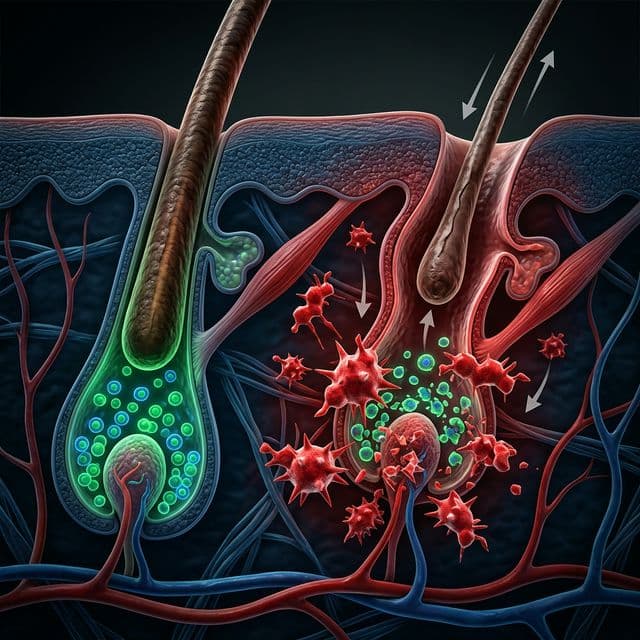
Early trigeminovascular activation with mild scalp tenderness. Allodynia developing. Responsive to early relaxation intervention.
Severe Stage — Central Sensitisation
Full cortical spreading depression with severe cutaneous allodynia. Scalp hypersensitivity, light and sound intolerance active.
Migraine & Tension Headache
Migraine is a neurovascular disorder characterised by recurrent, often unilateral head pain accompanied by nausea, light and sound sensitivity, and in many cases cutaneous allodynia — a hypersensitivity of the scalp skin that makes even gentle touch painful. In Malaysia, where sleep deficit, chronic work stress, and urban commuting are endemic, migraine affects an estimated 15% of adults. The biological link between scalp therapy, vagus nerve stimulation, and migraine interruption is now firmly established by clinical evidence.
Key Characteristics
- Recurrent head pain, often unilateral and pulsating
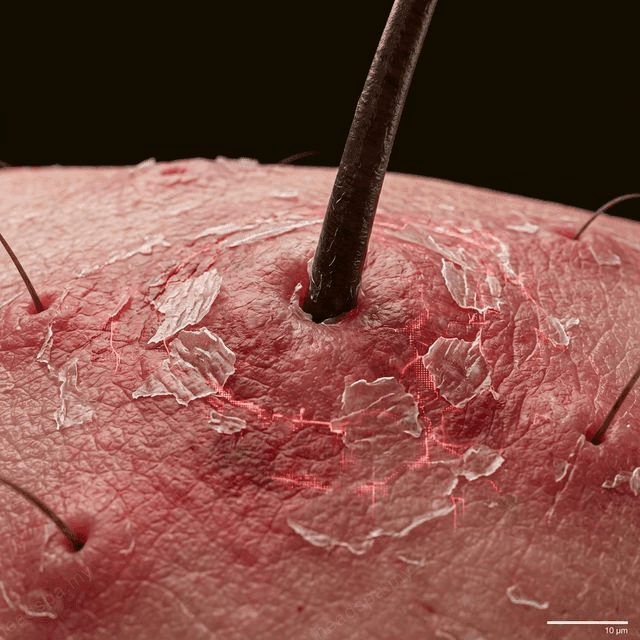
- Scalp allodynia — the scalp becomes painful to touch during attacks
- Light, sound, and smell hypersensitivity (photophobia, phonophobia)
- Nausea and vomiting in moderate-to-severe episodes
- Neck and occipital tension preceding or accompanying attacks
- Post-drome fatigue lasting 24–48 hours after resolution
Our Treatment Approach
Occipital ridge massage and temporal pressure point techniques to promote deep relaxation. Scalp-focused vibration therapy to support parasympathetic calm. Suboccipital tension release for headache-related discomfort.
Treatment Available At
Deep Dives
Science Articles on Migraine & Tension Headache
7 min read
Why Head Spa Relieves Migraine: The CGRP and Vagus Nerve Science
CGRP — the same neuropeptide that drives meningeal vasodilation during a migraine — is also released in the scalp during stress. Here is the clinical mechanism that links occipital massage to migraine interruption.
Read article →
8 min read
Migraine and Sleep in Malaysia: The Cortisol Cycle That Keeps You in Pain
Malaysia's average sleep duration of 6.1 hours does more than cause fatigue — it biologically primes the nervous system for more frequent migraine attacks. Here is the mechanism, and how to interrupt it.
Read article →
9 min read
Cervicogenic Headache vs Migraine: Why Your KL Head Spa Treats Both
Not all headaches originating in the head are migraines. Cervicogenic headache — pain referred from the upper cervical spine — is systematically misclassified, undertreated, and directly caused by screen-heavy KL work culture.
Read article →
8 min read
The Vagus Nerve and Scalp Health: Why Your Head Spa Affects Your Nervous System
The vagus nerve's dorsal branch runs through the occipital scalp. Targeted pressure here activates the parasympathetic nervous system — reducing cortisol, lowering inflammatory markers, and directly improving follicle health.
Read article →
8 min read
Why TTE Uses Vagal Nerve Stimulation, Not a Shoulder Massage
A shoulder massage activates superficial mechanoreceptors for temporary relaxation. Vagal nerve stimulation via occipital pressure measurably reduces systemic cortisol and shifts the autonomic nervous system into parasympathetic dominance.
Read article →
8 min read
Delta Waves and Scalp Healing: What Happens to Your Hair During Deep Sleep
During delta wave sleep (0.5–4 Hz), growth hormone secretion peaks, cortisol hits its daily nadir, and follicle stem cells receive their primary activation signal. Missing this window is not just about feeling tired — it is a biological deficit with measurable scalp consequences.
Read article →
8 min read
How Sleep Deprivation Destroys Scalp Health: The Growth Hormone Window You're Missing
Between 11pm and 3am, growth hormone triggers anagen phase activation in hair follicles. Malaysian professionals sleeping at 2am and waking at 6am are systematically missing this regeneration window — and their scalp shows it.
Read article →
10 min read
World Brain Day Malaysia: The Link Between Stress, Sleep, Migraine and Scalp Health
World Brain Day on 22 July is a useful reminder that scalp discomfort, hair fall, headaches, and poor sleep often share one hidden pathway: a nervous system that never fully downshifts.
Read article →
9 min read
World Cup Sleep Debt Malaysia: How Head Spa Recharges You After Late-Night Football
World Cup matches in North America can push Malaysian fans into midnight and early-morning viewing. A head spa cannot replace sleep, but it can support recovery from scalp oil, head tension, sleep debt, and nervous-system overactivation.
Read article →
7 min read
Football Headache and Neck Tension: Why Penalty Shootouts Stay in Your Scalp
A tense football match can leave the jaw, temples, forehead, scalp and neck braced for hours. Head spa helps by working on the head tension and nervous-system activation behind the heavy-head feeling.
Read article →
8 min read
World Cup Final Recovery Plan Malaysia: What to Do After Extra Time, Mamak and No Sleep
The World Cup final is emotional, social and biologically expensive for Malaysian fans. Use this recovery plan to manage sleep debt, oily scalp, head tension and next-day fatigue.
Read article →
Ready to transform your scalp health?
Book a consultation and let our specialists create a personalized protocol for migraine & tension headache.