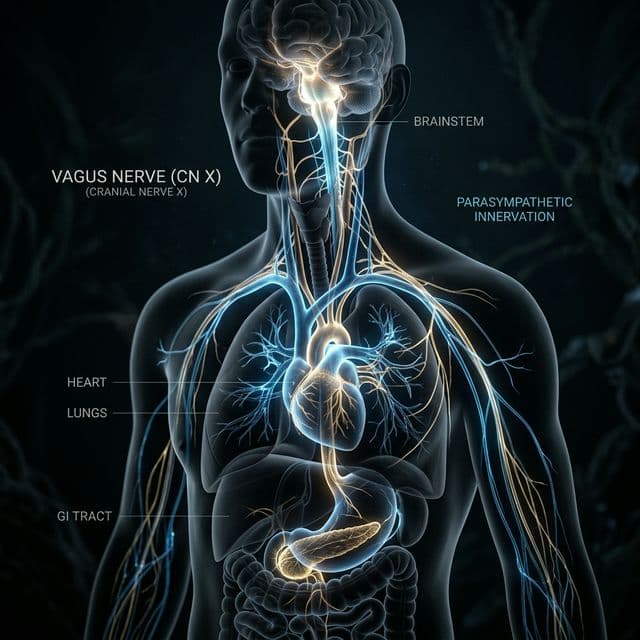
The vagus nerve is the longest cranial nerve in the body, running from the brainstem through the neck, chest, and abdomen. Its dorsal branch, however, exits through the posterior skull and supplies sensory innervation to the occipital scalp — making the head spa an unexpectedly direct pathway to autonomic nervous system regulation.
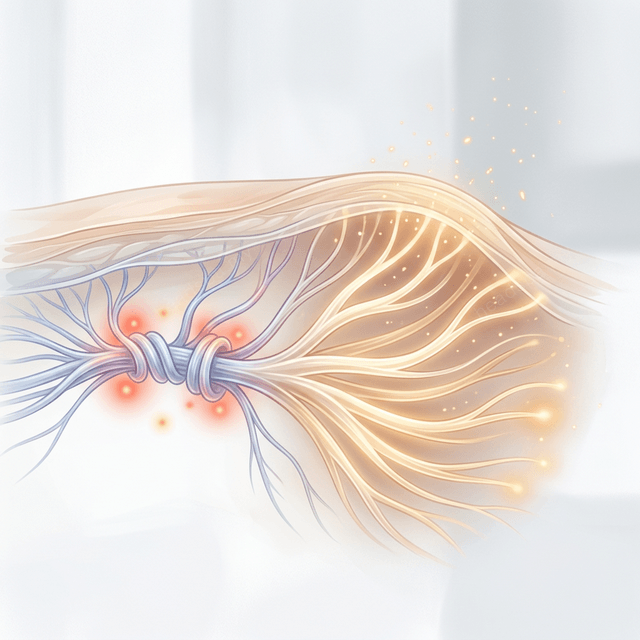
Anatomy of the Occipital-Vagal Connection !3D illustration of vagus nerve stimulation reducing cortisol and promoting scalp microcirculation
The greater occipital nerve (GON) shares neuroanatomical connectivity with the vagal nucleus tractus solitarius (NTS) in the brainstem. Stimulation of the GON — as occurs during occipital massage — activates the NTS, which is the primary relay station for parasympathetic (rest-and-digest) nervous system activation.
This is not folk medicine. It is the same anatomical pathway exploited by transcutaneous vagus nerve stimulation (tVNS) devices used in clinical neurology.
The Parasympathetic Cascade
- Reduced adrenocorticotropic hormone (ACTH) → reduced cortisol synthesis
- Vagal anti-inflammatory reflex → suppression of TNF-α and IL-6
- Heart rate variability (HRV) increase → restoration of autonomic balance
- Serotonin precursor availability increase → improved mood and sleep onset
The Scalp-Hair Connection
Each of these downstream effects directly benefits scalp health. Reduced cortisol removes the primary inhibitor of follicle stem cell activation. Suppressed TNF-α and IL-6 reduce follicular inflammation. Improved sleep quality restores the GH/IGF-1 secretion window critical for anagen induction.
432Hz Amplification
Binaural beat entrainment at 432Hz has been associated in small trials with accelerated theta and alpha wave induction — brain states consistent with deep relaxation and parasympathetic dominance. Combined with physical occipital stimulation, the effect is additive rather than redundant.
This is the mechanistic basis of TTE Elephant's Sleep Healing Headspa: simultaneous peripheral and acoustic vagal stimulation creating a measurable neuro-physiological response.