A shoulder massage activates superficial mechanoreceptors for temporary sensory relaxation. Vagal nerve stimulation via occipital pressure measurably reduces systemic cortisol and shifts the autonomic nervous system into parasympathetic dominance — a fundamentally different biological outcome that directly impacts hair follicle health.
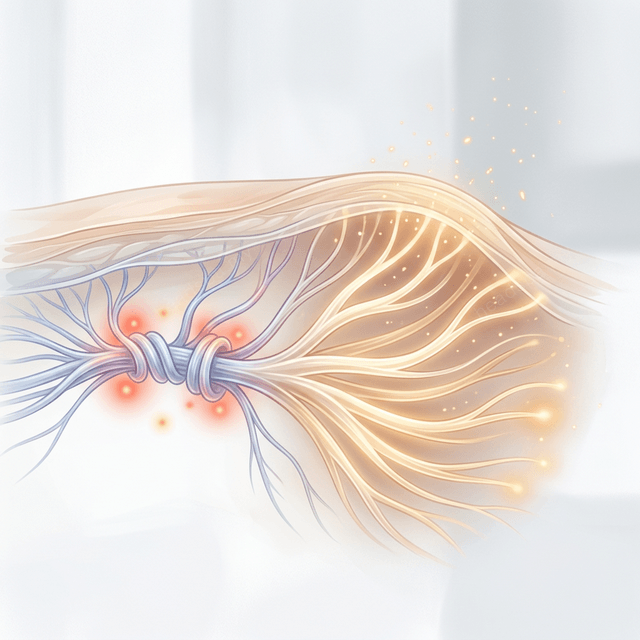
The Relaxation Illusion !3D diagram of vagus nerve pathway and cortisol reduction through occipital scalp pressure stimulation
Nearly every wellness establishment in Kuala Lumpur offers some form of massage supplementary to a headspa service: a shoulder rub, a hand revival, a neck knead. These additions feel pleasant, sell well, and are frequently marketed as "stress relief" or "full-body wellness."
From a neurophysiological perspective, however, these standard massage techniques interact with your nervous system in a fundamentally limited way. Understanding the difference between a superficial sensory response and a systemic autonomic shift is critical for anyone seeking genuine, lasting relief from stress-driven scalp conditions.
How a Standard Massage Works (Mechanoreceptor Activation)
When a therapist applies moderate pressure to your shoulder muscles, they activate Meissner's corpuscles and Pacinian corpuscles — mechanoreceptors situated in the upper layers of the skin and fascia. These sensory receptors detect pressure changes and transmit signals via A-beta nerve fibres to the somatosensory cortex of the brain.
The brain interprets these signals as pleasant tactile stimulation. Endorphins (the body's natural painkillers) are released in modest quantities, creating a generalised feeling of warmth and relaxation. A 2016 meta-analysis by Field (*Complementary Therapies in Clinical Practice*) confirmed that standard massage temporarily reduces self-reported anxiety scores and raises peripheral skin temperature.
However — and this is the critical distinction — mechanoreceptor activation does not engage the autonomic nervous system's regulatory centres. The pleasant sensation is genuine, but it is a cortical perception (the brain feeling nice), not a systemic physiological shift (the body's stress hormones actually changing). When the massage stops, the cortisol levels remain at their pre-massage baseline. The stress axis has not been interrupted.
The Autonomic Nervous System: The Real Target
To understand why certain scalp conditions persist despite regular massage and relaxation, you must understand the two branches of the autonomic nervous system:
- Sympathetic ("Fight-or-Flight"): Elevates cortisol, adrenaline. Constricts peripheral blood vessels. Suppresses digestion and tissue repair. This is the branch activated by urban commuting, work deadlines, and chronic anxiety.
- Parasympathetic ("Rest-and-Digest"): Lowers cortisol. Dilates blood vessels. Activates tissue repair, immune function, and growth hormone secretion. This is the branch that enables your hair follicles to remain in the active growth (anagen) phase.
For an individual chronically locked in sympathetic dominance — the biological norm for KL professionals enduring an average 75-minute daily commute — the hair follicle is continuously bathed in cortisol. As demonstrated by Choi et al. (2021, *Nature*), elevated cortisol directly suppresses the GAS6 protein in the dermal papilla, arresting hair follicle stem cell activation.
A shoulder massage does not shift this autonomic balance. The cortisol remains elevated. The follicle remains suppressed. The hair continues to thin.
Vagal Nerve Stimulation: The Biological Hard Reset
The vagus nerve (cranial nerve X) is the longest cranial nerve in the human body. It runs from the brainstem through the neck, thorax, and abdomen, providing the primary neural highway for parasympathetic control of virtually every major organ system.
Stimulating the vagus nerve does not produce a vague, generalised "relaxation." It triggers a specific, measurable cascade: reduced heart rate variability in the parasympathetic direction, suppressed inflammatory cytokine production (TNF-α, IL-6), and — critically — a direct reduction in hypothalamic-pituitary-adrenal (HPA) axis output, which means systemic cortisol levels actually drop.
Bonaz et al. (2018, *Cold Spring Harbor Perspectives in Medicine*) demonstrated that vagal nerve stimulation produces an anti-inflammatory reflex, measurably reducing circulating pro-inflammatory markers within minutes. This is not a subjective "feeling relaxed." It is a quantifiable physiological state change.
The Occipital Nerve Gateway
The practical question is: how do you stimulate the vagus nerve non-invasively during a headspa session?
The answer lies in the neuroanatomy of the greater occipital nerve. This nerve emerges from the C2 vertebra and ascends through the posterior neck musculature to innervate the scalp at the base of the skull. Crucially, the greater occipital nerve shares significant anatomical crossover with the spinal accessory nerve and — via the trigeminocervical complex — maintains functional connectivity with the vagal nucleus in the brainstem.
A landmark study by Yuan & Bhatt (2013, *Brain*) confirmed that stimulating the greater occipital nerve produces measurable changes in central neural excitability, demonstrating a direct pathway from occipital stimulation to brainstem-level autonomic regulation.
When TTE Elephant's Sleep Healing Headspa protocol applies deep, sustained, calibrated pressure to the occipital ridge and suboccipital triangle, it is not delivering a scalp massage. It is engaging a specific neural gateway that functionally connects to the parasympathetic regulatory centre. The pressure must be precise — targeting the zone between the superior nuchal line and the atlas (C1) — and sustained for a minimum duration to achieve vagal tone change.
What This Means for Your Scalp
The downstream effects of genuine vagal activation on scalp health are profound and clinically specific:
- Cortisol Suppression: As systemic cortisol drops, the GAS6 pathway in the dermal papilla is reactivated, allowing hair follicle stem cells to re-enter the growth cycle.
- Inflammatory Cytokine Reduction: TNF-α and IL-6 levels decrease, halting neurogenic inflammation and stopping the Substance P → mast cell → histamine cascade responsible for phantom scalp itch.
- Growth Hormone Window: Deep parasympathetic dominance mimics the hormonal environment of slow-wave (delta) sleep, during which the pituitary secretes Growth Hormone — the primary anabolic signal for follicular tissue repair.
No amount of shoulder kneading, hand massage, or aromatherapy inhalation produces these specific biological outcomes. They require targeted stimulation of the correct neural pathway, at the correct anatomical location, for the correct duration.
The Difference in Practice
At TTE Elephant, the distinction is embedded in the treatment architecture. The protocol does not include a "bonus" neck massage for sensory pleasure. It includes targeted occipital neuro-therapy for autonomic regulation — paired with 432Hz acoustic entrainment calibrated to encourage delta wave brainwave patterns.
For clients presenting with scalp concerns driven by chronic stress — neurogenic itch, cortisol-induced shedding, stress-pattern seborrhea — the intervention must reach the autonomic nervous system. Anything that stops at the skin surface is treating the symptom, not the cause.
Frequently Asked Questions
Q: Why does head spa help with sleep better than a regular massage? A: A regular massage activates superficial touch receptors, creating a temporary pleasant sensation. A clinical head spa using occipital pressure stimulates the vagus nerve, which directly shifts the autonomic nervous system into parasympathetic dominance, lowering cortisol and mimicking the hormonal conditions for deep delta wave sleep.
Q: What is the vagus nerve and why does it matter for scalp health? A: The vagus nerve is the body's primary parasympathetic highway. When stimulated, it reduces systemic cortisol, suppresses inflammatory cytokines, and enables growth hormone secretion. This hormonal environment is essential for hair follicle stem cells to remain active and in the growth phase.
Q: Can I stimulate the vagus nerve myself at home? A: Basic techniques like cold water exposure and deep diaphragmatic breathing provide mild vagal tone improvement. However, the sustained, anatomically precise occipital pressure required for measurable cortisol reduction requires clinical application by trained therapists who understand the neuroanatomy of the greater occipital nerve.
Q: How is TTE's approach different from a "relaxation" headspa? A: Most headspa services focus on sensory pleasure — pleasant scents, soothing music, gentle scalp massage. TTE's Sleep Healing protocol targets a specific neural pathway (the vagus nerve via the greater occipital nerve) to achieve a measurable physiological outcome: systemic cortisol reduction and parasympathetic dominance. The distinction is between feeling relaxed and being biologically regulated.