Sleep is not passive recovery. It is the only window during which the hormonal conditions required for hair follicle stem cell activation are simultaneously present.
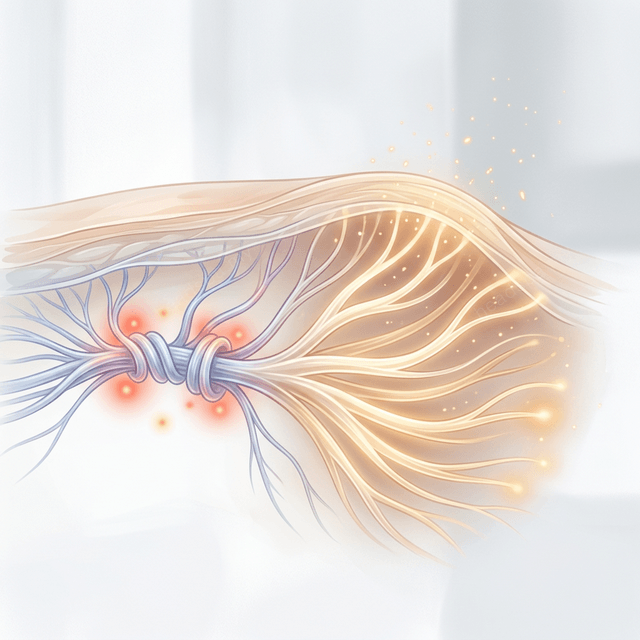
The GH Secretion Window !Scalp cortisol stress response and sleep deprivation hair follicle impact — clinical diagram
Growth hormone (GH) is secreted in pulses throughout the day, but the largest pulse occurs during the first slow-wave sleep (SWS) cycle — typically 90 minutes after sleep onset. SWS is characterised on EEG by delta wave activity (0.5–4 Hz) with amplitude >75µV.
GH acts on the follicle through IGF-1 (insulin-like growth factor 1), which activates the Wnt/β-catenin signalling pathway in follicle dermal papilla cells — the same pathway suppressed by cortisol. GH and cortisol are biochemically antagonistic: they compete for control of the follicle's growth state.
Cortisol's Nadir
Serum cortisol hits its 24-hour minimum between 1:00–3:00 AM in individuals with normal sleep timing. This cortisol nadir coincides with the window of maximal GH availability — creating the optimal hormonal environment for anagen (growth phase) induction.
Disrupted sleep or late-night working shifts this nadir window, reducing the overlap of GH peak and cortisol minimum and shortening the effective follicle activation period.
Melatonin's Direct Role
Melatonin — secreted by the pineal gland in darkness — has direct effects on the hair follicle independent of its sleep-promoting role. Melatonin receptors (MT1, MT2) are expressed on follicle outer root sheath cells, and melatonin has been shown to extend the anagen phase and reduce premature entry into catagen (regression phase).
Artificial light exposure after 10 PM suppresses melatonin synthesis. Combined with late phone use, this is one of the most consistent upstream contributors to accelerated hair fall in the under-35 demographic.
What Restores the Window
The Sleep Healing Headspa is designed to shift the autonomic nervous system into parasympathetic dominance — the prerequisite state for SWS entry. By reducing sympathetic arousal before sleep, the treatment improves sleep architecture: SWS depth, delta wave amplitude, and the GH pulse size that follows.
The treatment's relaxation effect also supports a lower cortisol nadir baseline — meaning the biological low point during sleep reaches deeper, extending the follicle activation window.