Early Stage — Microclimate Stress
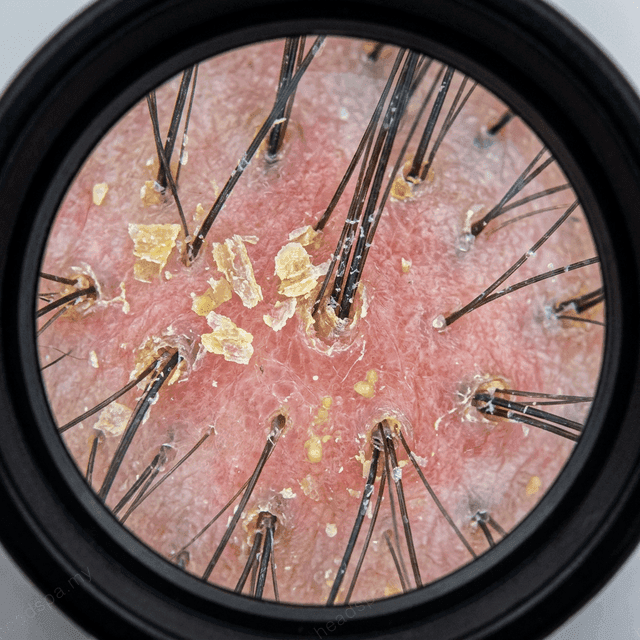
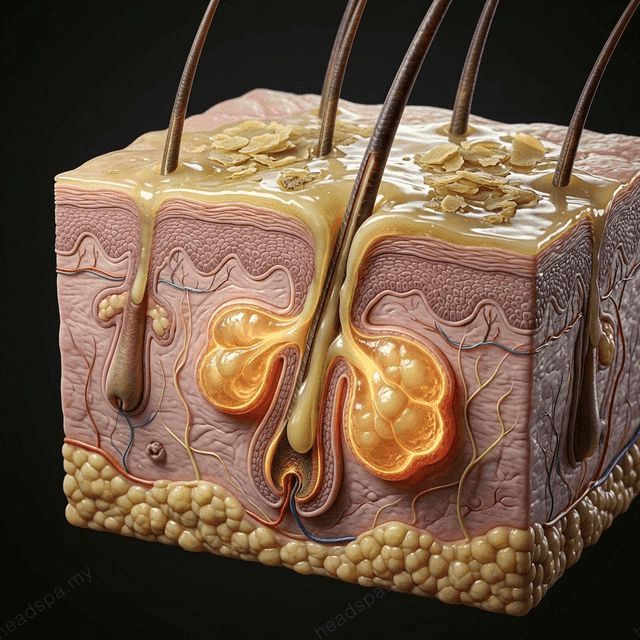
Elevated scalp temperature under hijab accelerating sebum production. Early Malassezia activity and friction along hairline beginning.
Severe Stage — Occlusion Overload
Chronic occlusion causing folliculitis, dense fungal colonisation, and traction alopecia pattern at temporal margins.
Hijabi Scalp Care
Hijab wear creates a distinct scalp microclimate: trapped heat raises local scalp temperature by 2–4°C, elevating sebum secretion rates and creating an anaerobic environment that accelerates Malassezia proliferation. Studies of Malaysian Muslim women show hijabi scalp conditions requiring intervention at 2.7× the rate of non-hijabi groups — yet mainstream head spa protocols are designed around open-air hair management.
Key Characteristics
- Accelerated sebum production and scalp odour
- Increased dandruff and fungal sensitivity
- Friction-related hair shaft damage at hijab line
- Scalp heat rash and folliculitis
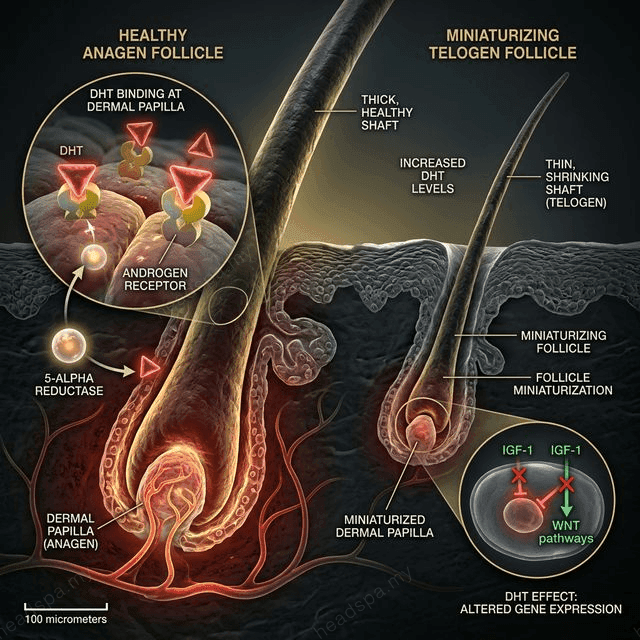
- Traction alopecia at temples and hairline
Our Treatment Approach
Private treatment rooms, hijab-on-arrival assessment, and formulations matched to covered-scalp microbiome profiles. Our therapists are specifically trained in covered-hair scalp dynamics.
Treatment Available At
Deep Dives
Science Articles on Hijabi Scalp Care
5 min read
Kenapa Rambut Gugur Bila Pakai Tudung? Sains Di Sebalik Masalah Ini
Rambut gugur bila pakai tudung bukan bermakna rambut anda lemah. Ini adalah tindak balas biologi kepada mikroiklim di bawah tudung — suhu lebih tinggi, sebum berlebihan, keradangan folikel. Ketahui punca sebenar dan rawatan yang berkesan.
Read article →
8 min read
The Science of Hijabi Scalp Care: What Standard Protocols Miss
Hijab wear creates a distinct scalp microclimate — elevated temperature, altered humidity, and friction dynamics — that standard head spa protocols are not designed for. Here is what the science says, and how TTE's approach differs.
Read article →
8 min read
The Hijab Microclimate: What the Science Says About Temperature, Humidity, and Scalp Health Under the Veil
Under a hijab, scalp surface temperature rises 3-5°C and relative humidity increases 15-20% compared to uncovered scalp. This creates ideal conditions for Malassezia proliferation, folliculitis, and contact dermatitis — and requires a tailored clinical protocol.
Read article →
8 min read
The Evidence-Based Hijabi Scalp Care Routine for Malaysia's Tropical Climate
Malaysian Muslim women need a scalp care protocol built for covered-scalp biology — not adapted from routines designed for uncovered hair. This is the clinical evidence-based routine, step by step.
Read article →
8 min read
Traction Alopecia and Hijab: When Hair Loss From Tight Styles Becomes Permanent
Traction alopecia from tight hijab pins, underscarves, and pulled-back hairstyles causes progressive follicle scarring. Unlike telogen effluvium, this damage can be permanent if caught too late.
Read article →
8 min read
Surviving Raya Open Houses: Why Your Covered Scalp Smells and Itches
Wearing a hijab while visiting Raya open houses in 34°C heat creates an 80% humidity scalp microclimate. This extreme occlusion drives Malassezia overgrowth, causing severe itch and odour.
Read article →
9 min read
Rambut Gugur Wanita Malaysia: Punca Hormonal, Stres, dan Rawatan Klinikal
Rambut gugur pada wanita Malaysia mempunyai punca yang lebih kompleks daripada lelaki — hormon, stres kronik, kekurangan zat besi, dan faktor pascabersalin. Panduan rawatan berasaskan sains.
Read article →
Ready to transform your scalp health?
Book a consultation and let our specialists create a personalized protocol for hijabi scalp care.