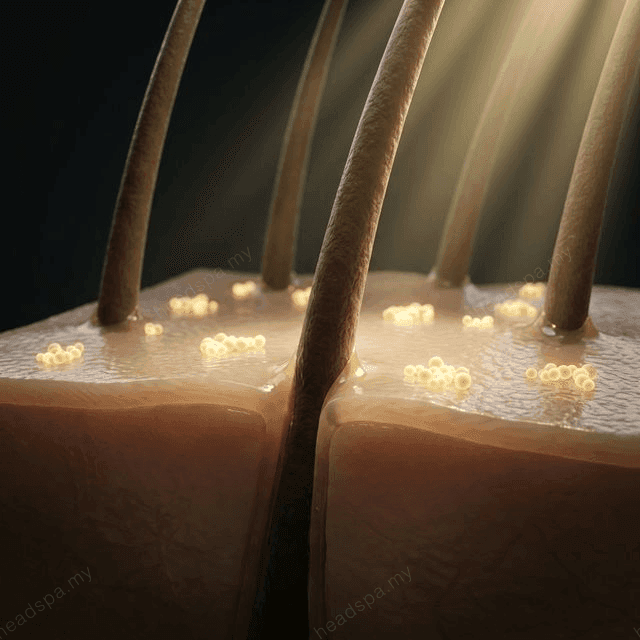
The overwhelming majority of scalp care content available to Malaysian Muslim women is built on a foundational mismatch: it assumes uncovered scalp biology. Washing frequency guidelines developed in temperate European climates, ingredient recommendations calibrated for normal ambient humidity, and product formulations designed for hair exposed to open air are applied wholesale to a scalp that spends 8–14 hours daily in an entirely different microenvironment. The result is routines that either over-manage (stripping the scalp and triggering reactive sebum overproduction) or under-manage (allowing Malassezia proliferation, folliculitis, and product accumulation to go unchecked).
This protocol is built from the other direction. It starts with the biology of the covered scalp in a tropical equatorial climate and works outward to routine recommendations. Every step has a mechanistic rationale.
Understanding Your Starting Conditions
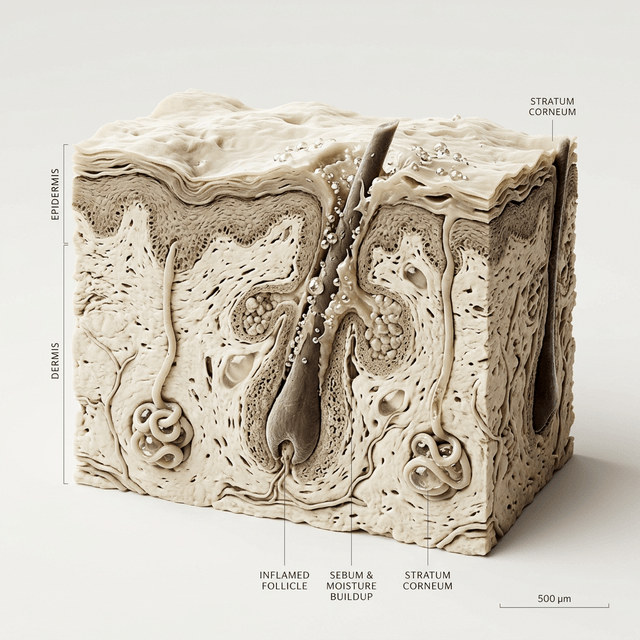
Before the routine, the baseline. Under a hijab in Malaysian conditions, your scalp is operating at approximately 36–39°C surface temperature and 90–95% relative humidity during wear time. Sebum production is accelerated. Malassezia replication rate is elevated. Transepidermal water evaporation is reduced. Air circulation is minimal. Any product applied to your scalp concentrates and accumulates rather than evaporating.
This is not a problem to be solved by finding the "right" product. It is a biological condition to be managed with a calibrated routine. The science underlying these conditions is covered in detail in the companion article on hijab microclimate scalp science.
The Daily Routine
Morning: Minimise, not maximise.
The most common morning mistake is applying products before putting on the hijab. The microclimate will concentrate whatever you apply, increasing follicular occlusion and microbial substrate. In the morning, the goal is a clean, product-light scalp under the hijab.
If you experience dry scalp symptoms (tight feeling, superficial fine flaking without oiliness), a single pass of a lightweight, water-based scalp tonic — ingredients: niacinamide, panthenol, no silicones, no mineral oil — applied lightly to the scalp only (not the hair shaft) is appropriate. Allow it to absorb fully before covering. Do not apply oils or serums to the scalp before wearing hijab.
Evening: Complete drying before bed.
This is the single most consequential daily habit for covered-scalp biology. A scalp that is not fully dry before sleep — particularly if washed in the evening — becomes an incubation site for bacteria and fungi overnight. Folliculitis in hijab-wearing women most frequently develops from this single practice.
After washing, use a diffuser or directed low-heat airflow to ensure the scalp (not just the hair) is fully dry. Focus airflow at the roots, not the tips. Do not sleep with even slightly damp scalp, regardless of climate. This is non-negotiable in Malaysian humidity.
Washing Frequency: The Most Misunderstood Variable
The persistent myth in Malaysian hair care content is that washing frequently damages hair. This conflation of scalp washing with hair shaft treatment is the source of significant clinical harm in the hijab-wearing population.
The scalp is skin. It requires cleansing calibrated to its sebum production rate, microbial activity, and environmental conditions. For hijab-wearing women in Malaysia, the appropriate washing frequency is:
- Oily scalp type: Daily washing with a mild, pH-balanced (4.5–5.5) shampoo. The hijab microclimate accelerates sebum production; daily removal of the accumulated sebum substrate prevents Malassezia from reaching overgrowth conditions.
- Normal scalp type: Every 2 days. This maintains the acid mantle without allowing microbial accumulation.
- Dry scalp type: Every 3 days, with a hydrating scalp treatment applied post-wash. Dry scalp under hijab conditions is often not truly dry — it is frequently a compromised barrier presenting as flaking, and is better managed with barrier repair formulations than by reducing wash frequency.
Washing frequency does not cause hair loss. Chronic scalp inflammation — which insufficient washing allows to develop — does.
Inner Cap Hygiene: The Overlooked Variable
The inner cap (inner liners, sport hijabs worn underneath the outer layer) accumulates sebum, sweat, microbial metabolites, and product residue on a daily basis. Wearing an unwashed inner cap for two or more consecutive days reintroduces yesterday's microbial load to a freshly cleansed scalp — negating the benefit of washing entirely.
Inner caps must be washed daily. This is not excessive; it is the appropriate hygiene standard for a garment in continuous contact with actively sweating, covered skin in 33°C ambient temperatures. Fabric selection matters: open-weave modal or bamboo jersey wicks moisture and reduces scalp temperature by 1–2°C compared to polyester alternatives. This small temperature reduction meaningfully shifts Malassezia growth kinetics away from the exponential range.
Ingredient Checklist: What to Use, What to Avoid
- Zinc pyrithione (0.5–1%): antifungal, anti-inflammatory; reduces Malassezia load; appropriate for routine use
- Salicylic acid (1–2%): keratolytic, clears follicular occlusion; use 1–2× weekly, not daily
- Niacinamide (2–5%): anti-inflammatory, sebum regulation, barrier support
- Panthenol: humectant, barrier repair; appropriate in leave-on scalp tonics
- Piroctone olamine: antifungal alternative to zinc pyrithione; good tolerability
- Tea tree oil (diluted to 0.5–1%): antimicrobial; effective but can cause sensitisation in some users
- Dimethicone and cyclomethicone (heavy silicones): occlusive film traps heat and microbial metabolites under hijab
- Mineral oil and paraffinum liquidum: similarly occlusive; creates sebum substrate accumulation
- Fragrance-heavy formulations: impaired air circulation prevents fragrance dissipation; increases sensitisation risk
- Coconut oil as a scalp treatment: highly comedogenic rating, accelerates follicular occlusion in the microclimate
Weekly: Scalp Massage Protocol
Four minutes of structured scalp massage per week — not daily, as daily massage without adequate scalp hygiene can redistribute microbial load — applied with fingertip percussion and circular movements targeting the frontal hairline, temporal regions, and crown, provides mechanical stimulation to the dermal papilla microvasculature. The Khumalo et al. 2007 analysis of scalp practices and disease prevalence identified regular scalp manipulation as protective against follicle stasis, provided it is performed on a clean scalp.
Perform scalp massage on wash day, post-shampoo while the scalp is cleansed, before applying conditioner to the hair shaft. This is the optimal timing for dermal papilla stimulation — sebum has been cleared, inflammatory metabolites have been washed away, and the mechanical stimulus reaches the follicle without occluding compounds present.
Nutrition: The Two Non-Negotiables
| Nutrient | Why It Matters for Hijabi Scalp | Target Level | Sources |
|---|---|---|---|
| Vitamin D | VDR activation regulates anagen–catagen transition; hijab-wearing reduces cutaneous synthesis significantly | 75–100 nmol/L serum 25-OHD | Supplementation 1,000–2,000 IU/day; oily fish, egg yolk |
| Iron (ferritin) | Ferritin below 30 µg/L correlates with telogen effluvium; inadequate dietary iron common in women 20–40 | Serum ferritin >50 µg/L | Red meat 2× weekly; fortified cereals; combined with vitamin C |
| Zinc | Cofactor for 5-alpha reductase regulation; deficiency associated with seborrhoeic dermatitis | Serum zinc 11–24 µmol/L | Pumpkin seeds, legumes, red meat |
| Biotin | Required for keratin infrastructure; deficiency rare but causes brittle shaft and scalp scaling | No defined deficiency threshold | Eggs, nuts, wholegrains |
Vitamin D deficiency is clinically the most significant nutritional variable for hijab-wearing Malaysian women, given the combined effect of hijab coverage, indoor work environments, and SPF sunscreen use reducing the already limited UV-B exposure available. As detailed in the Almohanna et al. 2019 review, suboptimal vitamin D status impairs VDR-dependent follicle cycling with effects measurable in hair pull test results.
What Not to Do: The Three Practices That Cause Irreversible Damage
1. Tight pins and clips at the hairline. Bobby pins, metal clips, and tight headbands placed at the same hairline points daily create repeated mechanical traction on frontal follicles. The Khumalo et al. 2007 traction alopecia literature is unambiguous: daily traction at the same follicle sites produces progressive follicle miniaturisation that can become permanent within 2–5 years. Rotate pin placement daily. Distribute tension. This is not a cosmetic choice; it is follicle preservation.
2. Leaving the scalp wet under the hijab. Wet scalp under hijab creates immediate folliculitis breeding conditions — warm, moist, occluded. A single instance is recoverable. Chronic repetition produces recurrent folliculitis that scars the follicular ostium and permanently reduces hair density. Always ensure the scalp is dry before covering.
3. Heavy serums and occlusive oils applied before wearing hijab. The microclimate traps these products against the scalp for hours. Comedonal occlusion, cystic folliculitis, and accelerated Malassezia proliferation are the predictable outcomes. Save oil-based treatments for nights you will not be covering until morning.
Monthly: Professional Clinical Assessment
A professional scalp assessment every 4–6 weeks allows trichoscopy evaluation of follicle density, Malassezia indicators, and perifollicular inflammation that is not visible to self-examination. The TTE KL clinic provides covered-scalp-specific assessment and the TTE Muslimah protocol — designed for the biological parameters of hijab-wearing women in Malaysia's climate. For further reading, see the traction alopecia and hijab clinical overview and the full hijabi scalp care reference.
---
FAQ
Q: Is it true that washing hair every day ruins it? A: This is one of the most persistently harmful myths in Malaysian hair care. Daily washing with an appropriate, pH-balanced shampoo does not damage hair follicles or the hair shaft when formulations are suitable. The concern originated from harsh detergent shampoos that stripped the acid mantle. Modern mild shampoos (pH 4.5–5.5, sulphate-reduced or sulphate-free) can be used daily without harm — and for oily scalp types under hijab in Malaysian conditions, daily washing is clinically appropriate. What damages hair is chronic scalp inflammation, not washing.
Q: Can I use coconut oil as a pre-wash scalp treatment? A: Coconut oil as a hair shaft treatment (mid-length to ends) is appropriate and beneficial — it reduces protein loss during washing. As a scalp treatment for hijab-wearing women, it is not recommended. Coconut oil has a high comedogenic rating and, applied to a scalp that will be covered for hours, accelerates follicular occlusion and provides an abundant lipid substrate for Malassezia. Use scalp-specific formulations with non-comedogenic carrier oils (jojoba, squalane) if pre-wash scalp treatment is desired.
Q: My scalp flakes but doesn't feel oily. Is this dry scalp or something else? A: The distinction is clinically important. True dry scalp produces fine, white, powdery flakes that resolve with moisturisation and reduce with decreased wash frequency. Malassezia-driven seborrhoeic dermatitis produces larger, yellowish, adherent flakes that worsen when wash frequency decreases (because sebum accumulates) and are associated with a greasy-but-itchy sensation. If flaking in your case does not improve or worsens with moisturising treatments, and you wear hijab daily in Malaysia, Malassezia-driven seborrhoeic dermatitis is the more probable diagnosis. Clinical assessment will confirm.
Q: How long before I see results from following this routine correctly? A: Scalp microbiome rebalancing, where Malassezia is a primary concern, typically requires 4–6 weeks of consistent protocol adherence before measurable change in flaking and inflammation. Follicle health improvements — increased density, reduced shedding — lag further behind: 3–6 months for meaningful improvement in anagen proportion. Nutritional interventions (vitamin D correction) require 8–12 weeks to show biological effect. Consistency over months, not days, is the correct timeframe expectation.
Q: At what point should I see a professional rather than managing this at home? A: Seek clinical assessment if: flaking does not reduce after 6 weeks of appropriate protocol; you notice active pustules or tenderness at the scalp (indicates active folliculitis requiring medical treatment); you observe visible hairline recession over 3–6 months; or your hair shedding rate exceeds approximately 150 strands per day consistently. These indicators suggest a condition beyond self-managed routine care.