Wearing a hijab while visiting Raya open houses in 34°C heat creates an 80% humidity scalp microclimate. This extreme occlusion drives Malassezia overgrowth, causing severe itch and odour. Standard commercial shampoos cannot penetrate the resulting fungal biofilm, requiring specialized clinical purification.
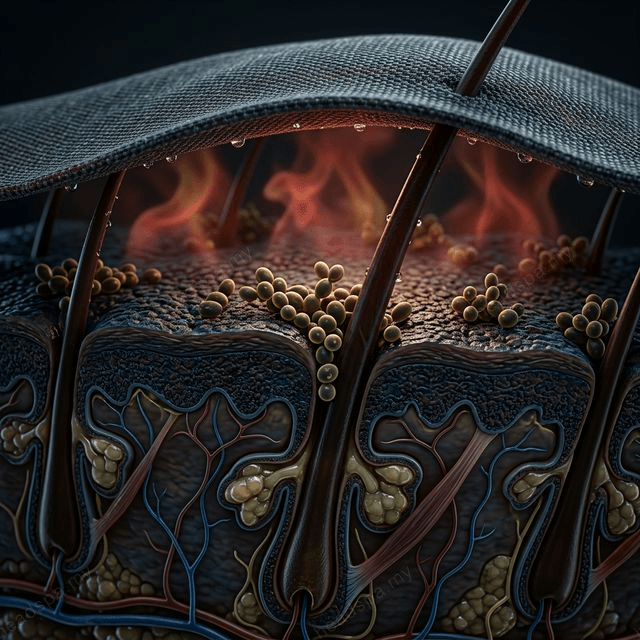
The Reality of the Hijab Microclimate !3D diagram of hijab microclimate heat and humidity occlusion causing scalp inflammation
During Hari Raya Aidilfitri, the social demand to look immaculate while navigating intense weather conditions puts the covered scalp under unprecedented physiological stress. Hopping between five different open houses in a single day, moving from air-conditioned living rooms back into the sweltering Malaysian afternoon heat, demands incredible resilience from the stratum corneum barrier.
A 2019 study published in the *South East Asian Journal of Public Health* documented that women wearing hijabs in tropical climates have a 2.7× higher rate of clinical scalp interventions compared to those who do not. The issue is not the fabric itself, but the intense microclimate it creates when combined with equatorial weather and high-stress social gatherings.
When you don a thick inner cap (anak tudung) followed by a layered chiffon or satin shawl for an entire day, you trap heat and moisture directly against the epidermis. The temperature of the covered scalp rapidly rises above the normal 32°C baseline. Simultaneously, insensible perspiration becomes trapped, pushing local relative humidity beneath the fabric to nearly 90%. You have essentially created a tropical greenhouse on your scalp.
The Malassezia Proliferation
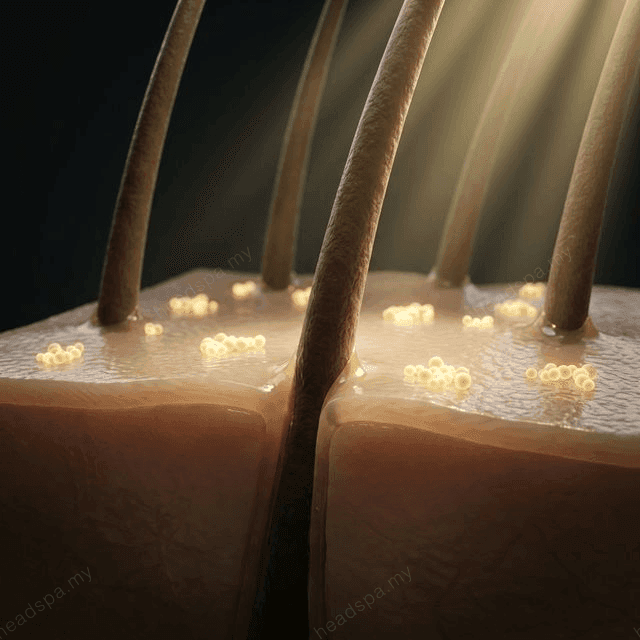
This hot, hyper-humid dark environment is the exact biological requirement for the exponential growth of a specific, naturally occurring yeast called *Malassezia globosa*.
Malassezia is lipophilic, meaning it feeds on the lipid-rich sebum produced by your hair follicles. During Raya, as your core body temperature rises from the heat and the stress of driving through traffic, your sebaceous glands are stimulated to produce an excess of sebum to lubricate and protect the hair shaft.
The yeast consumes this excess sebum at a highly accelerated rate in the warm, occluded environment. As it metabolizes the triglycerides in your oil, it excretes a toxic byproduct called oleic acid directly onto the skin. Oleic acid is highly caustic to the epidermal barrier. It penetrates the stratum corneum, creating microscopic fissures and triggering a massive inflammatory response from your immune system.
The immediate result is intense pruritus (the urgent need to scratch, even through your hijab during a conversation) and accelerated skin cell turnover. This rapid shedding manifests as thick, greasy dandruff flakes that stick to the roots of your hair, unlike standard dry flakes which easily brush off.
The Source of the Scalp Odour
Beyond the physical itch and flaking, the most distressing symptom reported by hijabi clients during long festive days is scalp odour. The smell is not a sign of poor hygiene; it is a direct consequence of lipid oxidation and bacterial metabolism.
As the trapped sebum heats up to 34°C beneath your hijab, it rapidly oxidizes upon contact with trapped air pockets. Squalene (a primary component of sebum) breaks down into squalene peroxide, a highly volatile and odorous compound.
Simultaneously, the humid environment allows secondary bacteria, like *Cutibacterium acnes* and *Staphylococcus epidermidis*, to ferment the trapped sweat and oxidized lipids. This bacterial breakdown produces short-chain fatty acids (like propionic acid and isovaleric acid) which are responsible for the distinct, sharp, musty odor that becomes apparent the moment you remove your inner cap at the end of a long Raya open house marathon.
The Threat of Traction Alopecia
The biological burden of the microclimate is compounded by mechanical stress. For Raya, hairstyles are often secured tighter than usual to endure a full day of activity and photography. Hair is pulled taut into high buns or heavy scrunchies, serving as anchors for the shawl.
This sustained, localized tension on the hair root causes progressive trauma to the follicle. The continuous pulling stretches the dermal papilla, inducing localized inflammation. Over the course of the festive week, this mechanical stress frequently triggers Traction Alopecia — manifesting as noticeable thinning around the hairline, temples, and the crown anchor point. When the follicle is already bathing in caustic oleic acid, the physical pulling acts as the final catalyst for hair fall.
Why Commercial 'Hijab Shampoos' Fall Short
The retail market is flooded with products marketed specifically to hijab-wearing women, frequently relying on strong mint or menthol extracts. While these ingredients provide a temporary, cooling sensation that masks the feeling of heat, they offer zero clinical efficacy against the underlying biological mechanism.
Menthol does not eradicate *Malassezia globosa*, nor does it neutralise squalene peroxides. Worse, many commercial brand formulations utilize high-pH sulfate systems that violently strip the scalp’s fragile acid mantle. Stripping the oil merely triggers the sebaceous glands into a state of "rebound seborrhea" — overproducing even more oil within hours to defend the compromised barrier, feeding the yeast all over again.
TTE's Clinical Intervention for the Covered Scalp
Attempting to resolve a severe Malassezia biofilm and odor profile with a drugstore shampoo is clinically ineffective. The problem requires a professional rebalancing of the scalp ecosystem.
At TTE Elephant, our dedicated Muslimah Headspa focuses on deep biological purification within completely private, isolated suites designed exclusively for hijabi clients.
The intervention begins with high-resolution 200× trichoscopy to visually assess the severity of the fungal biofilm, oxidized sebum blockage, and follicular miniaturization. Based on this biometric data, we apply a clinical, enzymatic exfoliation protocol. Unlike scrub-based exfoliants that create further micro-tears on an inflamed scalp, specialized enzymes dissolve the inter-cellular glue binding the dead stratum corneum and liquify the trapped, oxidized sebum plugs deep within the follicular funnel.
Once the biofilm is chemically dismantled, the scalp is treated with targeted, low-pH amino acid cleansers that physically destroy the Malassezia environment by restoring the scalp's protective acid mantle (shifting the pH back to a hostile 4.5–5.5). Finally, high-pressure nano-mist infusion is utilized to drive ceramides and anti-inflammatory peptides deep into the dermis, repairing the barrier and halting the itch signaling pathway.
Before you endure the heat and heavy styling demands of the festive season, recalibrating the scalp’s defensive barrier is essential. A clinically purified scalp ensures zero itch, zero odor, and root volume that withstands a full day beneath the hijab.
Frequently Asked Questions
Q: Why does my scalp smell bad when wearing a hijab, even if I wash my hair daily? A: Scalp odour beneath a hijab is caused by lipid oxidation and bacterial fermentation. The lack of ventilation combined with 33°C heat causes sebum (oil) to oxidize into squalene peroxide. Bacteria then ferment this trapped sweat and oil, producing short-chain fatty acids responsible for the distinct musty smell. Frequent washing with the wrong pH only exacerbates oil production.
Q: Can wearing a hijab cause itchy scalp and dandruff? A: Yes. The microclimate created by a hijab — high heat and 80-90% trapped humidity — is the ideal breeding ground for Malassezia yeast. This yeast feeds on the oil produced by your scalp and excretes oleic acid, causing severe inflammation, greasy flaking, and intense itching.
Q: Is it normal to lose hair at the front hairline when wearing a hijab? A: No, this is a clinical sign of Traction Alopecia. Tying hair into tight buns or pulling it taut to secure an inner cap creates sustained mechanical trauma on the hair follicle. Over time, this localized tension causes irreversible miniaturization and permanent hair loss at the temples and hairline.
Q: Where can I find a strictly private head spa for Muslimahs in Malaysia? A: At TTE Elephant Head Spa, our dedicated Muslimah Headspa services are conducted in entirely private, closed-door en-suite rooms. The entire protocol—from analysis to clinical purification and blowout—is performed by female therapists in complete privacy, ensuring your scalp health is treated to the highest clinical standard without compromising your comfort.