Glycerin, panthenol, hyaluronic acid and ceramides can contribute to moisturising formulas, but they do not all have the same evidence behind scalp claims. Much of the human research concerns skin on the arms, legs or face. Choosing dry-scalp ingredients starts with understanding what each is intended to do and whether the finished product has been tested on the scalp.
Hydration and barrier function are different measurements
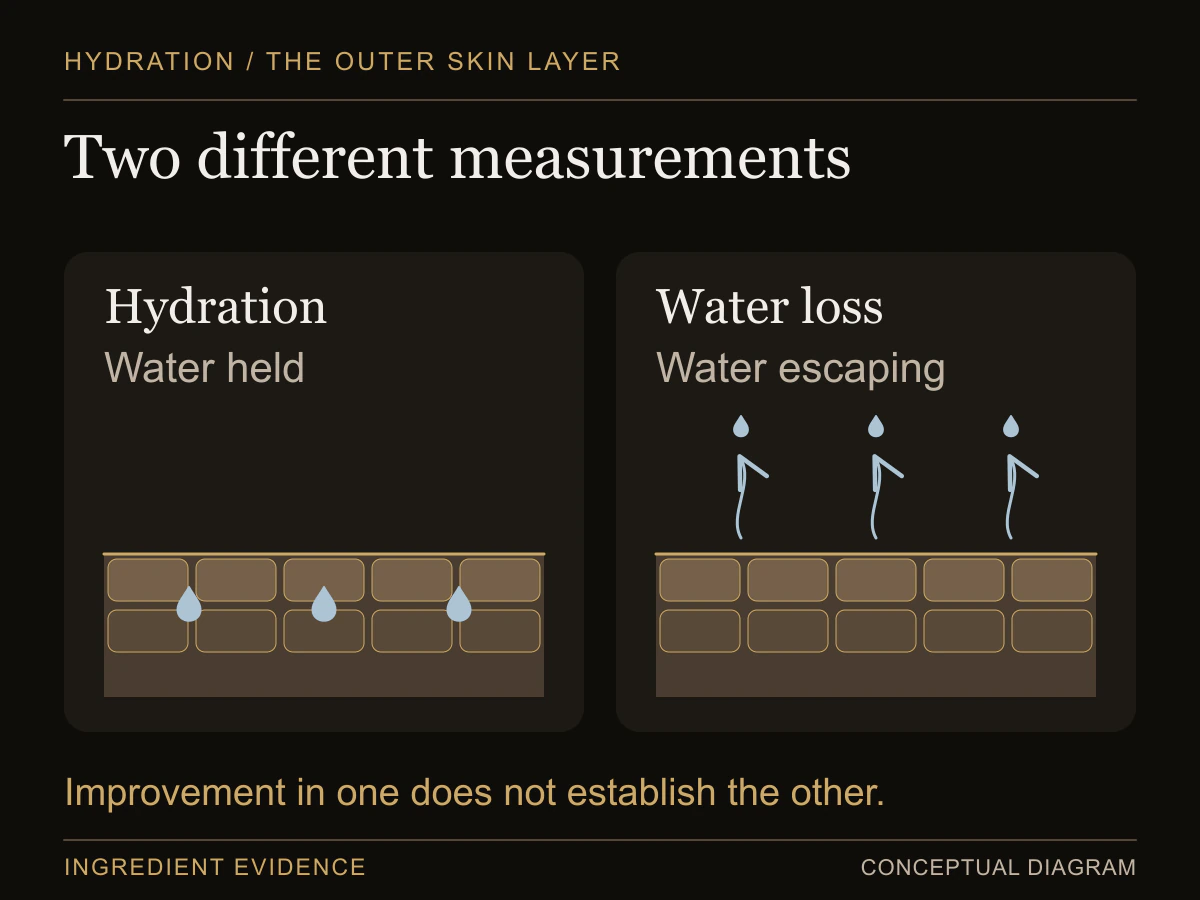
Hydration describes water held within the outer skin layer. Barrier measurements often assess water escaping through it, called transepidermal water loss, or TEWL. A product can improve one measurement without significantly changing the other.
In a small uncontrolled scalp study, a pseudo-ceramide/eucalyptus lotion improved hydration and symptoms without significantly changing TEWL. The finding supports cautious interest in that blend, rather than a blanket barrier-repair claim. Takagi and colleagues, 2018.
Neither measurement, by itself, establishes that a product treats dandruff or produces new hair. Softer hair fibres are also a separate result from a more comfortable scalp.
Glycerin: a familiar humectant with useful skin evidence
Glycerin, also called glycerol, helps skin hold water. Its familiar name need not make it a less considered ingredient.
In 24 people with atopic dermatitis, a glycerol cream improved hydration and barrier measurements against its glycerol-free base, without a significant difference in overall eczema severity. That is body-skin evidence, not an isolated scalp result. Breternitz and colleagues, 2008.
On a label, glycerin can be a useful clue to the formula's purpose. It is not enough to judge the whole product's performance or how comfortable it will feel in use.
Panthenol: distinguish skin comfort from hair conditioning
Panthenol is commonly discussed alongside hydration. One randomized, double-blind study found that dexpanthenol in two different cream bases improved skin hydration and reduced water loss compared with the bases alone after seven days. Gehring and Gloor, 2000.
That is human skin evidence, rather than proof that every panthenol shampoo repairs a sensitive scalp. It also does not establish hair regrowth. If a product's supporting test measures hair softness or ease of combing, describe those outcomes as hair conditioning; do not translate them into changes inside the follicle.
Hyaluronic acid: evaluate the blend behind the headline
Hyaluronic acid is a water-binding ingredient that also appears on labels as sodium hyaluronate. Its familiarity from facial care can make scalp claims sound more settled than they are.
A study in 20 women found lasting forearm hydration after applying a hyaluronic acid/glycerin/Centella blend. It did not isolate the ingredients or test scalps. Milani and Sparavigna, 2017.
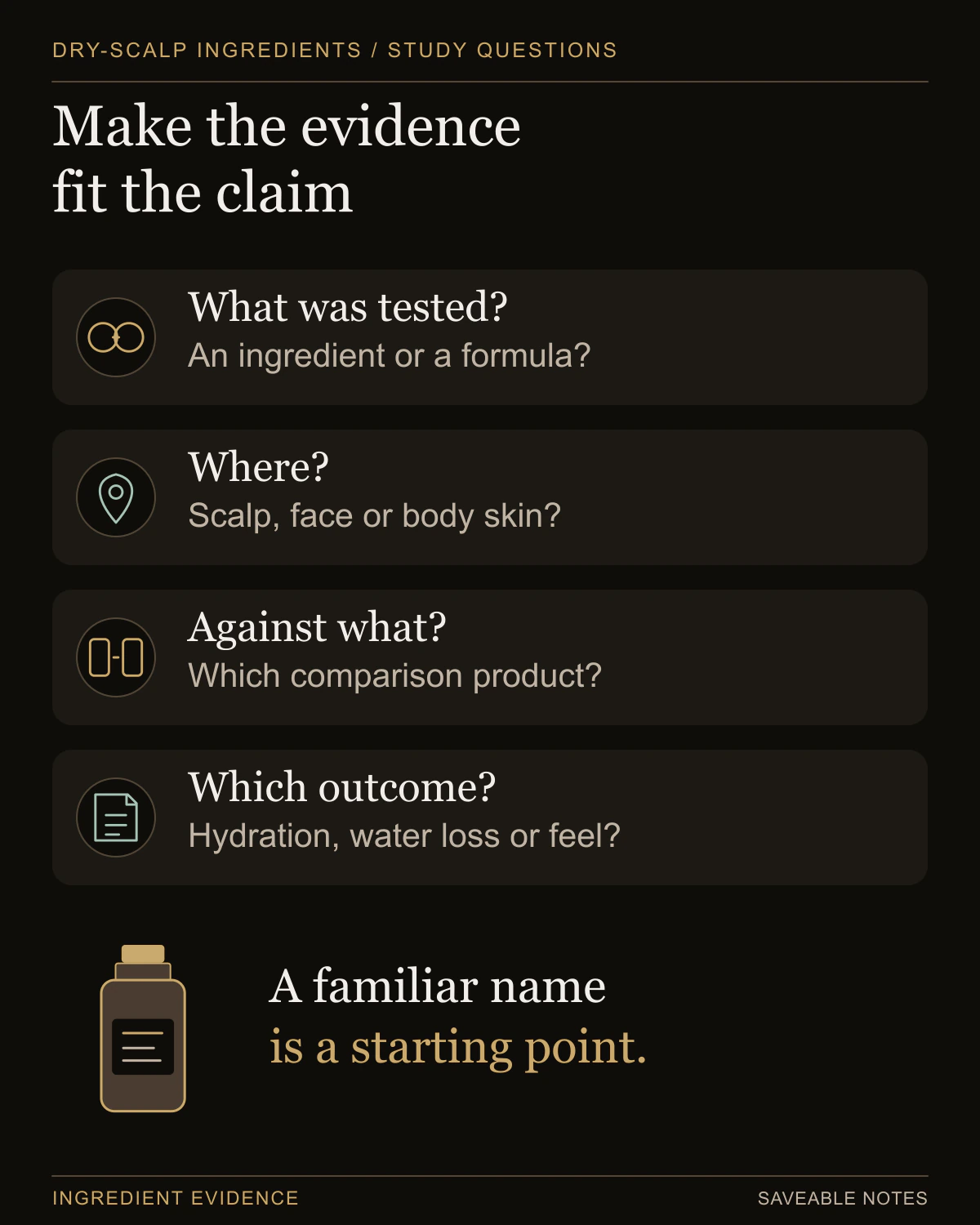
“Contains hyaluronic acid” and “this scalp formula improves hydration” are different statements. The second needs evidence for the formula and its intended use.
Ceramides: a relevant idea with specific evidence limits
Ceramides are skin-barrier lipids; pseudo-ceramides are synthetic ingredients designed to fulfil similar functions. Takagi and colleagues studied one such ingredient in a blend.
A label cannot transfer results from a different product. Ask whether a claim refers to this finished formula or to research about one of its ingredients.
For a KL or JB routine, consider practical fit: the intended application site, directions and how the product feels alongside your existing washing habits. Climate alone cannot tell you which ingredient your scalp needs. Our scalp-serum guide covers the wider selection process. For another common barrier-care ingredient, read our niacinamide evidence guide.
Frequently asked questions
Q: Which ingredient is best for a dry scalp? A: These studies do not establish a universal winner. The cause of dryness and the complete formula matter more than a single highlighted name. No reader needs all four ingredients simply because they appear in this guide.
Q: Will moisturising ingredients clear every kind of flaking? A: No. Several scalp conditions can resemble dryness and need different care. Persistent flakes, inflammation or unusual hair changes deserve assessment. AAD guidance on dry-scalp conditions.
Q: Is a cooling formula more hydrating? A: Cooling cannot establish hydration or barrier performance. Read our warm, cool and tingling guide if sensation is driving your choice.
Make comfort part of a considered ritual
Bring a label and a short outline of your current routine to TTE Elephant. A conversation about cleansing, product purpose and comfort can make your next appointment more considered. Explore our KL and JB branches. These ingredient findings do not promise treatment of scalp disease, improved sleep or a nervous-system reset.