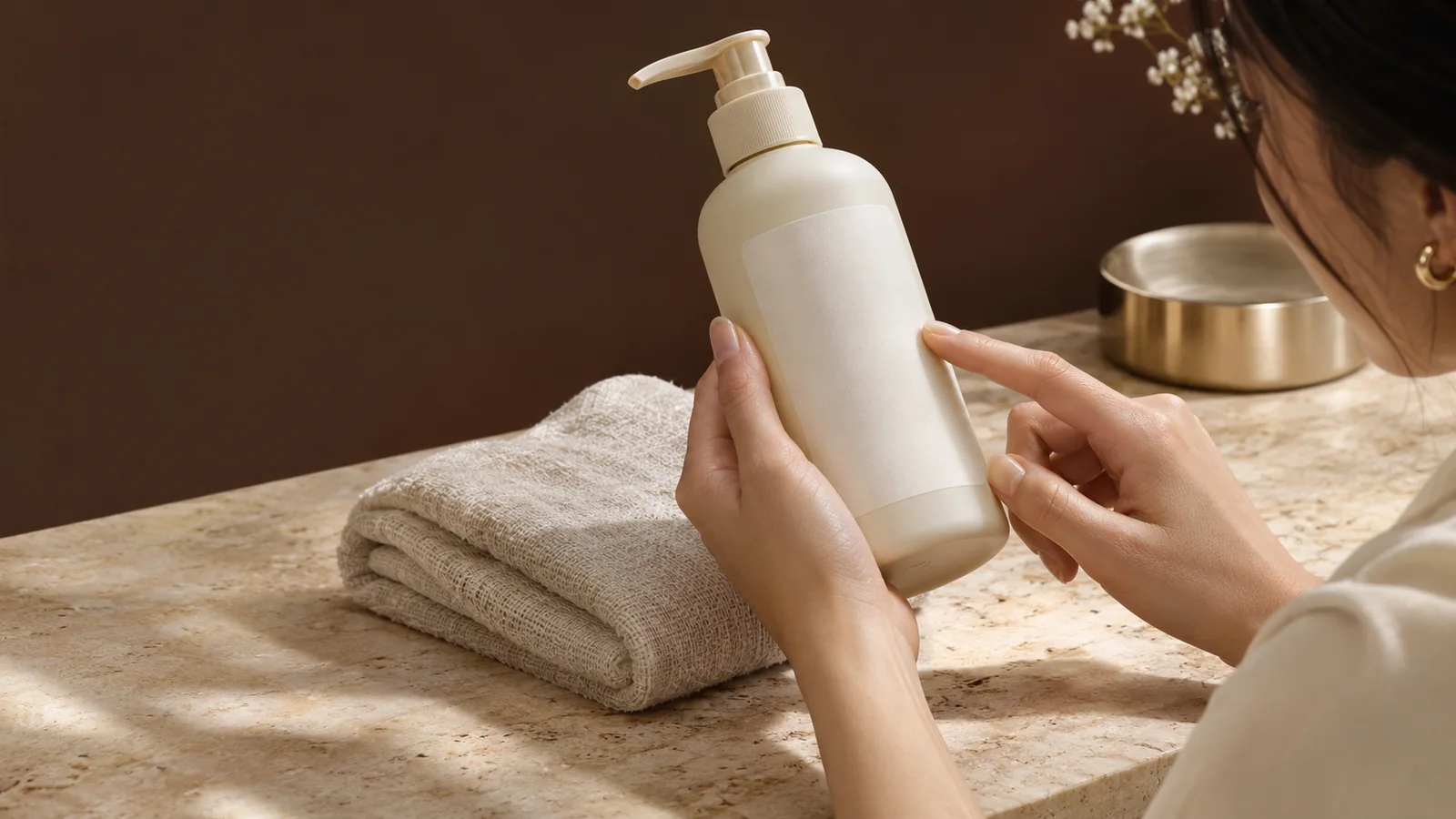
Dandruff shampoo ingredients have different roles. Some studied formulas address yeast-associated dandruff; salicylic acid helps remove scale. A useful choice starts with the actual product, its directions and your scalp symptoms. Evidence for one shampoo cannot automatically be transferred to another containing the same ingredient. Clinical scale-removal comparison, formulation-delivery study.
For readers in Kuala Lumpur or Johor Bahru, this guide is a way to read the label with more confidence. It is not a diagnosis or a prescription. For the wider context, start with our complete guide to dandruff in Malaysia.
Piroctone olamine, ketoconazole and selenium: what has been studied?
Piroctone olamine appears in cosmetic anti-dandruff formulations. A controlled human study reported improved flake scores with a piroctone-containing shampoo compared with control. It also measured microbial changes, but those findings do not prove that every such shampoo permanently restores a “perfect” microbiome. Hu et al., 2024.
Ketoconazole has controlled shampoo evidence. In a placebo-controlled comparison, both ketoconazole and selenium sulfide shampoos reduced dandruff and itch; ketoconazole was better tolerated in that particular trial. That result does not make it the automatic choice for every scalp. Danby et al., 1993.
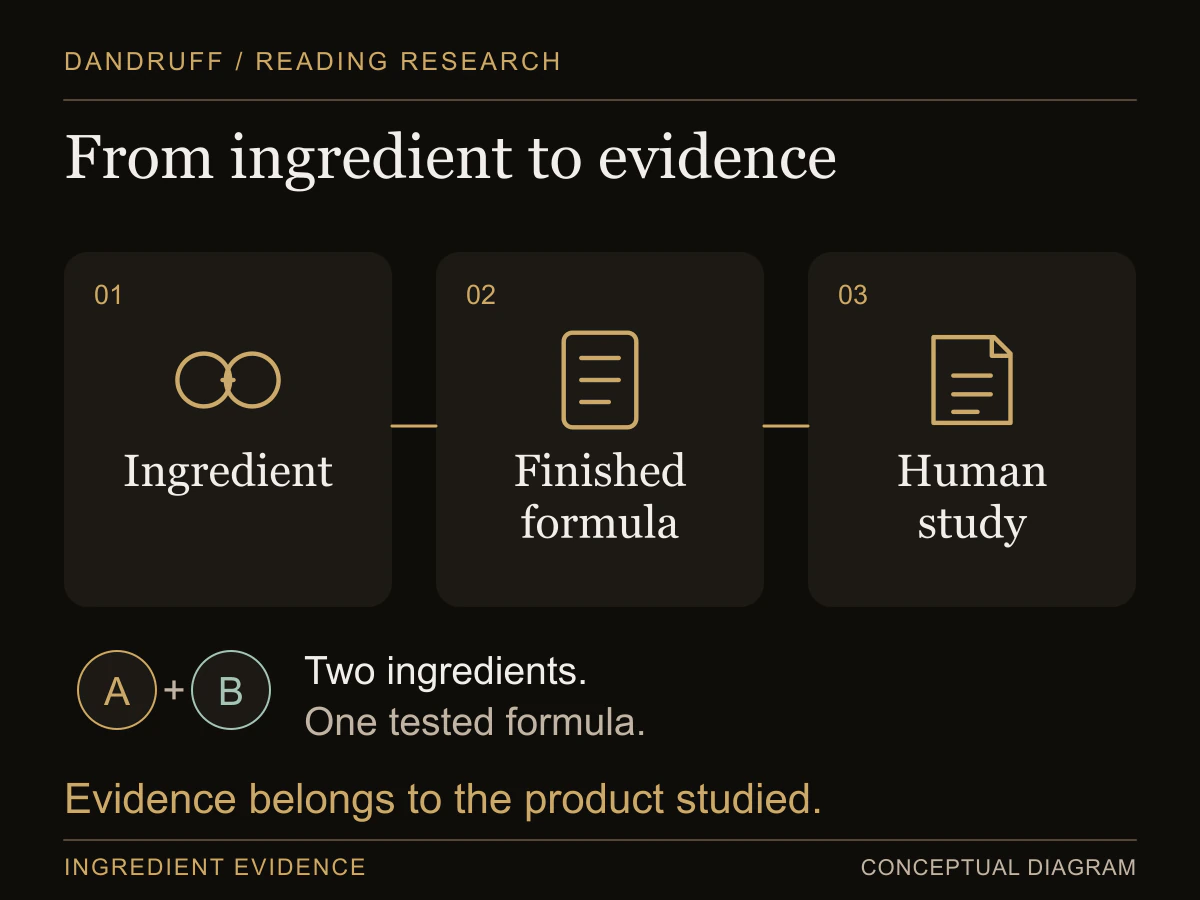
Selenium sulfide, also called selenium disulfide, has been studied in different formulas. A newer comparison with ketoconazole found improvement in both groups, but the selenium shampoo also contained salicylic acid. Its results belong to the whole formula. Barbosa et al., 2024.
These findings are more useful as questions than as a league table: Was the study about dandruff or diagnosed seborrhoeic dermatitis? Was there a comparison shampoo? Were several active ingredients used together? Does the bottle in your hand match the product that was studied?
Where do salicylic acid and tea tree oil fit?
Salicylic acid is relevant when scale removal is the question. One small comparison tested it alongside piroctone olamine; the results cannot identify which ingredient contributed most. That is a useful reason to look beyond a single highlighted ingredient. Combination-shampoo study.
Tea tree oil has limited human shampoo evidence. One short trial found improvement against vehicle shampoo, but it did not test homemade oil blends or establish equivalence to antifungal medicines. Satchell et al., 2002.
If you are unsure whether the material you see is scale or product residue, our scalp buildup versus dandruff guide explains the distinction to discuss during a consultation. For questions about dryness, see our hydration and barrier-care ingredient guide.
Read the Malaysian product label, not an overseas headline
Malaysia’s current cosmetic restrictions include zinc pyrithione under specified conditions. An overseas regulatory headline therefore cannot establish the status of a Malaysian bottle. NPRA Annex III, June 2026.
Cosmetic notification and medicinal registration are different regulatory routes. NPRA’s database includes registered ketoconazole shampoo medicines; check the specific product rather than assuming all anti-dandruff shampoos have the same status. NPRA cosmetic guidelines, registered-product example.
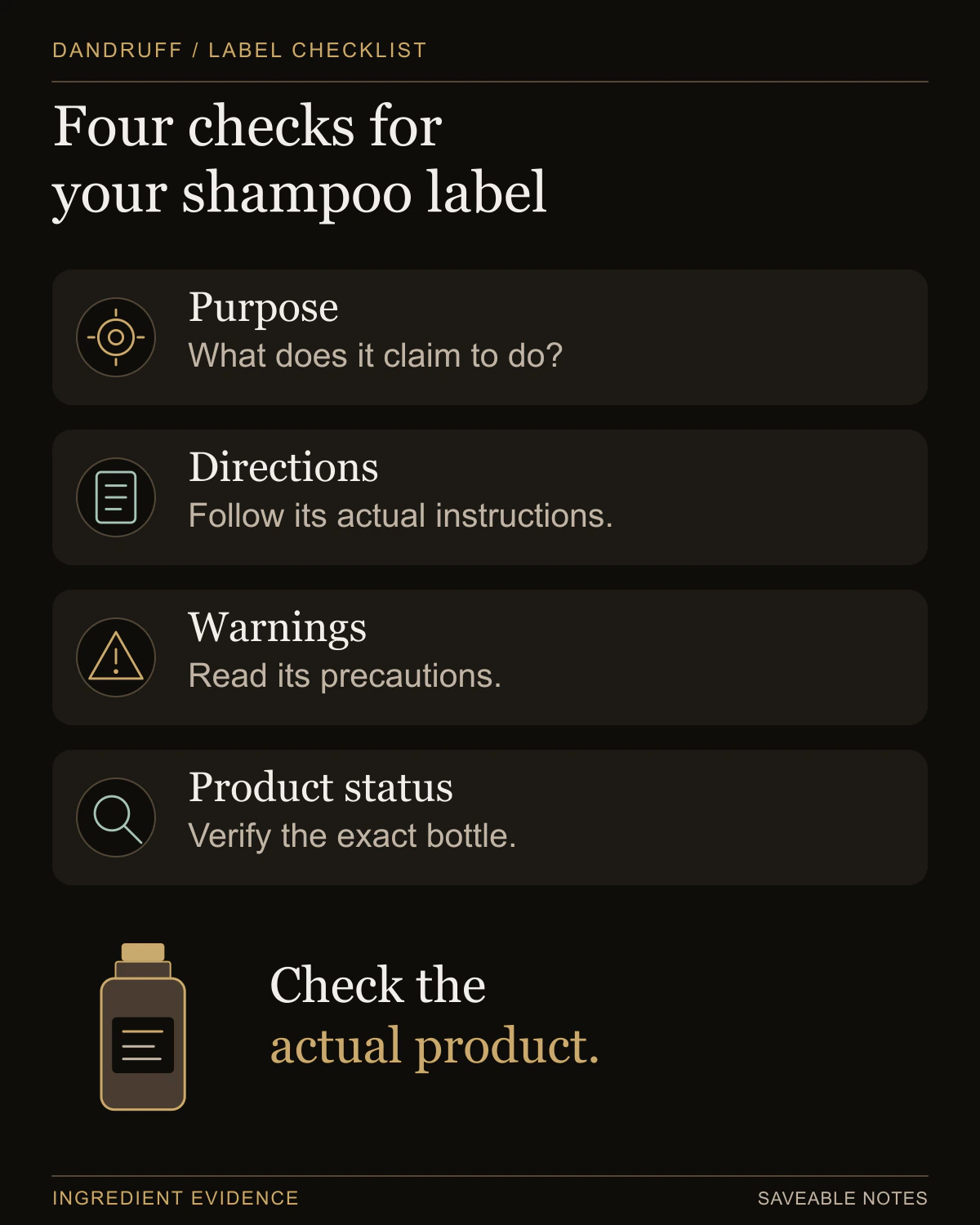
Keep three practical questions beside the label:
- What does this finished product claim to do?
- What directions and warnings apply to this product?
- What would count as improvement: fewer flakes, less itch, or both?
Follow its directions rather than copying a study’s schedule. Dermatology guidance also recognises that hair type affects how a dandruff shampoo is used. American Academy of Dermatology guidance.
Frequently asked questions
Q: Is there one best dandruff shampoo ingredient? A: The studies reviewed here do not establish one winner for every person or formula. In a direct ketoconazole–zinc pyrithione trial, outcomes favoured ketoconazole, but the study was open-label and use schedules differed. Primary comparison.
Q: Is tea tree oil automatically gentler? A: No. Botanical origin does not rule out contact allergy; clinical cases have been reported with tea-tree-containing products. Contact-allergy case series.
Q: When should I get medical advice? A: Seek assessment for severe dandruff, a very itchy scalp, redness or swelling, or symptoms that persist despite appropriate shampoo use. NHS guidance.
Bring the label to your consultation
Bring your current shampoo and a short description of your symptoms when you speak with TTE. A thoughtful consultation starts with understanding your routine and expectations. Explore our TTE locations to discuss scalp care and the ritual experience, while keeping medical treatment decisions with your clinician or pharmacist.