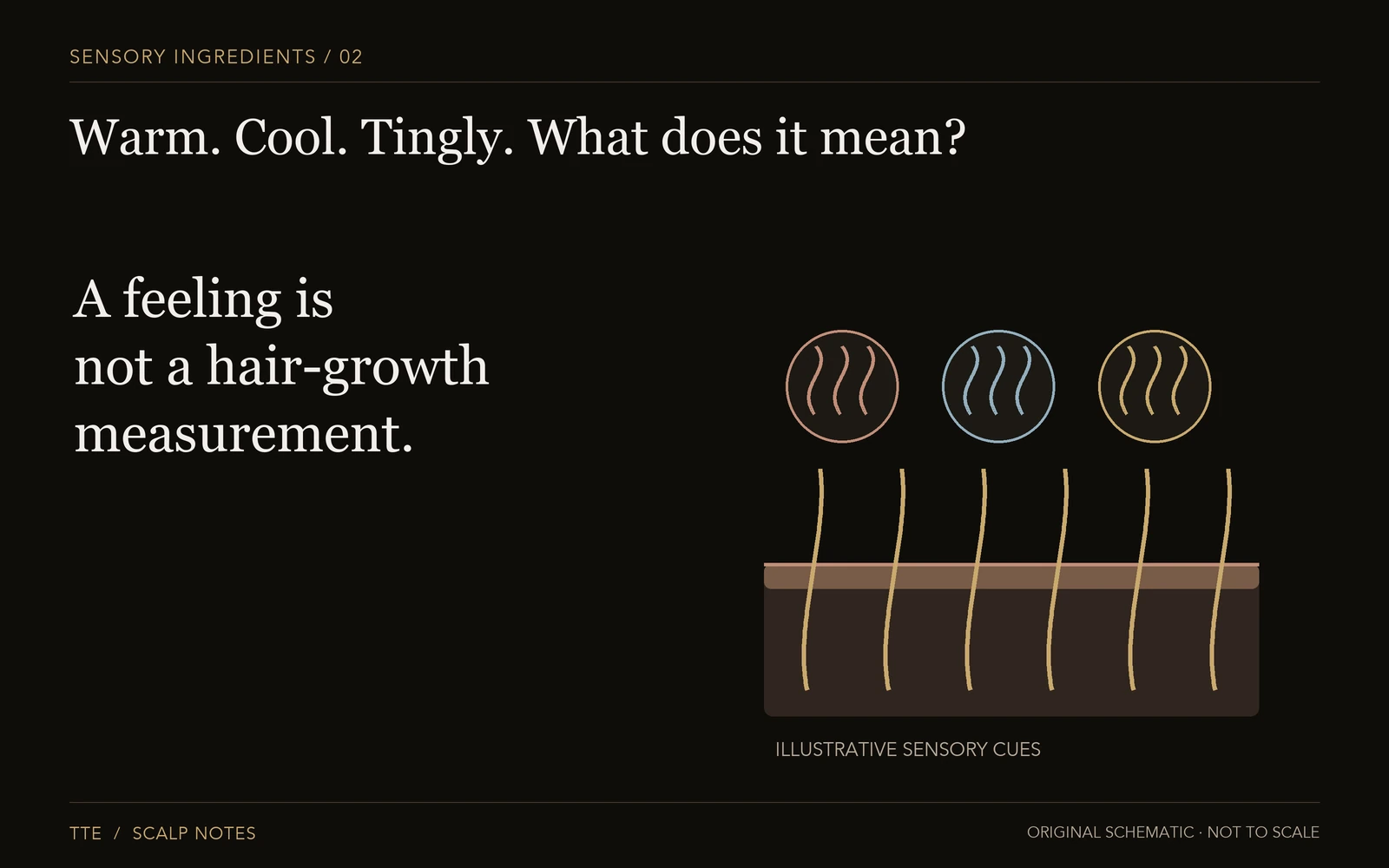
Scalp serum tingling can come from ingredients designed to change skin sensation, but it can also accompany irritation. Warmth, cooling and redness do not prove hair growth or show that a product suits you. Check the label, stop using a product that causes discomfort, and seek advice for persistent or significant symptoms.
What does the product say it should feel like?
Some labels mention a cooling or warming effect. Others describe only hydration or scalp conditioning. Read the application instructions alongside that description: the intended amount, application area and frequency matter. A salesperson's description of a strong sensation should not replace the written directions.
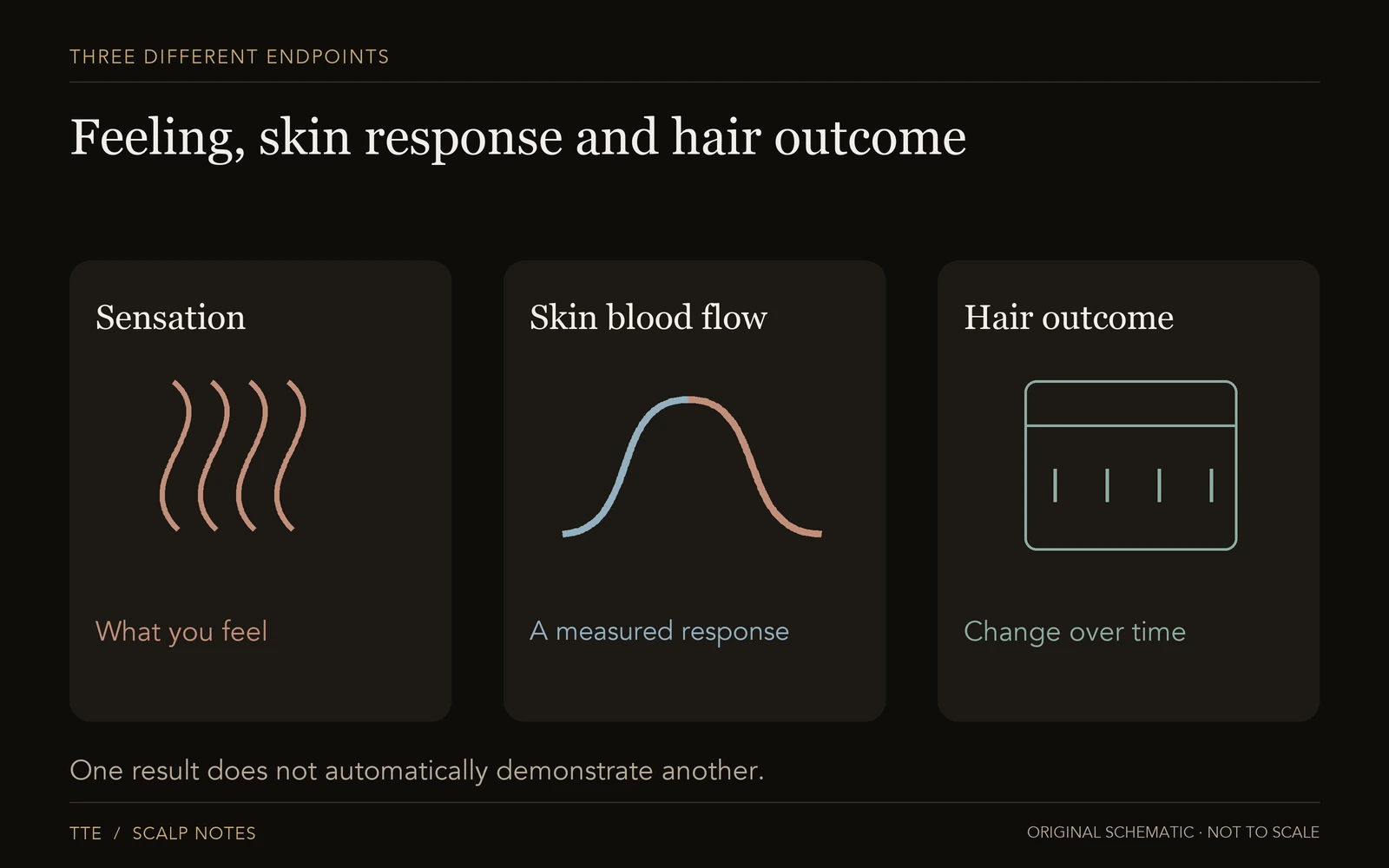
It helps to separate three questions. What can this formula make skin feel? What did research measure? What are you experiencing now? The answers can differ. A formula designed to feel warm can still be unsuitable for a particular person, and an ingredient with a measured skin effect has not necessarily been tested for hair growth.
If you are comparing bottles before purchase, our scalp serum selection guide covers purpose and application. If a product is currently causing burning or pain, responding to that symptom comes first.
What do methyl nicotinate and warming ingredients do?
Methyl nicotinate is used in research to provoke a measurable response in small blood vessels in the skin. A human study examined how that response varied with concentration and body site. It measured skin perfusion, not the number of new scalp hairs. It cannot establish that a warming scalp serum repairs follicles. Original methyl nicotinate study.
Vanillyl butyl ether is another ingredient associated with warming sensations. A study combined laboratory receptor experiments with human sensory testing on the neck. Adding menthol changed the irritation reported after vanillyl butyl ether. These results concern sensation and receptor activity; the study was not a scalp-regrowth trial. Original vanillyl butyl ether and menthol research.
The practical point is straightforward: being able to feel an ingredient tells you that you can feel it. It does not provide a personal measure of circulation, absorption or future hair density. There is no need to chase a stronger sensation when comparing products.
Does cooling make a serum suitable for sensitive skin?
A cooling description is a sensory claim. It is not an assessment of your particular scalp. Menthol studies show that perceived cooling and other sensations can be altered by the ingredient, which is different from proving that an irritated scalp has recovered. Human menthol sensory study.
Consider the whole formula and your previous reactions rather than selecting by temperature language alone. If your scalp is already sore, adding a second product to cancel the first product's heat makes the sequence harder to interpret. A more useful next step is to stop the suspected product and obtain appropriate advice.
Our sensitive-scalp guide can help you describe symptoms, while the scalp-inflammation guide explains the broader concern. Neither can identify an allergy from a sensation or photograph.
What should you do if it burns or causes a rash?
Stop the suspected product and gently rinse it away, following its safety instructions. Avoid scrubbing or applying another active serum to counteract the feeling. NHS guidance on contact dermatitis centres on avoiding the trigger and removing an irritant or allergen from the skin. Seek medical advice if symptoms are persistent, recurrent or severe. NHS contact dermatitis guidance.
An itchy scalp rash can follow exposure to a hair-care product. The American Academy of Dermatology advises identifying and avoiding the responsible ingredient, with dermatological assessment when needed. A label saying that tingling is expected does not establish why your skin is reacting. AAD on scalp itch and product reactions.
Do not deliberately reapply a product that caused a significant reaction to test your tolerance. Persistent burning, swelling, blistering or pain warrants prompt medical advice. Breathing difficulty or swelling of the mouth, tongue or throat requires emergency help. NHS guidance on severe allergic reactions.
Which details are useful to record?
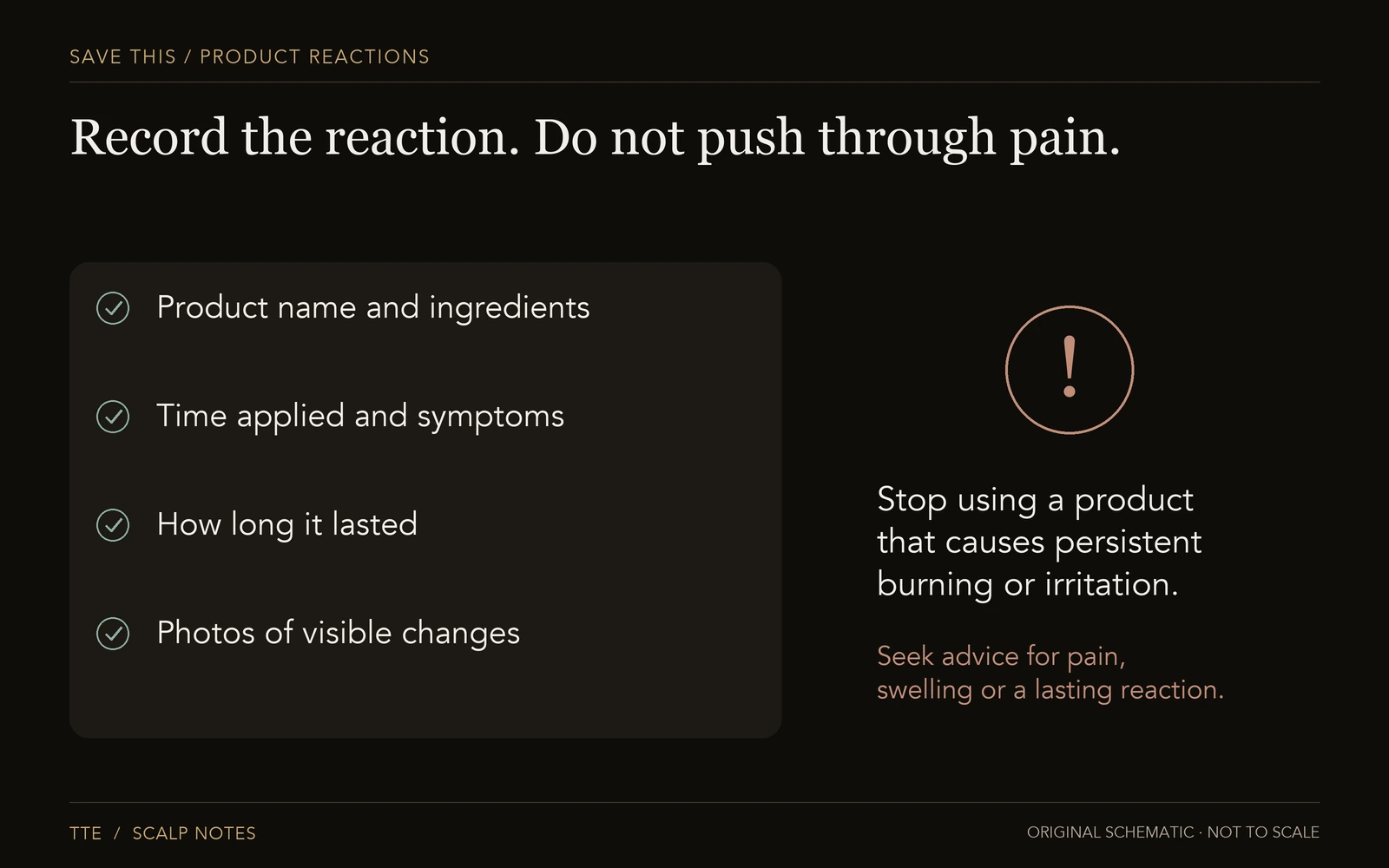
Keep the bottle and full ingredient list. Note when you applied it, how much you used relative to the label, whether the scalp was wet or dry, and how soon symptoms appeared. Record other products used that day, including shampoo, dye and styling products. These details can help a clinician understand the exposure.
Describe the symptom in ordinary language: stinging at the hairline, tenderness at the crown, an itchy patch behind an ear. If there is a visible change, a clear photograph can document it. Avoid using the intensity of redness or the delay before a rash as a home test for distinguishing irritation from allergy; contact reactions can have different timings. NHS contact dermatitis symptoms.
What changes after colouring or when using a spray?
Recent colouring belongs in your product history. If the scalp is sore after a colouring appointment, do not assume a new serum will make it ready for another treatment. Our guide to headspa after hair colouring explains which details to discuss before arranging care.
For sprays, aim only where the label directs and protect the face and eyes. A mist drifting onto the forehead is an exposure to a different area, not evidence of better scalp coverage. Follow the manufacturer's instructions if accidental eye contact occurs; obtain advice if discomfort persists.
Before a future TTE appointment, tell the team about the reaction and the products involved. Active symptoms need appropriate assessment before a ritual is planned. Once suitable, preferences about fragrance, pressure and sensory effects can guide a comfortable visit.
Frequently asked questions
Q: Does tingling mean the serum is working? A: It means you are noticing a sensation. Whether the product improves its stated outcome requires separate evidence. A stronger tingle is not a reason to use more.
Q: Is redness always expected with a warming product? A: No. Read the label, but do not use its warming claim to dismiss persistent or uncomfortable redness. Stop the product and seek advice when symptoms are significant or do not settle.
Q: Should a sensitive scalp use a cooling serum? A: Cooling alone is not a selection rule. Your symptoms, previous reactions and the complete formula matter more. A clinician can help assess ongoing discomfort.