Prebiotic scalp care is a product category to examine, not a guarantee of a healthier microbiome. Prebiotics are materials used by microorganisms; probiotics contain live microorganisms; postbiotics involve non-living microbial preparations. For each term, a credible benefit claim needs relevant evidence. The exact formula, application route and measured outcome matter more than the prefix.
What normally lives on the scalp?
The scalp supports communities of bacteria and fungi. Their presence is not automatically a sign of poor hygiene. Research comparing healthy and dandruff-affected scalps has identified differences involving organisms such as Malassezia, Cutibacterium and Staphylococcus, with patterns that depend on how samples are collected and compared. Primary study of healthy and dandruff scalp communities.
A study of Chinese volunteers also reported dandruff-associated differences in major bacterial and fungal populations. That is useful biological context, but observing a difference does not show that a particular serum can correct it or improve symptoms. The product would need to be tested. Original Chinese scalp-microbiome study.
Avoid turning these findings into a shopping list of organisms to add or remove. A bottle cannot be judged by whether its description mentions a familiar bacterial name. Nor should “balance” be accepted without an explanation of what changed and whether that change helped people.
How do prebiotics, probiotics and postbiotics differ?
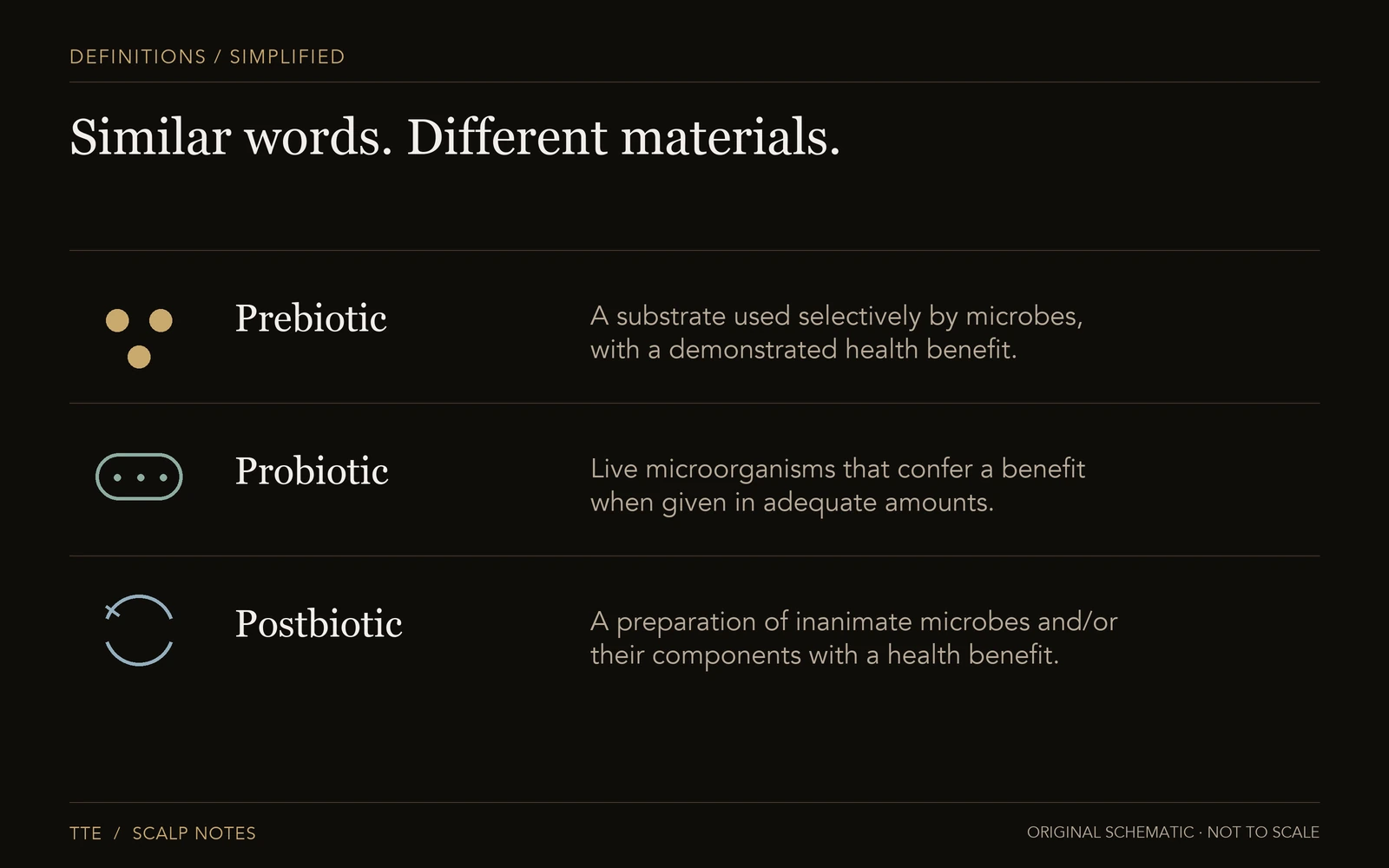
These recognised research definitions provide a useful starting point. They are more specific than a general claim that a product is microbiome-friendly.
| Term | Meaning in plain language | A useful question |
|---|---|---|
| Prebiotic | A material selectively used by the host's microorganisms, with a health benefit | Which microbes use it, and what benefit was demonstrated? |
| Probiotic | Live microorganisms delivered in an adequate amount to provide a health benefit | What organism is present, and does it remain alive through the stated shelf life? |
| Postbiotic | A preparation containing inactivated microorganisms or their components, with a health benefit | What preparation was tested, and how was its benefit assessed? |
The definitions come from the ISAPP consensus statements on prebiotics, probiotics and postbiotics. All include a benefit requirement. A plausible mechanism is a starting point for research, rather than the whole definition.
What does a ferment or extract label tell you?
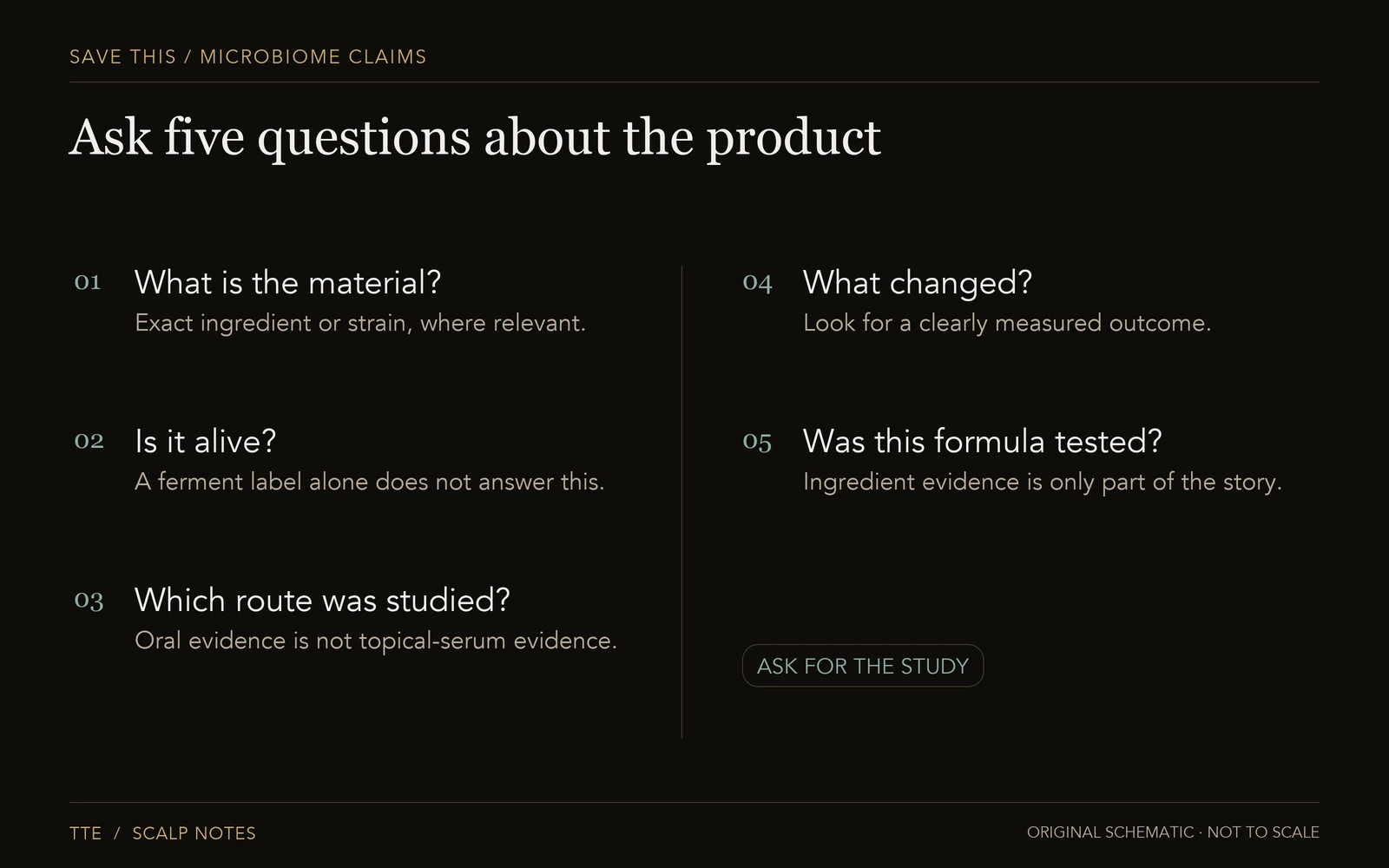
It tells you to ask for more detail. “Ferment,” “filtrate” and “extract” do not, by themselves, establish that the finished bottle contains live microbes. A ferment-related ingredient should not automatically be described as a probiotic.
For postbiotics, the ISAPP statement specifies microbial cells or components in the preparation; a purified microbial metabolite alone does not meet that definition. A manufacturer should be able to explain the identity and processing of the material it is discussing. ISAPP postbiotic criteria.
This distinction is useful when comparing two similar labels. One may describe how an ingredient was produced, while the other makes a claim about what the final product does. Those are separate pieces of information. Neither needs to be dismissed, but each needs to answer the right question.
Was the ingredient studied, or the product you are buying?
Imagine a supplier shows that a particular ingredient changes microbial growth in a laboratory dish. The serum on the shelf contains that ingredient plus solvents, preservatives, fragrance and other materials. The laboratory result does not reveal the combined formula's behaviour on a person's scalp.
Next, check the route. Research on a swallowed supplement concerns a different exposure from a rinse-off shampoo or leave-on serum. A scalp-product claim should be supported by work relevant to that application. The amount used, contact time and accompanying routine are also useful details to request.
Then check the participants. Were they healthy volunteers, people with dandruff or people with a particular diagnosed condition? Evidence from one group may raise a question for another group without answering it. Ask whether the paper names the formula or merely an ingredient it contains.
What counts as a useful result?
A microbial measurement and a symptom improvement are not interchangeable. A study might find a shift in relative abundance without demonstrating less itch or flaking. A comfort questionnaire might show that users liked the serum without showing which microbes changed.
When a chart says a population increased, ask whether it reports a proportion or an absolute amount. A larger slice of a pie chart can result from another slice becoming smaller. The label should not turn that observation into an unsupported claim that a scalp has been restored.
For a purchasing decision, look for outcomes that match your purpose: flake scores, discomfort, tolerability or another clearly described measure. Ask what the comparison group used and how long observation lasted. These questions are useful even if you never read the statistical methods yourself.
How does it fit into ordinary scalp care?
Decide which step the product is meant to add before changing your whole routine. Keep the manufacturer's directions available and record what you actually notice. Adding several products together makes it harder to identify the one that helped or caused discomfort.
If flakes keep returning, use our recurring dandruff guide and dandruff concern page to prepare for an assessment. A microbiome claim is not a reason to abandon clinician-directed care. If the flakes appeared after heavier styling, buildup versus dandruff covers a different set of questions.
At TTE, bring the label and describe the routine you want to keep manageable. A discussion of cleansing and comfort can be useful without assigning your scalp a microbial diagnosis. Our serum selection guide helps keep the product's purpose clear.
Frequently asked questions
Q: Are prebiotics live bacteria? A: No. They are materials used by microorganisms. A product adding live organisms belongs to a different category, and the probiotic term also requires evidence of benefit.
Q: Does a microbiome claim mean the product treats dandruff? A: No. Ask whether that exact formulation was tested for dandruff and which outcomes improved. A changed microbial measurement alone does not establish symptom relief.
Q: Can a scalp scan identify my microbes? A: A magnified salon image can document visible features such as flakes and hair shafts. It does not identify your bacterial or fungal community. Microbiome studies use collected samples and laboratory methods, not a visual score from an ordinary scalp photograph.