If you are experiencing persistent scalp pruritus (itching) but cannot find any visible flakes, dead skin, or redness, you do not have dandruff. Treating an invisible fungal infection with aggressive zinc pyrithione or ketoconazole shampoos will not resolve the itch — it will actively worsen the condition by stripping your epidermal barrier. The true cause of an itch without visible flaking is often invisible to the naked eye: neurogenic inflammation.
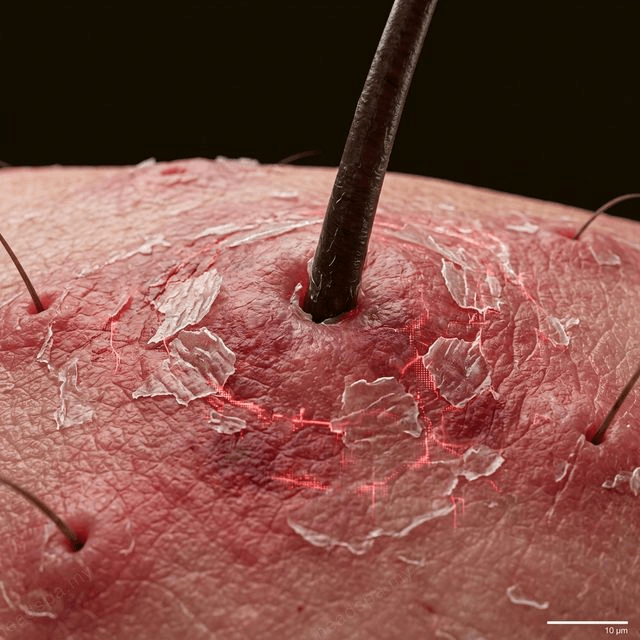
The Invisible Itch: Sensitive Scalp Syndrome !3D cross-section of inflamed scalp barrier — neurogenic inflammation and mast cell activation
The scalp possesses one of the highest densities of nerve endings in the human body. Sensitive Scalp Syndrome is a clinically recognised condition affecting approximately 40% of the population, characterised by itching, prickling, or burning sensations without objective clinical signs like erythema (redness) or scaling.
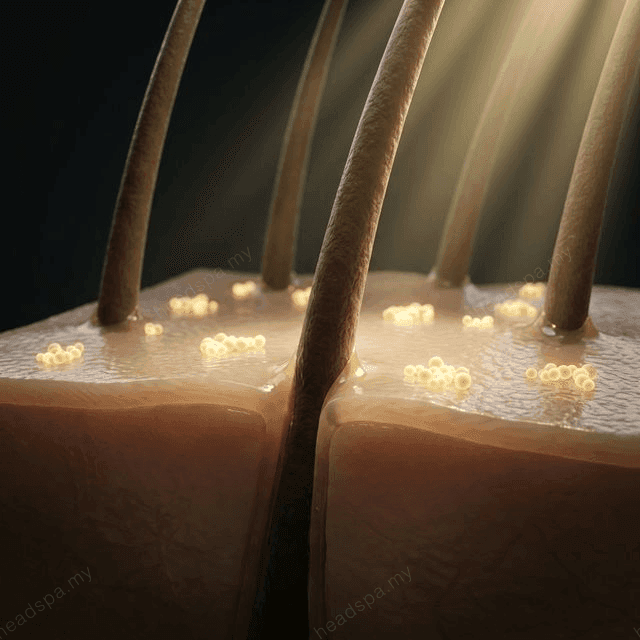
Unlike traditional seborrheic dermatitis (dandruff), which is driven by the Malassezia yeast breaking down sebum, neurogenic itch originates from the peripheral nervous system. When the scalp's epidermal barrier is compromised — whether by harsh chemical treatments, severe urban pollution, or alkaline tap water — the superficial nerve endings become hyper-reactive to otherwise normal stimuli.
Substance P and The Stress Connection
Neurogenic inflammation is heavily modulated by psychological stress. When you experience sustained anxiety or commuter fatigue, your peripheral nerve endings release a neuropeptide called Substance P.
Substance P binds directly to receptors on mast cells in the scalp dermis, causing them to degranulate and release histamine and pro-inflammatory cytokines. This creates an intense itching sensation entirely independently of any fungal or bacterial presence. Because this cascade is driven by stress rather than microbes, scalp concerns related to neurogenic itch frequently spike during demanding professional periods and cannot be washed away with standard over-the-counter remedies.
The Environmental Load
In dense urban environments, the barrier compromise that exposes these nerve endings is accelerated. Fine particulate matter (PM2.5) from traffic exhaust can penetrate the stratum corneum, creating microscopic oxidative stress that lowers the activation threshold for peripheral nerves. For residents seeking a head spa in Kuala Lumpur, addressing the daily accumulation of this invisible urban particulate load is the first necessary step toward calming a hyper-reactive scalp.
TTE's Clinical Approach
Addressing neurogenic itch requires a dual intervention: barrier repair at the surface layer and autonomic nervous system regulation at the systemic level.
First, standard sulfate-based cleansers must be abandoned in favour of ceramide-rich, pH-calibrated formulations that physically rebuild the stratum corneum, shielding the exposed nerve endings from environmental triggers.
Second, the Substance P cascade must be interrupted. This is why our our services do not just focus on the hair follicle. The Sleep Healing Headspa protocol utilises targeted occipital pressure and 432Hz acoustic entrainment to achieve measurable vagal nerve stimulation. By shifting the autonomic nervous system into parasympathetic dominance, we directly lower systemic cortisol and reduce the downstream release of inflammatory neuropeptides at the scalp level.
An itch without flakes is your nervous system signalling an overload. Treating the nerve requires addressing both the broken barrier and the systemic stress driving the response.