By the time you take the train home from Mid Valley, your fringe lies flat against your forehead. The last few centimetres of your hair still feel rough. If you have oily roots and dry ends, choose the shampoo for your scalp and decide where to put conditioner by the texture of your lengths. A richer all-over wash or a stronger cleanser from root to tip can leave one of those needs unmet.
Why can one head of hair feel both oily and dry?
Oil comes from glands in the skin around the follicles. Run your fingers along a parting, then along a section near its ends. At the parting you are touching skin and the newest hair. The ends are older fibres that have been through more washes, brushing and possibly colour or heat styling. A shiny parting tells you very little about how easily those fibres will tangle.
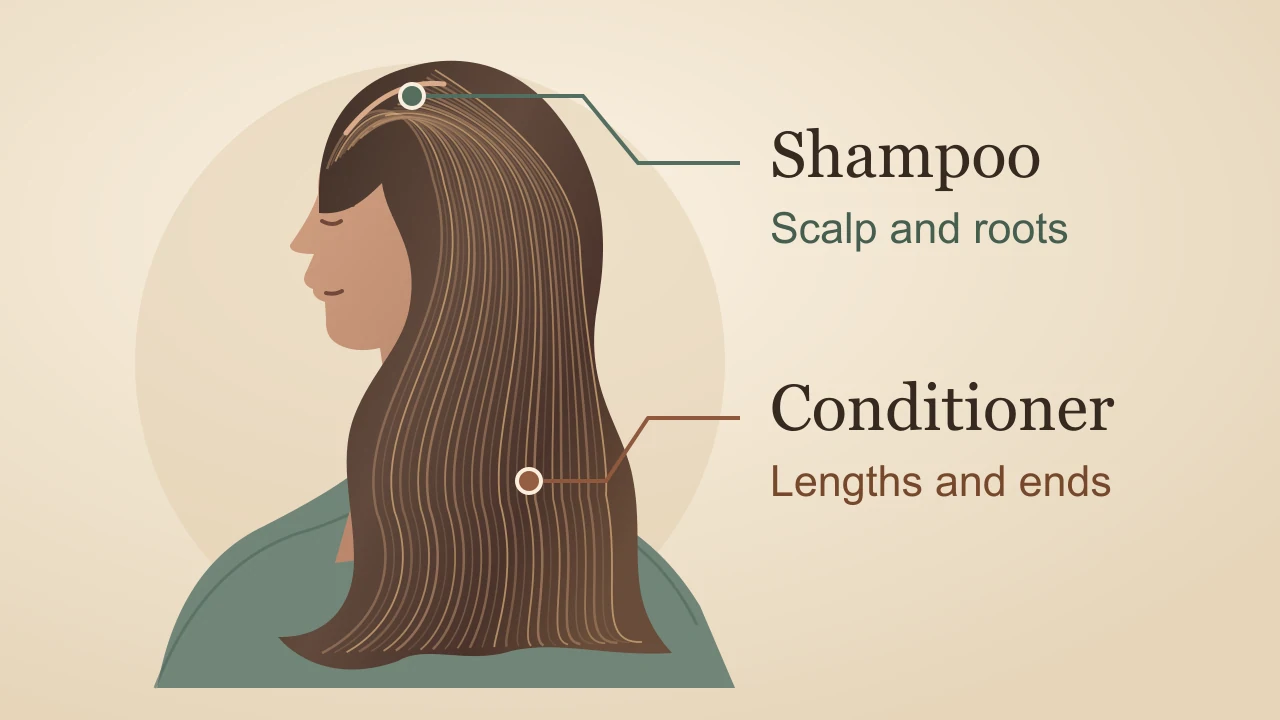
At your next wash
- Start at the parting. Work your usual shampoo gently over the scalp with your fingertips. Rinse it through the lengths. There is no need to gather the ends into a pile and scrub them together.
- Condition where the comb catches. For fine, straight hair that goes limp easily, start at the ends. For dry or curly hair, spread conditioner along the lengths. Rinse according to the product instructions.
- Blot and detangle gently. Squeeze water out with a towel. Start detangling at the tips and work upwards with a wide-tooth comb. If you blow-dry, choose a low or medium heat setting.

These steps follow the American Academy of Dermatology’s guidance on washing and conditioning for different hair types. Let how oily or dirty the scalp feels guide your next wash. The day after a humid JB commute may feel different from a day spent indoors.
What to change first
If you are considering a new shampoo, first try changing where you apply the products you already own. At the next wash, notice two things separately. How comfortable does your scalp feel when dry? Can you comb through the ends without pulling? If the roots feel comfortable but the ends still knot, you have a reason to adjust the conditioning step before spending money on a scalp treatment.
Persistent itch, recurrent flakes or sore patches deserve a different conversation. For visible flakes, see our guide to scalp buildup and dandruff. Seek medical advice for a painful scalp or symptoms that persist.
What to ask at a head spa
“My roots feel greasy the following evening, but the ends tangle immediately after washing. Where will you put the cleanser and conditioner?” This gives a therapist two specific things to address. At TTE you can also ask for lighter massage pressure and tell the team how you like your hair dried. For the sequence of a visit in KL or JB, see the first head spa guide.
Frequently asked questions
Q: Should I skip conditioner if my scalp is oily? A: Rough or tangled lengths can still benefit from conditioner. If you have fine hair, try applying it only to the ends and see whether the roots keep their lift.
Q: Which shampoo should I use after a head spa if my ends are dry? A: Start with a shampoo your scalp already tolerates and concentrate it at the roots. If you have a prescribed scalp product or a colourist’s aftercare instructions, keep those directions in your routine.