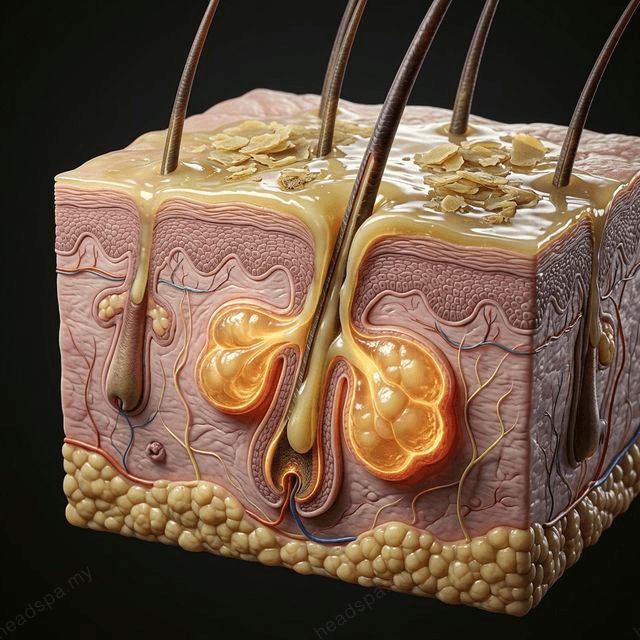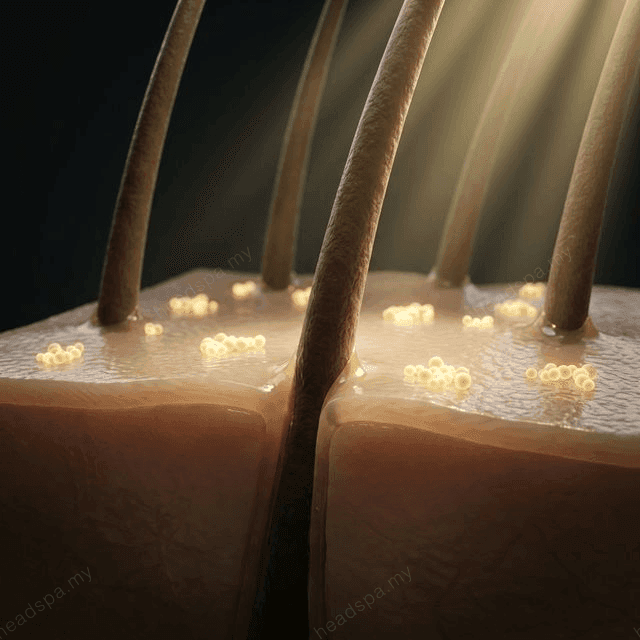
The sudden intake of high-glycemic Raya sweets and rich animal fats acutely spikes insulin and IGF-1, triggering androgen receptors that command sebaceous glands to overproduce heavy sebum within hours. Understanding the endocrinological link between traditional festive diets and scalp biology is essential for maintaining volume and avoiding scalp acne during the holidays.
The Post-Raya Grease Phenomenon !3D cross-section of sebaceous gland overproduction — androgen spike from high-glycaemic diet
A frequent complaint during the first week of Syawal is the inability to maintain hair volume. You wash your hair meticulously at 7:00 AM, yet by 2:00 PM, after visiting just two open houses, your roots are heavy, flat, and noticeably greasy. The immediate assumption is that the ambient Malaysian heat caused you to sweat. However, sweat is primarily aqueous (water-based) and evaporates; heaviness at the root is caused by lipids (sebum).
This rapid onset of oily roots is not an external problem caused by the weather; it is an internal metabolic response to your diet. The traditional festive spread — particularly the combination of high-glycemic carbohydrates (Kuih Raya, Sirap, Lontong) and saturated animal fats (Rendang) — acts as an acute hormonal trigger for your sebaceous glands.
The Insulin and IGF-1 Cascade
To understand why a sugar-dense meal translates directly into an oily scalp, we must look at the biochemical pathway of insulin. When you consume high-glycemic foods on an empty stomach (a common occurrence when breaking fast or eating early on Raya morning), your blood glucose spikes violently.
To manage this blood sugar spike, the pancreas secretes a massive surge of insulin. High systemic insulin levels subsequently trigger the liver to release another powerful hormone: Insulin-like Growth Factor 1 (IGF-1).
In the field of dermatology and Scalp Biology, IGF-1 is well-documented as a primary lipogenic (fat-producing) signal. IGF-1 travels through your bloodstream to the dermis of your scalp, where it binds directly to receptors on the sebocytes (the cells that make up your sebaceous glands).
When IGF-1 activates these sebocytes, it forces them to undergo rapid proliferation and lipid synthesis. Furthermore, insulin and IGF-1 increase the bioavailability of androgens (male hormones) in the skin by stimulating the enzyme 5-alpha-reductase. This enzyme converts standard testosterone into Dihydrotestosterone (DHT), which acts as the ultimate amplifier for the sebaceous gland, compelling it to pump a heavy, viscous flow of sebum straight up the hair follicle.
The Difference Between Healthy and 'Raya' Sebum
Under normal, low-glycemic dietary conditions, the scalp produces a balanced flow of sebum primarily composed of triglycerides, wax esters, and a small amount of squalene. This healthy sebum coats the hair shaft, providing shine and protecting the epidermal barrier.
However, the rapid overflow of sebum triggered by the insulin-IGF-1 cascade changes the actual chemical composition of the oil. The sebum becomes highly concentrated with saturated fatty acids and squalene. Because of the ambient 34°C heat of a Malaysian afternoon, this heavy sebum is constantly kept in a liquefied state as it pools on the scalp surface.
When dense squalene hits the oxygen in the air, it rapidly oxidizes into squalene peroxide. This oxidized lipid is highly comedogenic. It mixes with dead stratum corneum cells inside the follicular funnel, creating a solid plug. This is why high-sugar diets frequently result in painful, inflamed scalp acne (folliculitis) localized around the crown and nape of the neck just days after the festivities begin.
The Limits of Clarifying Shampoos
When faced with mid-day greasy roots, the instinct is to wash the hair with a strong, clarifying sulfate shampoo as soon as you get home. However, treating a hormonally-driven lipid overflow with harsh external detergents initiates a vicious cycle.
Anionic surfactants (like Sodium Laureth Sulfate) completely strip the scalp of all lipids, totally destroying the acid mantle. Because your internal IGF-1 and androgen signals are still commanding the sebaceous glands into overdrive, the sudden absence of surface oil triggers a "rebound seborrhea" response. The glands panic at the stripped barrier and immediately pump out an even larger volume of sebum. You are effectively training your scalp to become oilier.
Clinical Sebum Regulation
You cannot stop the biological insulin response if you choose to consume high-glycemic festive foods. However, you can clinically intercept the sebum before it oxidizes and creates follicular blockages.
For clients suffering from acute, diet-induced scalp concerns involving greasiness and acne, TTE Elephant employs enzymatic dissolution protocols rather than abrasive detergents.
Instead of aggressively stripping the surface, our scalp purification treatments utilize highly calibrated, low-pH amino acid cleansers. These formulations maintain the acidic integrity of the scalp (pH 4.5–5.5) while specifically dissolving the oxidized squalene peroxides inside the pore funnel without triggering rebound seborrhea.
Furthermore, targeted pressure applied during our meridian massage protocols helps regulate localized blood flow, aiding the lymphatic system in clearing localized inflammatory cytokines caused by the dietary sugar spikes. By treating the scalp as a metabolic organ rather than a piece of fabric to be scrubbed, we ensure that your roots maintain their volume and your skin barrier remains defensible against the festive dietary load.
Frequently Asked Questions
Q: Can eating too much sugar make my hair greasy? A: Yes. High-glycemic foods like sweets and syrups cause a rapid spike in insulin and IGF-1. These hormones bind directly to your sebaceous glands, triggering them to aggressively synthesize and pump large volumes of heavy sebum onto your scalp within hours of consumption.
Q: Why do I get painful pimples on my scalp after eating rich foods? A: The heavy, squalene-rich sebum produced after eating sugary and fatty foods quickly oxidizes when exposed to oxygen. This oxidized squalene mixes with dead skin cells to form hard plugs inside the hair follicles, leading to bacterial inflammation and painful scalp acne (folliculitis).
Q: Will washing my hair more often stop it from getting oily? A: No. Washing frequently with standard sulfate shampoos aggressively strips the lipid barrier. Because the oil production is being driven internally by your diet and hormones, stripping the surface just triggers a panic response in your glands, forcing them to produce even more oil to compensate (rebound seborrhea).
Q: How do clinical head spas treat diet-induced oily scalp in Malaysia? A: Instead of harsh scrubbing, a professional head spa uses enzymatic exfoliants and pH-calibrated amino acid cleansers. This dissolves the hard, oxidized sebum deep within the follicular funnel without stripping the protective acid mantle, effectively clearing the scalp while preventing rebound oiliness.