A scalp treatment applies a medicated or cosmetic product to the skin surface. A head spa is a multi-phase clinical protocol combining diagnostics, follicular exfoliation, barrier restoration, and autonomic nervous system regulation. Understanding this distinction prevents you from paying for a product application when you need a systemic intervention.
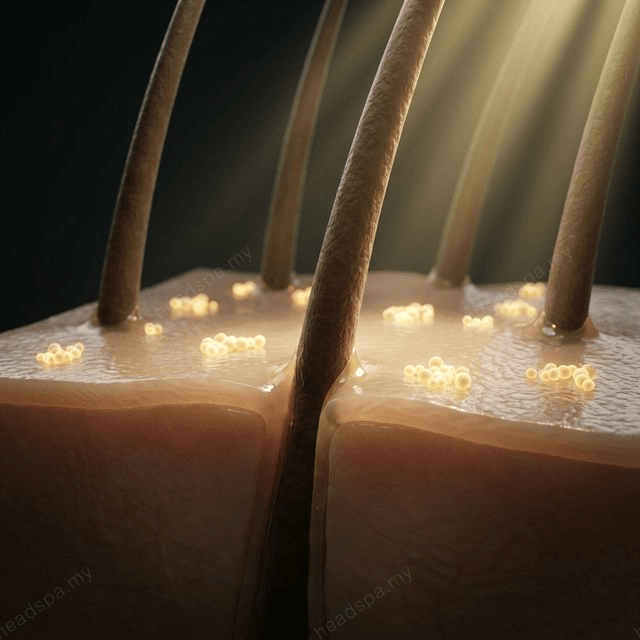
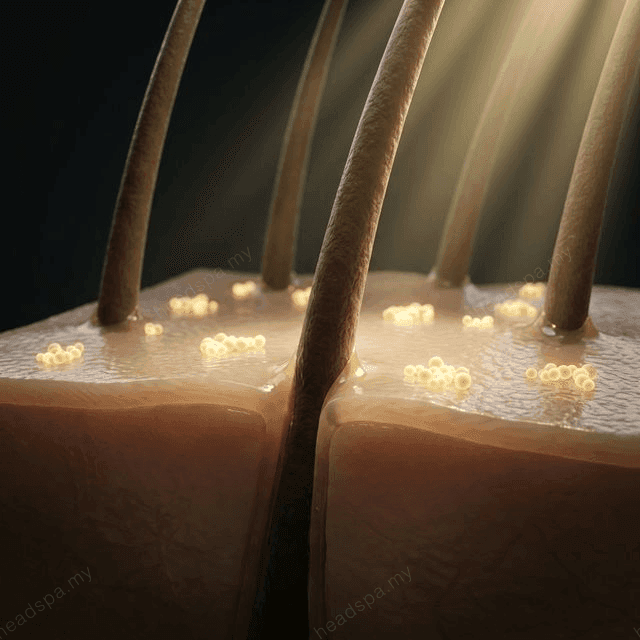
What a Scalp Treatment Is !Healthy scalp microbiome cross-section — clinical scalp treatment outcome versus cosmetic product
A "scalp treatment" in the Malaysian salon and dermatology context typically refers to a single-modality, product-driven intervention. This can range from a dermatologist-prescribed medicated lotion (ketoconazole, clobetasol) to a salon's branded "scalp detox" serum applied during a shampoo service.
The defining characteristic of a scalp treatment is its single-vector approach: one product, applied to the surface, targeting one symptom. An anti-dandruff scalp treatment suppresses *Malassezia*. An anti-inflammation scalp treatment reduces redness. A hydrating scalp treatment deposits moisture. Each addresses its target — but only its target.
What a Clinical Head Spa Is
A clinical head spa is a multi-phase protocol that treats the scalp as an interconnected biological system, not an isolated symptom site. A single session typically includes:
- Diagnostic Phase: 200× trichoscopy maps the follicular landscape across multiple scalp zones, identifying the specific pathology present — biofilm density, sebum plug severity, vascular inflammation patterns, or hair shaft miniaturisation.
- Exfoliation Phase: Enzymatic formulations dissolve oxidized sebum and microbial biofilm inside the follicular funnel. This is not the same as applying a surface serum.
- Restoration Phase: pH-calibrated amino acid cleansers restore the acid mantle (pH 4.5–5.5), preventing rebound seborrhea and fungal regrowth.
- Neural Phase: Targeted occipital pressure stimulates the vagus nerve, reducing systemic cortisol. This addresses stress-driven conditions that no topical product can reach.
The head spa model recognises that scalp concerns rarely have a single cause. Dandruff often coexists with neurogenic itch, which coexists with barrier compromise, which coexists with cortisol-driven follicular arrest. Treating one layer while ignoring the others is why standard scalp treatments produce temporary results.
When to Choose Which
If you have been prescribed a specific medicated scalp treatment by a dermatologist for a diagnosed condition (psoriasis, severe seborrhoeic dermatitis, alopecia areata), follow that medical protocol.
If your concerns are multi-layered — persistent oiliness, recurring dandruff, stress-related thinning, scalp sensitivity — a clinical head spa at a head spa in Kuala Lumpur addresses the ecosystem rather than a single symptom.
The distinction matters because it determines whether you resolve the condition or merely manage it indefinitely. Understanding Scalp Biology is the foundation for making this choice correctly.
Frequently Asked Questions
Q: Is a head spa just a fancy scalp treatment? A: No. A scalp treatment applies one product to address one symptom. A clinical head spa is a multi-phase diagnostic and treatment protocol that addresses the follicular environment, the scalp barrier, and the autonomic nervous system simultaneously.
Q: Can I get a scalp treatment at a head spa? A: A clinical head spa includes scalp treatment as one phase within a larger protocol. The treatment product is selected based on trichoscopic diagnostics rather than a fixed menu, ensuring the correct formulation for your specific condition.
Q: Which is better for dandruff — a scalp treatment or a head spa? A: A medicated scalp treatment (ketoconazole) suppresses the *Malassezia* yeast temporarily. A head spa dissolves the biofilm, restores the acid mantle environment that prevents regrowth, and repairs the lipid barrier. The head spa addresses the cause; the scalp treatment addresses the symptom.