A clinical head spa can eliminate active dandruff by enzymatically dissolving the *Malassezia* biofilm and restoring the scalp's acid mantle to pH 4.5–5.5. However, it cannot permanently "cure" the underlying genetic susceptibility to seborrhoeic dermatitis. What it can do is establish the scalp conditions that prevent recurrence.
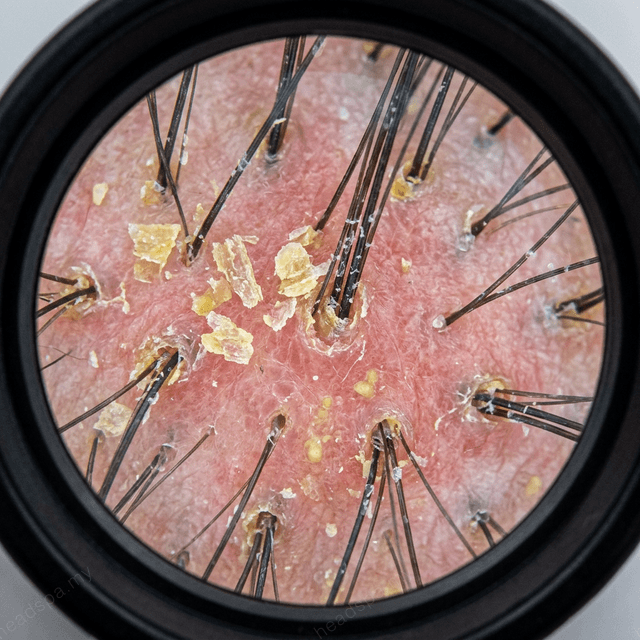
Why Dandruff Keeps Coming Back !Trichoscopy view of dandruff flakes and Malassezia fungal colonisation on scalp
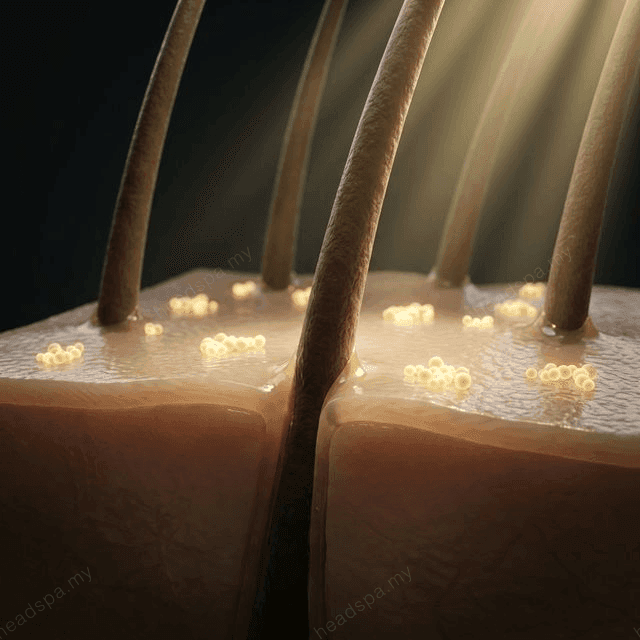
Dandruff is not caused by a dry scalp. It is caused by the yeast *Malassezia globosa*, which is a natural resident of every human scalp. The yeast feeds on sebum, breaking down triglycerides and excreting oleic acid — a potent inflammatory irritant. In genetically susceptible individuals, this oleic acid triggers an immune response: accelerated epidermal turnover, visible flaking, and intense itch.
In Malaysia's 80–90% ambient humidity, *Malassezia* proliferates approximately 3× faster than in temperate climates (Dawson, 2007, *JIDSP*). This is why dandruff is significantly more severe and persistent for Malaysian residents than for populations in cooler, drier environments.
The reason standard anti-dandruff shampoos fail long-term is that they address the symptom (flaking) without fixing the environment (the scalp's acid mantle) that allowed the overgrowth. Zinc pyrithione and ketoconazole temporarily suppress the yeast colony, but the alkaline pH of most shampoos (6.0–7.5) immediately re-establishes the conditions for regrowth.
What a Clinical Head Spa Does Differently
A clinical head spa attacks dandruff at the environmental level:
- Biofilm Dissolution: Enzymatic exfoliants dissolve the *Malassezia* biofilm — the protective matrix the yeast constructs to resist topical antifungals. This is the step that drugstore shampoos cannot perform.
- Acid Mantle Restoration: Following dissolution, pH-calibrated amino acid cleansers shift the scalp environment back to pH 4.5–5.5. At this acidity, *Malassezia* growth rate is dramatically suppressed.
- Ceramide Barrier Repair: Bio-identical ceramides physically rebuild the stratum corneum, sealing the microscopic fissures through which oleic acid penetrates to trigger inflammation.
Understanding Scalp Biology at this level is critical. When the acid mantle is consistently maintained at pH 4.5–5.5 and the lipid barrier is intact, the environment becomes biologically hostile to *Malassezia* overgrowth — even in KL's tropical humidity.
The Maintenance Reality
A single clinical head spa session can dramatically reduce visible dandruff. However, because *Malassezia* is a permanent resident of the scalp (not an external infection that can be eradicated), the scalp environment must be actively maintained. For Malaysian clients, this typically means clinical sessions every 3 to 4 weeks combined with a correctly pH-balanced home care regimen.
For clients dealing with persistent scalp concerns at a head spa in Kuala Lumpur, the question is not "can it cure my dandruff?" — it is "can it build the scalp environment where dandruff cannot thrive?" The answer to the second question is yes.
Frequently Asked Questions
Q: Will my dandruff come back after a head spa? A: *Malassezia* yeast is a permanent resident of the scalp, so the potential for overgrowth always exists. However, a clinical head spa restores the acid mantle and lipid barrier that prevent overgrowth. With consistent maintenance (every 3–4 weeks), active dandruff can be kept in long-term balance.
Q: Is head spa better than anti-dandruff shampoo? A: Anti-dandruff shampoos suppress the yeast temporarily but use alkaline pH that re-creates the conditions for regrowth. A clinical head spa dissolves the biofilm, restores the acid mantle, and repairs the barrier — addressing the root environment rather than just the symptom.
Q: How many head spa sessions does it take to clear dandruff? A: Most clients see a dramatic reduction in visible flaking after 1 to 2 sessions. Sustained environmental control, where the scalp no longer supports Malassezia overgrowth, typically requires 3 to 4 sessions over 8 to 12 weeks.