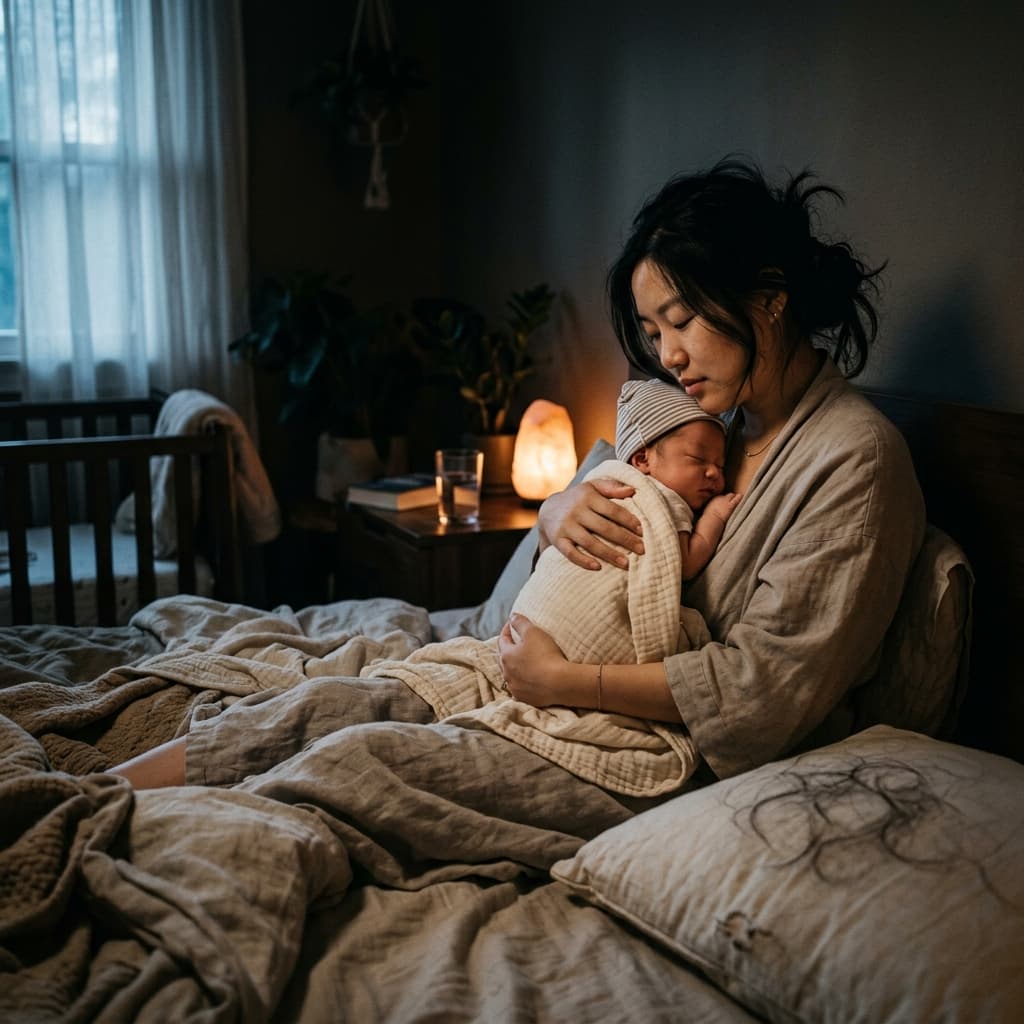
It is 3:17am. The baby has been fed, changed, and placed back in the cot. You glance at the drain. A small nest of hair. You glance at the sink. More strands.
You already know about postpartum hair loss. But what nobody told you is that your broken sleep is actively making it worse.
The Cortisol-Hair Follicle Connection
Cortisol is your body's primary stress hormone. In chronically elevated amounts — like when you've had fewer than four consecutive hours of sleep for several months — it becomes destructive to your hair.
Here's what elevated cortisol does:
1. Pushes follicles into the resting phase prematurely. Your hair follicles cycle between active growth (*anagen*), transition (*catagen*), and rest (*telogen*). Cortisol signals follicles to skip the growth phase and enter resting — which means more hair enters the shedding queue prematurely.
2. Restricts blood flow to the scalp. Chronic stress causes vasoconstriction — narrowing of blood vessels. Less blood flow means fewer nutrients and less oxygen reaching your follicles, slowing recovery.
3. Delays repair of damaged follicles. The body's repair processes happen almost exclusively during deep sleep (slow-wave sleep and REM). When you are chronically sleep-deprived, these repair cycles are incomplete.
4. Amplifies existing telogen effluvium. Postpartum hair loss is already triggered by the estrogen drop after birth. Sleep deprivation and elevated cortisol extend the shedding phase and delay regrowth.
Studies show that sleep-deprived postpartum mothers shed 18–24% more hair than those with adequate rest.
What Actually Helps
The scalp-sleep recovery protocol: (1) Prioritise sleep-when-baby-sleeps ruthlessly — follicle repair happens in those windows. (2) Daily 5-minute scalp massage to maintain blood flow even when sleep is fragmented. (3) Professional scalp treatment monthly — LED therapy stimulates follicle metabolism independent of sleep quality. (4) Magnesium glycinate before bed to improve deep sleep quality (safe while breastfeeding, consult your doctor).
You are not losing your hair because something is wrong with you. You are losing your hair because your body is prioritising keeping your baby alive over growing your hair. That is extraordinary. And it is temporary.