pH is not a marketing concept when applied to scalp biology. It is the primary regulator of the scalp's antimicrobial defense system, sebum enzyme activity, and microbiome composition.
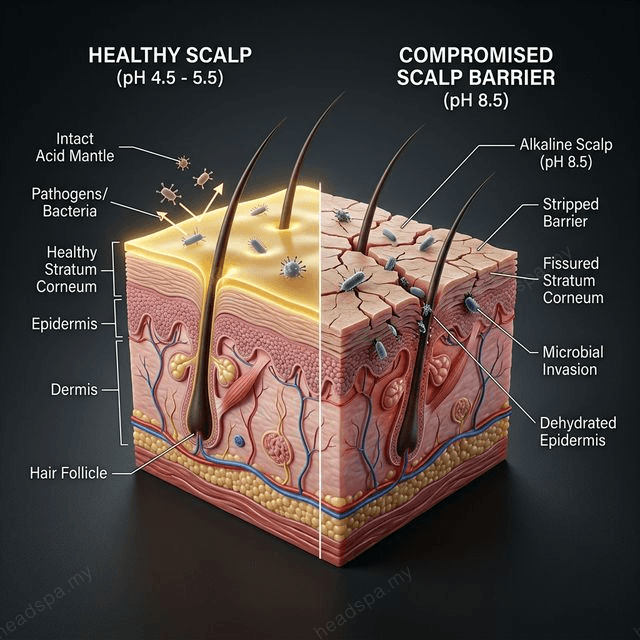
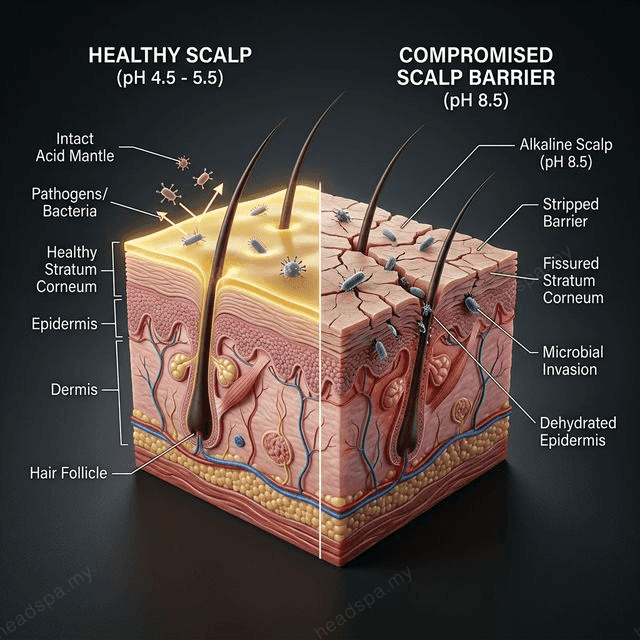
The Acid Mantle !3D cross-section of scalp acid mantle pH disruption — alkaline water effect on barrier function
The scalp's surface is covered by an emulsion of sebum and sweat that forms the acid mantle — a film maintained between pH 4.5 and 5.5. This acidic environment performs three functions:
- Antimicrobial barrier: Pathogenic bacteria and fungi (including Malassezia) grow poorly below pH 5.5. Alkaline disruption shifts the competitive advantage toward pathogens.
- Lipase regulation: Sebum-processing enzymes are pH-dependent. Alkaline conditions activate sebum hydrolysis enzymes, accelerating the conversion of triglycerides to inflammatory free fatty acids.
- Keratinocyte cohesion: The desquamation enzymes that should shed individual dead cells (rather than flakes) are activated at acidic pH. Alkaline disruption → visible scaling.
The Malaysian Tap Water Problem
Water treatment in Kuala Lumpur (treated by Air Selangor) and Johor Bahru (treated by SAJ Holdings) both produce tap water at pH 7.0–8.5 depending on distribution zone. Every wash with tap water applies an alkaline challenge to the acid mantle.
The mantle recovers within 1–2 hours in healthy scalps. In scalps already compromised by seborrhoeic dermatitis, product buildup, or humidity-induced Malassezia overgrowth, recovery is delayed — and repeated alkaline challenges maintain the scalp in a persistently dysregulated pH state.
Shampoo pH Compounding
Most commercial shampoos operate at pH 5.5–7.0. "pH-balanced" claims on packaging typically mean 5.5 — which is already at the upper tolerance limit of the acid mantle. Sulfate surfactants are particularly problematic because they denature the lipid components of the acid mantle even at neutral pH.
Professional Correction
TTE Elephant's scalp protocols use amino acid surfactant cleansing systems buffered at pH 4.5–5.0 — below commercial shampoo pH — to actively restore the acid mantle rather than merely preserve it. Post-treatment toner application locks the scalp at pH 4.8 for 24–48 hours, protecting the microbiome recovery window.