A clinical head spa can support hair growth by clearing follicular blockages, restoring the scalp's acid mantle, and reducing systemic cortisol — the hormone that forces follicles out of the active growth phase. However, a cosmetic head spa that only massages the surface provides no measurable growth benefit.
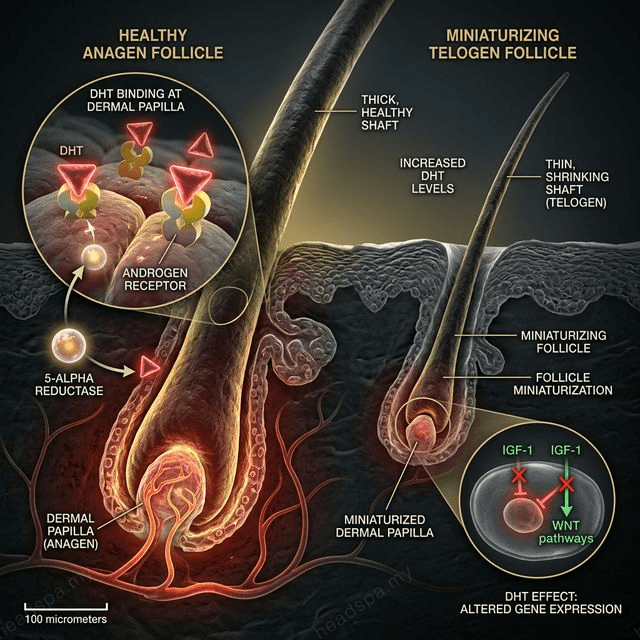
What Determines Whether Hair Grows !3D diagram of DHT-suppressed follicle versus healthy follicle after head spa scalp treatment
Hair growth is controlled by the dermal papilla — a cluster of stem cells sitting at the base of the hair follicle, approximately 4mm beneath the scalp surface. For hair to grow, two conditions must be met simultaneously: the follicular environment must be physically clear (no oxidized sebum plugs blocking the canal), and the hormonal environment must support the anagen (growth) phase.
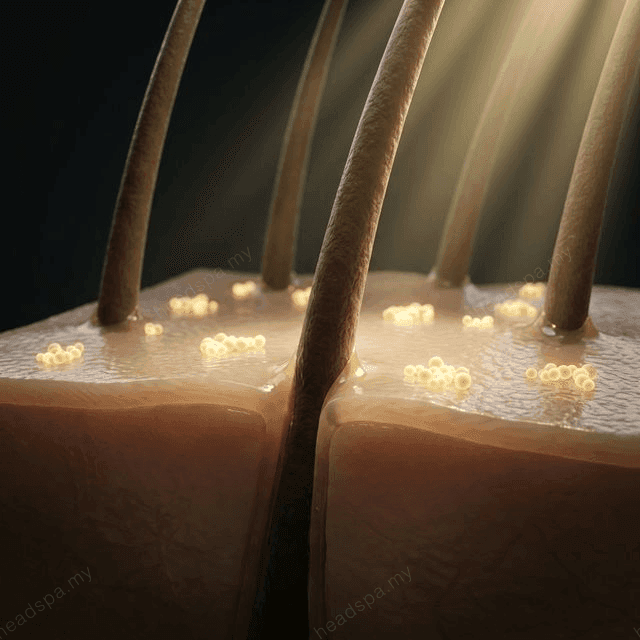
When the follicular funnel is choked with hardened squalene peroxide and *Malassezia* biofilm — extremely common in Malaysia's 80% humidity climate — the follicle physically cannot push a healthy hair shaft upward. The blockage acts as a bottleneck. No amount of surface treatment resolves this; only enzymatic dissolution at the follicular level can clear the canal.
How a Clinical Head Spa Supports Growth
A clinical head spa addresses the three biological requirements for hair growth:
- Follicular Excavation: Enzymatic exfoliants dissolve the oxidized sebum plugs inside the follicular funnel without the micro-lacerations caused by physical scrubs.
- Acid Mantle Restoration: pH-calibrated cleansers (pH 4.5–5.5) restore the scalp's antimicrobial barrier, preventing rebound seborrhea and *Malassezia* regrowth.
- Cortisol Regulation: Targeted occipital pressure during protocols like the Sleep Healing Headspa stimulates the vagus nerve, measurably reducing systemic cortisol. A 2021 study in *Nature* confirmed that cortisol directly suppresses the GAS6 protein in the dermal papilla, rendering follicle stem cells inactive.
A 2020 study (Lee et al., *Eplasty*) demonstrated that standardized scalp massage inducing stretching forces on dermal papilla cells resulted in measurably increased hair thickness over 24 weeks, validating the mechanical component.
The Limitation
A head spa cannot reverse genetic androgenetic alopecia (pattern baldness driven by DHT sensitivity). It can, however, optimize the follicular and hormonal environment to maximize the growth potential of the follicles you still have. For clients experiencing scalp concerns related to stress-driven shedding (telogen effluvium), barrier-driven thinning, or inflammatory hair loss, a clinical head spa is the most targeted non-pharmaceutical intervention available.
For residents seeking a head spa in Kuala Lumpur, the key distinction is between a cosmetic service (which touches the hair shaft) and a clinical service (which treats the living root). Only the latter supports measurable growth.
Frequently Asked Questions
Q: Can head spa make my hair grow faster? A: Head spa does not accelerate the genetically determined growth rate. It removes the biological obstacles — follicular blockages, scalp inflammation, and elevated cortisol — that prevent your follicles from reaching their full growth potential.
Q: How many sessions before I see hair growth results? A: Follicular clearing produces visible improvements in root volume within 1 to 2 sessions. Measurable hair thickness changes require consistent treatment over 3 to 6 months, as the hair growth cycle operates on a long biological timeline.
Q: Is head spa better than minoxidil for hair growth? A: They address different mechanisms. Minoxidil is a vasodilator that increases blood flow to the follicle. A clinical head spa clears the follicular environment and reduces the cortisol suppressing stem cell activation. They are complementary, not competing, interventions.