Hair fall during Ramadan is not primarily caused by dietary restriction, but by severe sleep disruption. Waking for Sahur repeatedly fragments deep delta wave sleep, which elevates systemic cortisol, disrupts the HPA axis, and forces hair follicles prematurely into the shedding (telogen) phase. Standard topical serums cannot treat this sleep-driven condition.
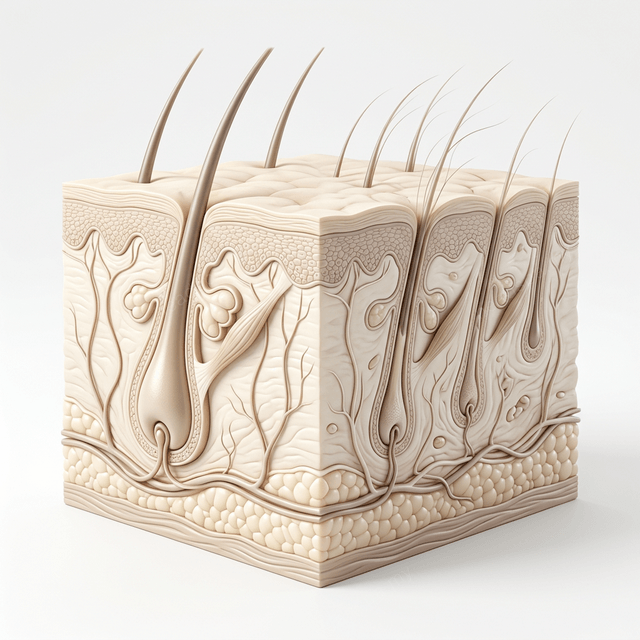
The Biological Reality of Fasting and Hair Health !3D follicle diagram showing telogen effluvium triggered by nutritional deficit during Ramadan fasting
During the holy month of Ramadan across Malaysia, clinics and salons routinely record a sharp uptick in clients reporting sudden, excessive hair shedding. The common assumption is that the fasting protocol itself — the restriction of calories, vitamins, and water — starves the hair follicle. Clinically, however, acute nutritional deficiency takes months to manifest visibly in the hair shaft.
The immediate, aggressive hair fall experienced during the fasting month is not a nutritional crisis; it is an endocrinological one. It is a direct biological response to the sudden, drastic restructuring of your sleep architecture and the resulting hormonal cascade. You are experiencing acute stress-induced shedding, medically termed Telogen Effluvium.
What Happens to Your Sleep Cycle During Ramadan?
To understand why your hair sheds, we must first look at what happens in the brain at 5:00 AM. A normal, uninterrupted baseline sleep cycle moves progressively through light sleep, REM (Rapid Eye Movement) sleep, and deep Slow-Wave Sleep (delta waves).
Deep sleep is the precise window during which your body repairs tissue. During delta wave sleep, the pituitary gland secretes Growth Hormone (GH), a critical signaling molecule that binds to receptors in the dermal papilla of your hair follicles, commanding them to stay anchored in the active growth phase (anagen). Simultaneously, deep sleep suppresses the hypothalamic-pituitary-adrenal (HPA) axis, keeping cortisol (the primary stress hormone) at its lowest daily baseline.
When you abruptly wake up for *Sahur* during the most critical 4:00 AM – 5:30 AM window, you slice directly through the delta wave cycle. This forced fragmentation completely halts the secretion of Growth Hormone and prematurely jolts the HPA axis into a waking state.
The Cortisol Cascade and Follicle Stem Cells
Because the brain perceives sleep fragmentation as an acute environmental threat, it compensates by pumping excessive cortisol into the bloodstream. In 2021, a landmark study published in *Nature* revealed exactly how cortisol stops hair growth.
Elevated levels of systemic cortisol directly suppress a protein called GAS6 in the dermal papilla. Without GAS6, hair follicle stem cells cannot activate. The follicle is essentially paralysed. Unable to sustain the metabolic energy required for anagen growth, the follicle prematurely aborts the hair shaft and forces it into the telogen (resting) phase.
Approximately 90 days after the follicle enters the telogen phase, the hair detaches from the scalp and falls out. This timeline explains why many Malaysians notice a dramatic increase in shedding not just during the final weeks of Ramadan, but continuing intensely in the months immediately following Hari Raya.
The Malaysian Factor: Dehydration and Heat
Beyond the hormonal axis, the environmental reality of fasting in Malaysia compounds the stress on the scalp barrier. The average Malaysian urban center maintains an ambient daytime temperature of 32–34°C.
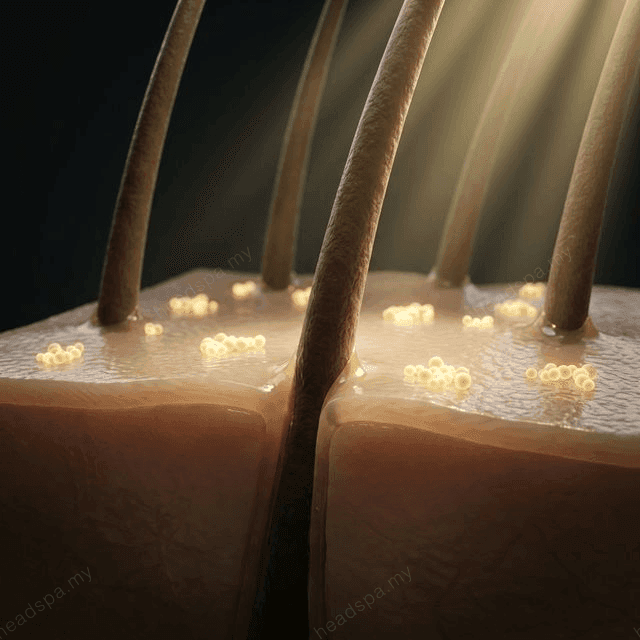
Fasting for 13 hours under tropical heat creates a state of mild, chronic dehydration. The skin is the last organ to receive hydration from your water intake and the first to lose it when reserves run low. As transepidermal water loss increases, the scalp's stratum corneum becomes brittle.
This desiccation degrades the protective lipid barrier. When the physical barrier weakens and the internal cortisol levels rise simultaneously, the scalp becomes highly vulnerable to neurogenic inflammation. You may notice your scalp feels physically tight, sensitive, or mildly itchy as the day progresses — a sensory warning sign that the follicles are under sustained systemic stress.
Why Standard Hair Loss Treatments Fail
If your hair fall is driven by a lack of delta wave sleep and elevated cortisol, applying a topical minoxidil serum or a generic hair tonic is biologically redundant. Most over-the-counter hair fall solutions function as peripheral vasodilators — they attempt to increase blood flow to a follicle that has already been hormonally commanded to shut down by the brain.
Treating sleep-driven Telogen Effluvium requires down-regulating the autonomic nervous system to halt the cortisol cascade, rather than just treating the surface of the scalp.
The Clinical Approach to Sleep-Driven Hair Fall
Addressing cortisol-induced shedding requires a systemic intervention. TTE Elephant’s clinical approach bypasses superficial treatments to address the neurological root cause.
Our specialized Sleep Healing Headspa protocol is engineered specifically for nervous system regulation. Through the application of sustained, calibrated pressure along the greater occipital nerve pathways at the base of the skull, the treatment directly stimulates the vagus nerve.
This neural stimulation forces a biological hard-reset, shifting the body out of sympathetic "fight-or-flight" overdrive and back into parasympathetic "rest-and-digest" dominance. Measurable reductions in systemic cortisol are achieved within the 90-minute session. Furthermore, using 432Hz acoustic entrainment, the protocol nudges the brain back toward restorative delta wave frequencies, mimicking the physiological benefits of deep sleep that are lost during the fasting month.
Simultaneously, the scalp barrier is deeply rehydrated using low-molecular-weight amino acids and ceramides, restoring the physical integrity of the stratum corneum lost to daytime dehydration. By addressing both the internal cortisol overload and the external barrier collapse, we stabilize the follicle and prevent further premature shedding before the festive season demands your hair look its absolute best.
Frequently Asked Questions
Q: Why does my hair fall out so much while fasting? A: Hair fall during fasting is rarely due to a lack of nutrients. Instead, waking up for Sahur disrupts your deep sleep cycles. This fragmentation elevates cortisol (stress hormone) levels, which directly suppresses hair follicle stem cells and forces the hair prematurely into a shedding phase called telogen effluvium.
Q: How long does Ramadan hair loss last? A: Because of the natural hair cycle, hairs pushed into the resting phase by cortisol spikes take roughly 2 to 3 months to physically detach. Therefore, shedding triggered during the fasting month often peaks right after Hari Raya and can last for several months if the nervous system is not regulated.
Q: Can dehydration cause my scalp to feel tight and itchy? A: Yes. Fasting 13 hours in Malaysia's 33°C tropical heat causes transepidermal water loss. The scalp's outer barrier dries out and cracks microscopically, exposing peripheral nerve endings. This leads to a tight, sensitive, and itchy feeling that is a precursor to inflammation.
Q: What is the best treatment for stress-induced hair fall in KL? A: Shampoos and surface serums cannot fix internal hormonal stress. The most effective clinical treatment requires down-regulating systemic cortisol. TTE Elephant’s Sleep Healing Headspa utilizes targeted vagus nerve stimulation to reduce stress hormones at the source, combined with deep ceramide hydration to repair the scalp barrier.