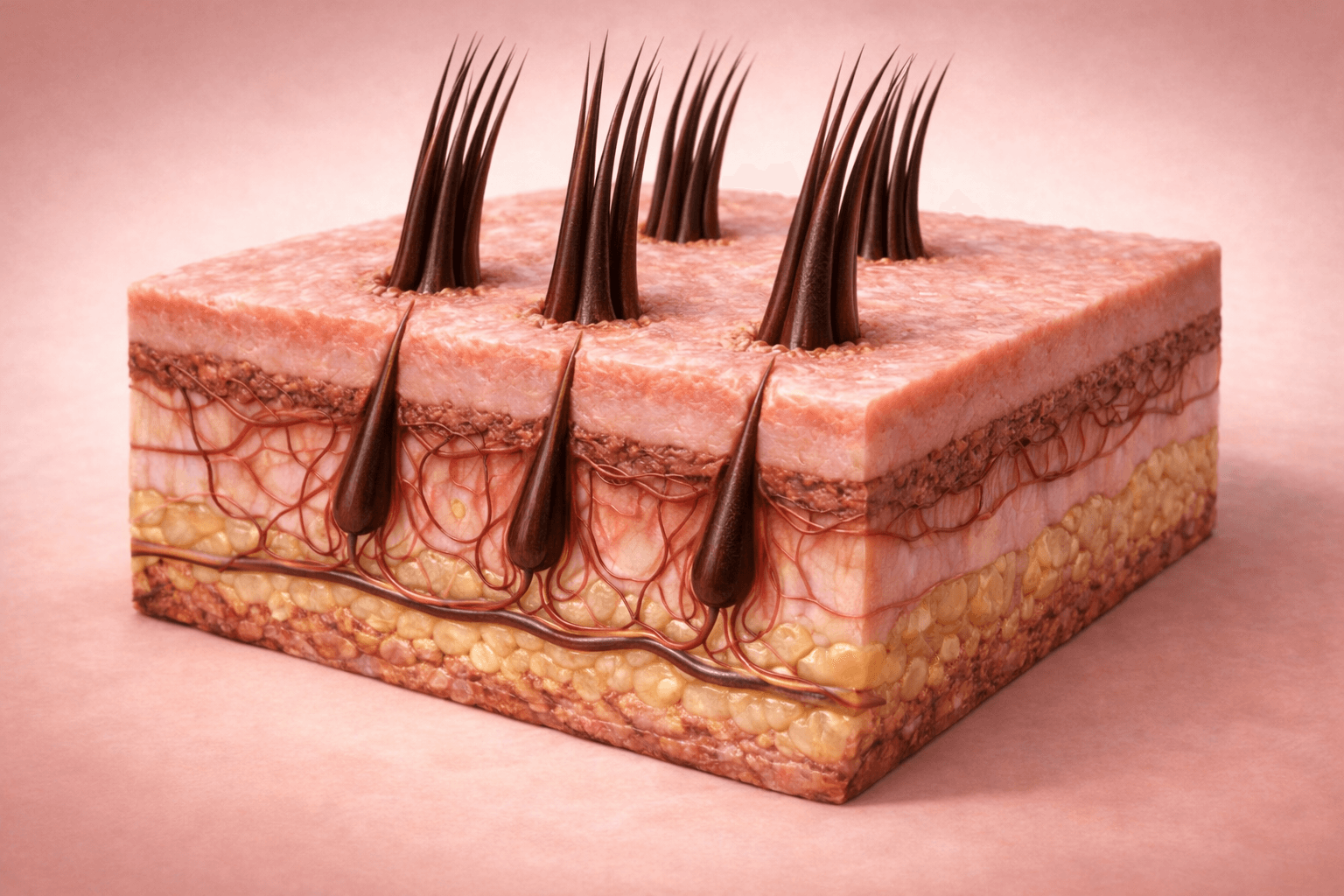
The question of head spa frequency is common, and the answers given by most providers are arbitrary. "Once a month" is a commercial default, not a clinical recommendation. Optimal frequency is determined by three biological variables: your scalp's sebum cycle, your stress-cortisol load, and the specific scalp condition being addressed.
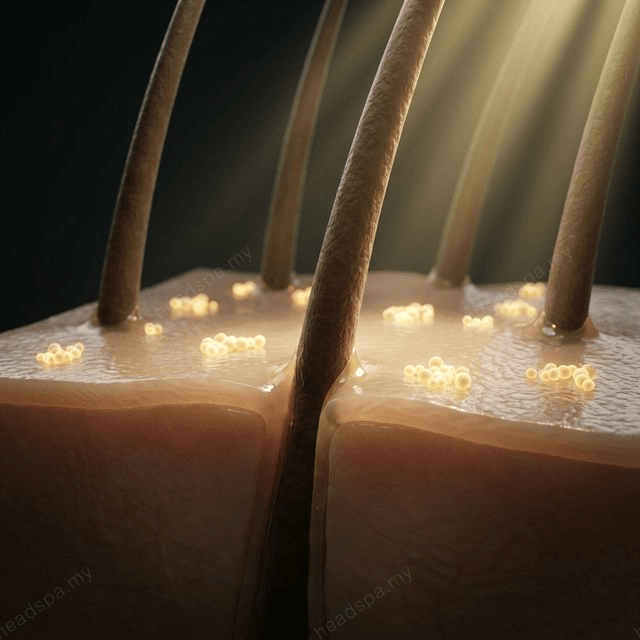
The Sebum Reset Cycle !Healthy scalp microbiome balance maintained through regular clinical head spa treatment
The scalp sebaceous glands operate on a continuous secretion cycle. After professional enzymatic cleansing — which removes infundibular sebum buildup — the follicle opening returns to its cleared state. In high-humidity environments like Malaysia, Malassezia proliferation reaches clinically significant levels within 14–21 days on a cleared scalp. In temperate climates, this threshold takes 28–42 days. Frequency recommendations for Malaysian scalps should therefore be calibrated to the local environment, not global averages.
Cortisol Reset Duration
The neuro-relaxation benefit of a properly executed head spa — specifically the cortisol reduction achieved through vagal stimulation — has a measurable duration. Studies on manual therapy and parasympathetic activation indicate that HRV (heart rate variability) improvement, an index of autonomic balance, persists for 48–72 hours post-session in most subjects. For individuals under chronic occupational or environmental stress, the therapeutic window narrows. Weekly sessions are appropriate for acute stress-driven hair fall. Bi-weekly maintains the effect without over-intervention. Monthly is a maintenance frequency for stable scalp conditions.
Frequency by Scalp Condition
Seborrheic dermatitis / oily scalp with Malassezia: Every 2 weeks. The antifungal and microbiome-normalising effect requires reinforcement before Malassezia re-establishes at threshold levels.
Stress-related hair fall (telogen effluvium): Weekly for the first 4–6 weeks to interrupt the cortisol-follicle cycle, then bi-weekly as maintenance. The goal is sustained cortisol suppression across the full telogen effluvium recovery period (typically 3–6 months post-stressor).
Scalp inflammation / folliculitis: Every 2 weeks initially, with formulation adjusted as inflammation resolves. Not weekly — over-intervention on inflamed tissue is counterproductive.
Healthy scalp, preventive care: Monthly is sufficient. The sebum cycle and microbiome remain in balance; the objective is maintaining baseline rather than correcting a deficit.
The Malaysian Adjustment
Standard head spa frequency guidelines are written for European or North Asian climate conditions. Malaysia's year-round 28–35°C temperatures and 75–85% humidity create a perpetual Malassezia-permissive environment. The typical European "monthly" recommendation translates, for a KL resident, to a bi-weekly interval. This is not upselling — it is climate calibration.
Signs You Are Overdue
Scalp itching that persists despite regular washing, visible flaking that returns within days of shampooing, diffuse hair fall exceeding 100 strands daily, and persistent scalp tenderness are all indicators that the interval between treatments has exceeded your scalp's self-regulation capacity. Each of these signals a condition that has progressed beyond what home care can address.