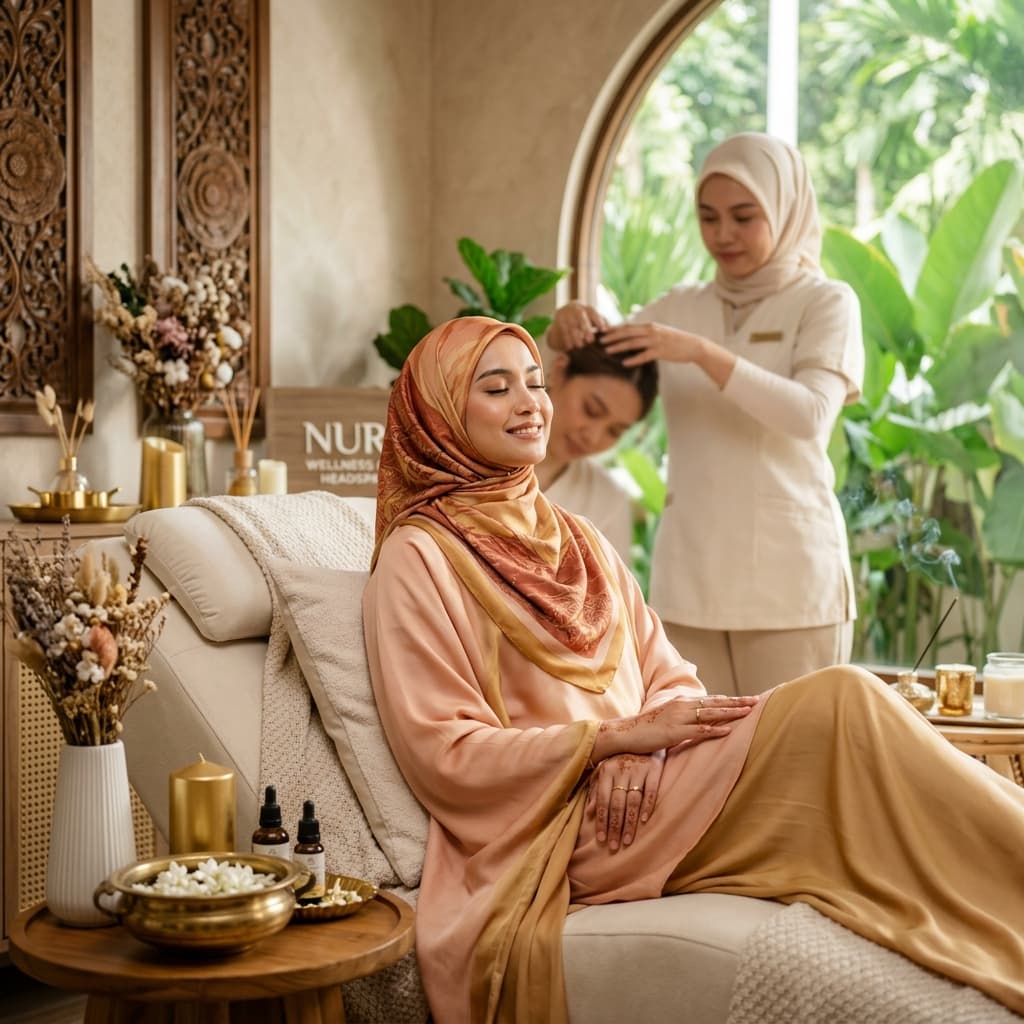
Raya is over. The open houses are winding down, the baju kurung folded away. And somewhere between the third day of ketupat and the sixth relative's house, your scalp quietly accumulated a month's worth of stress.
What Ramadan and Raya Did to Your Scalp
Four compounding stressors hit your scalp during this period. First, fasting-triggered nutritional stress pushed hair follicles into the resting phase — the clinical result is telogen effluvium, with peak shedding arriving 6–12 weeks later (May–June 2026). Second, sahur-disrupted sleep elevated cortisol, which directly restricts blood flow to the scalp. Third, a 2023 Scientific Reports study found hijab-wearing women show higher abundance of M. restricta — the Malassezia species linked to seborrheic dermatitis — from extended occlusive hijab wear. During Raya's 14–16 hour hijab days in 33°C Klang Valley heat, this shift accelerated. Fourth, Raya styling (sanggul, tight inner ninja caps) created mechanical traction on the frontal hairline — research shows 34.6% of hijab-wearing women report hair loss attributed to the hijab, 72.2% at the frontal hairline.
The Four-Week Post-Raya Recovery Protocol
Week 1 (1–7 April): Reset. Daily 5-minute scalp massage, anti-fungal clarifying wash twice weekly, coconut oil pre-wash. Loosen all tight bun styles.
Week 2 (8–14 April): Nourish. Reintroduce iron (bayam merah, beef liver), protein (eggs, ikan), zinc (pumpkin seeds). Pandan leaf rinse — boil 10-12 leaves in 1 litre water, use as final rinse — provides documented anti-inflammatory and cooling benefits under hijab.
Week 3 (15–21 April): Strengthen. Change bun position to distribute follicle tension differently. Replace tight elastics with silk scrunchies. Check ferritin — optimal for hair health is above 70 µg/L; many Malaysian women sit at 15–20 µg/L without knowing. Pure botanical henna (Lawsonia inermis) once monthly is clinically supported for scalp inflammation.
Week 4 (22–30 April): Professional reset. AI scalp analysis, clinical-grade LED therapy (620–880nm), and professional lymphatic drainage massage address what four weeks of home care builds toward. All TTE Headspa treatment rooms are fully private and Muslimah-comfortable.
What to Expect in May–June 2026
The telogen effluvium from Ramadan peaks 6–12 weeks after the event — late May to early June. More hair in the drain is the predictable sequence, not a setback. If April care was consistent, new growth is already beginning. Iron supplementation and a June professional treatment accelerate the return.
*Selamat Hari Raya, dan selamat pulih.*