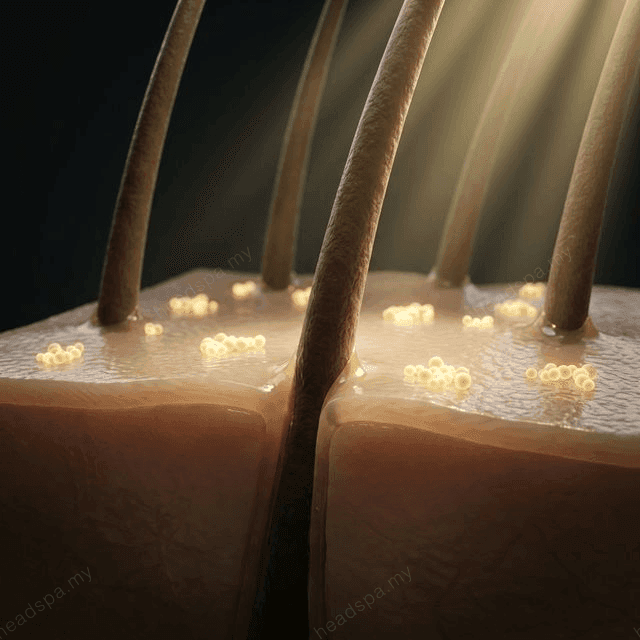
Most Malaysian mothers expect some hair shedding after delivery. Few are prepared for standing in the shower watching clumps of hair spiral toward the drain — weeks on end, without stopping. This is not cosmetic fragility. It is postpartum telogen effluvium: a hormonally driven, predictable biological event that affects the majority of women who have carried a pregnancy to term.
Understanding the mechanism behind postpartum hair loss is the first step toward managing it without panic — and without wasting money on treatments that address the wrong cause.
The Estrogen-Telogen Mechanism
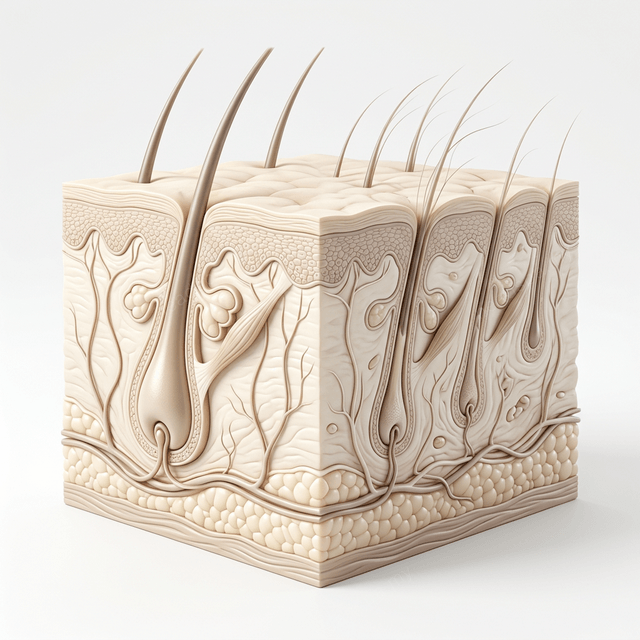
During pregnancy, circulating estrogen rises to levels three to five times above baseline. This hormonal elevation extends the anagen (active growth) phase of each hair follicle, effectively locking hairs in place that would ordinarily have shed months earlier. The result: pregnancy hair looks thicker, fuller, and healthier than at any other point in a woman's life.
Delivery triggers a rapid hormonal reversal. Estrogen levels fall sharply within 24 to 72 hours. Simultaneously, prolactin rises to support lactation, and progesterone drops precipitously. The follicles that were held artificially in anagen by elevated estrogen are now released — all at once — into telogen (resting phase). Two to four months after this shift, those resting follicles begin to shed their shafts synchronously.
The result is diffuse hair loss of 30% or more of hair density, concentrated at the temples and crown, typically peaking at months three to five postpartum.
This is not pathological hair loss in the classical sense. The follicle remains alive and intact. Shedding is the natural end of a delayed telogen phase — not follicle death.
Why Malaysian Mothers Are at Heightened Risk
The Malaysian postpartum context introduces biological stressors that can amplify and prolong the telogen effluvium beyond its typical six-to-nine month resolution window.
Breastfeeding and iron depletion represent the most clinically significant accelerant. Exclusive breastfeeding demands approximately 1 mg of iron per day above baseline, drawn from maternal stores. In a population where pre-pregnancy ferritin levels are already low — a common finding across Southeast Asian women with rice-heavy diets and heavy menstruation — postpartum breastfeeding can suppress ferritin to below 20 µg/L. At that level, hair follicle mitosis is directly impaired, converting what should be a temporary telogen effluvium into an extended, nutrition-driven shedding cycle.
Postpartum sleep disruption compounds the hormonal picture. Cortisol dysregulation — driven by fragmented sleep — suppresses the hypothalamic-pituitary axis and interferes with thyroid function. Both thyroid hormones and cortisol have direct effects on hair follicle cycling. A mother managing a newborn on four interrupted hours of sleep per night is not simply tired; she is running a sustained neuroendocrine stress response that delays follicle recovery.
Confinement dietary practices (pantang) vary significantly in nutritional adequacy. Traditional Malaysian confinement meals in certain communities restrict cold foods, raw vegetables, and some protein sources — inadvertently limiting dietary iron, zinc, and biotin intake during the precise window when follicle recovery demands them most.
| Recovery Factor | Optimal Level | Common Postpartum Finding |
|---|---|---|
| Serum ferritin | > 70 µg/L | 12–30 µg/L |
| Thyroid TSH | 0.5–2.5 mIU/L | Often unchecked |
| Vitamin D | > 50 nmol/L | Frequently deficient |
| Sleep (consolidated) | 7–8 hours | 3–5 hours (fragmented) |
What Actually Accelerates Recovery
Postpartum telogen effluvium resolves on its own in most cases — but the timeline varies from six to eighteen months depending on how quickly the underlying stressors are addressed.
Ferritin optimisation is the single highest-leverage intervention. A serum ferritin below 70 µg/L is inadequate for optimal follicle function, even if standard iron panels return within normal range. Supplementing to raise ferritin above 70 µg/L — through elemental iron supplementation with vitamin C for absorption, and reducing tannin-heavy teas during supplement timing — has been shown in multiple studies to shorten the effluvium phase.
Vagus nerve regulation addresses the cortisol load that suppresses follicle recovery. The vagus nerve governs the parasympathetic brake on the stress response. Clinical head spa protocols that incorporate sustained cranial pressure, occipital nerve stimulation, and scalp massage have measurable effects on heart rate variability — a validated proxy for vagal tone. At TTE Elephant, the Sleep & Nervous System Healing protocol is specifically designed for this neuroendocrine recovery pathway.
Scalp circulation support ensures that recovering follicles receive adequate micronutrient delivery. Postpartum scalp circulation is frequently compromised by tension headaches, breastfeeding posture (sustained neck flexion), and dehydration. Targeted scalp massage at our KL and JB locations improves microvascular blood flow to the follicle bulb — the primary site of mitotic activity during anagen re-entry.
The Recovery Timeline
| Phase | Timing | What to Expect |
|---|---|---|
| Shedding onset | Weeks 8–16 postpartum | Diffuse shedding, temple recession, brush-load accumulation |
| Peak shedding | Months 3–5 | Maximum volume loss; normal to lose 300+ hairs/day |
| Plateau | Months 5–7 | Shedding slows; regrowth "baby hairs" visible at hairline |
| Recovery | Months 7–12 | Density returns; texture may differ temporarily |
| Full resolution | 9–18 months | Normal cycle resumes; prolonged if ferritin not corrected |
---
Q: Is it normal to lose this much hair after delivery? A: Yes. Postpartum telogen effluvium is physiologically normal and affects the majority of women who have been pregnant. The follicles are not damaged — they are completing a delayed shedding cycle. The volume can be alarming, but it does not indicate permanent loss unless the underlying nutritional or hormonal stressors remain unaddressed beyond 12 months.
Q: Should I stop breastfeeding to recover my hair faster? A: No. Stopping breastfeeding abruptly to reduce prolactin is not a clinically supported approach to postpartum hair recovery. The more effective intervention is ensuring your ferritin, vitamin D, and thyroid function are within optimal ranges while breastfeeding. Address the nutritional deficit directly rather than eliminating the feeding relationship.
Q: When should I see a dermatologist instead of a head spa? A: If shedding has not meaningfully reduced by month nine postpartum, or if you notice patchy bald circles rather than diffuse thinning, seek a dermatology assessment. Patchy loss may indicate alopecia areata (an autoimmune condition) triggered by postpartum immune shifts — a different mechanism requiring a different clinical pathway. See our detailed guide on postpartum hair loss and alopecia areata for distinction criteria.
Q: What head spa treatments are appropriate during breastfeeding? A: At TTE Elephant, our botanical formulations for breastfeeding mothers exclude actives that are absorbed transdermally in clinically significant quantities. The vagus nerve and scalp circulation protocols are safe and specifically beneficial during this period. Inform your therapist at consultation so the treatment plan is adjusted accordingly.