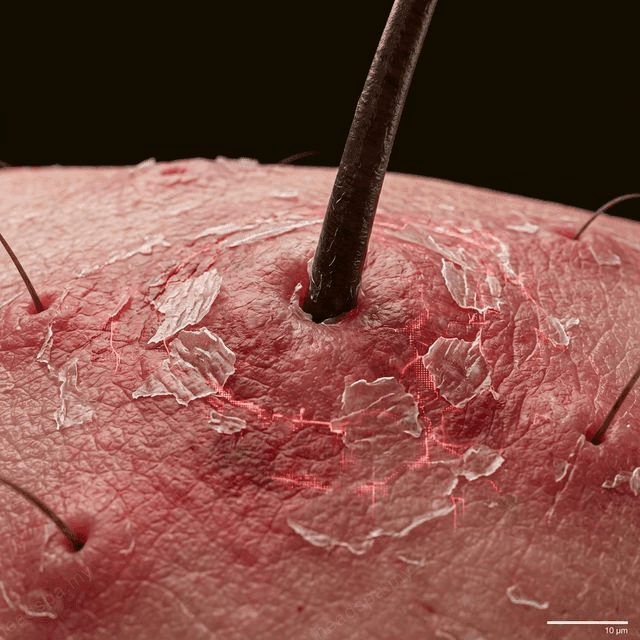
Post-COVID hair loss is telogen effluvium — a delayed, mass shedding event triggered when SARS-CoV-2's systemic inflammation forces hair follicles into the resting phase simultaneously. In Malaysia, where over 5 million confirmed infections were recorded, the condition remains widely misunderstood. The shedding typically begins 6–12 weeks after infection and can last 3–9 months without targeted scalp intervention.
Why COVID Causes Hair Loss — The Cytokine Pathway
COVID-19 triggers an inflammatory cytokine cascade — elevated IL-6, TNF-α, and interferon-γ — that disrupts the normal hair growth cycle at the molecular level. These cytokines suppress the Wnt/β-catenin signalling pathway in follicle dermal papilla cells, the same molecular switch that drives the anagen (growth) phase. When this pathway is suppressed, follicles simultaneously enter the telogen (resting) phase across the entire scalp.
What most people never realise: SARS-CoV-2 may directly infect hair follicle cells. Research from Bao et al. (2021) identified ACE2 receptor expression in hair follicle outer root sheath cells — the same receptor the virus uses to enter lung tissue. This means COVID-19 can cause direct follicular injury, not just an indirect stress response. Your follicles were not collateral damage. They were targeted.
Normally, at any given time, only 10–15% of follicles are in the resting phase. Post-COVID, this can jump to 30–40% simultaneously — which is why the volume of shedding feels catastrophic and disproportionate to anything you have experienced before.
Why the Loss Appears Months After You Recovered
The delay between COVID infection and visible shedding is what makes post-COVID telogen effluvium so confusing. By the time the hair falls, the trigger was months ago. The biological timeline is consistent:
- Trigger (COVID infection): Cytokine storm forces follicles into telogen
- Latency (6–12 weeks): Follicles rest silently — no shedding yet, no visible change
- Shedding phase: Telogen hairs release simultaneously as follicles attempt to re-enter anagen
This timeline disconnect causes most people to search for other causes — a new shampoo, a diet change, a new supplement — while the COVID link goes entirely unrecognised.
The counterintuitive recovery signal: The shedding can appear to intensify precisely when you start recovering. Follicle re-entry into anagen physically pushes out the accumulated telogen hairs. Accelerating shedding after a period of improvement is often a sign of early recovery, not deterioration.
The Ferritin Complication Nobody Mentions
Post-COVID telogen effluvium is rarely a single-mechanism problem. SARS-CoV-2 infection significantly depletes serum ferritin — both because the immune response consumes iron at an elevated rate, and because COVID-related appetite suppression reduces dietary iron intake during the acute phase.
Nalbandian et al. (2021) documented ferritin depletion in 43% of COVID long-haulers in a landmark *Nature Medicine* review of post-acute COVID-19 syndrome. Since ferritin is the primary iron storage protein for follicle keratinocyte production, this creates a compounding hair loss mechanism that persists long after the viral inflammation has resolved.
Two mechanisms, running simultaneously: Cytokine-driven telogen effluvium (COVID-specific) layered on top of iron deficiency hair loss (nutritional). Treating only one leaves the other fully active. A serum ferritin test alongside a professional scalp assessment is the minimum diagnostic standard before any treatment protocol begins. Targeting the wrong mechanism — buying DHT blockers for telogen effluvium, for example — will produce no results regardless of dosage or duration.
For the full clinical framework on iron-related hair loss, see Iron Deficiency Hair Loss.
Why Recovery Is Harder in Malaysia
Malaysia's tropical climate adds stressors that extend the post-COVID recovery window:
- At 80–90% ambient humidity, Malassezia proliferates 3× faster than in temperate climates. The barrier disruption from COVID-related scalp inflammation creates a perfect environment for fungal overgrowth that delays recovery.
- KL's 19°C air-conditioned offices against 33°C outdoor heat create daily acid mantle pH swings that compound barrier disruption in already-compromised post-COVID scalp tissue.
- Many Malaysian patients received broad-spectrum antibiotics or antivirals during treatment. These disrupt the scalp microbiome at the same time the follicle cycle is destabilised — creating a dual recovery burden.
A 2022 survey by the Malaysian Dermatological Society found post-COVID telogen effluvium was the most common new dermatological complaint at outpatient clinics in Q3 2021 and Q1 2022 — accounting for 28% of all new hair loss presentations. The volume of untreated cases in the Malaysian urban population remains significant.
The Omicron distinction: Omicron variant infections triggered post-COVID telogen effluvium at a lower rate than Delta and original strain (approximately 18% vs 35–40% in hospitalised Delta cases). However, because Omicron infected a far larger total Malaysian population, the absolute number of cases was higher during that wave. If you had Omicron and dismissed the possibility of post-COVID hair loss because it was "mild," reconsider.
What Actually Resolves It: The Three-Component Protocol
Anti-hair-fall shampoos and DHT-blocking serums address neither the cytokine pathway nor the ferritin deficit. Clinical resolution requires three components working simultaneously:
1. Ferritin repletion: Confirm serum ferritin is above 40 ng/mL — the threshold for optimal follicle function, not just the clinical "normal" range of >12 ng/mL. Many Malaysian patients are told their iron is "normal" at 15 ng/mL while their follicles are functionally iron-depleted. The distinction matters.
2. Scalp barrier restoration: Professional scalp detox removes oxidised sebum and microbiome disruption accumulated during the post-COVID recovery window. Enzymatic exfoliation combined with azulene and centella asiatica botanical compounds directly suppresses residual scalp cytokine activity — the inflammatory residue that keeps the follicle cycle from normalising.
3. Follicle mechanical re-activation: Scalp stimulation techniques used in professional Korean headspa protocols increase IGF-1 (insulin-like growth factor 1) and VEGF expression at the follicle level. Research published in *PLOS ONE* (Koyama et al., 2016) demonstrated that standardised scalp massage increases gene expression for follicle cell proliferation within 24 weeks. Professional treatment concentrates this mechanical effect beyond what self-massage achieves.
The intervention window is real: Post-COVID telogen effluvium treated within 3–6 months of onset shows near-complete regrowth in 85–90% of cases. Cases untreated beyond 9 months — where follicle miniaturisation has begun on top of the effluvium — show significantly lower recovery rates. Every month of delay narrows the biological window. This is not a condition that rewards patience.
TTE Elephant Head Spa at Mid Valley KL and Eco Botanic JB uses AI scalp trichoscopy to distinguish post-COVID effluvium from concurrent conditions, then designs a structured 3–5 session recovery protocol based on actual follicle state, not symptom description alone.
Self-Assessment: Is This Post-COVID?
Check whether your pattern matches:
- Hair loss began 6–16 weeks after a confirmed or suspected COVID infection
- Shedding is diffuse (all over the scalp) rather than patchy or hairline-specific
- You can pull 10–15 strands with gentle traction across multiple scalp zones
- Loss has continued for more than 8 weeks since it started
- You had fever, fatigue, or systemic symptoms during the infection
If three or more apply, post-COVID telogen effluvium is the primary candidate. See Hair Fall & Thinning for the complete diagnostic framework.
Frequently Asked Questions
Q: How long does post-COVID hair loss last in Malaysia? A: In most cases, post-COVID telogen effluvium resolves within 6–9 months of onset without intervention. With professional scalp treatment targeting barrier restoration and follicle re-activation, recovery time typically reduces to 3–5 months. Cases persisting beyond 9 months often involve secondary iron deficiency or early follicle miniaturisation requiring a more intensive protocol.
Q: Is post-COVID hair loss permanent? A: In the majority of cases, no. Telogen effluvium is a cycle disruption, not follicle death — follicles are alive and capable of re-entering the growth phase. However, if cytokine-driven inflammation persists as in long COVID, or ferritin remains depleted without repletion, the recovery window narrows and the risk of permanent miniaturisation increases with each passing month.
Q: I had COVID 18 months ago and my hair is still falling — what is happening? A: Persistent shedding 12+ months post-infection warrants investigation for secondary causes — particularly iron deficiency, thyroid dysfunction (COVID is documented to trigger transient thyroiditis in a subset of patients), or androgenetic alopecia that was unmasked by the effluvium trigger. A trichoscopy assessment distinguishes between these, since each requires a fundamentally different treatment approach.
Q: Can post-COVID hair loss be mistaken for other conditions? A: Yes — and this is common. Diffuse telogen effluvium looks similar to early female pattern hair loss and iron deficiency hair loss on the scalp surface. The COVID history and timeline are the key differentiators. A professional trichoscopy examination under magnification can identify the specific follicle pattern within a single assessment session.