Korean head spa has gone viral globally — from Seoul clinics to New York studios to TikTok feeds across Southeast Asia. But if you're in Johor Bahru, or considering the drive down from Singapore, one question deserves a clear answer before you book: what actually makes a Korean head spa different from the scalp wash you receive at any salon?
The difference is not aesthetic. It is biological.
Korean Head Spa vs Regular Head Spa
Most people have experienced a standard salon head wash: a generic shampoo applied to the scalp, a brief circular massage from the same technician who colour-treated the client before you, and a rinse. The product used is identical regardless of your scalp condition. The experience is pleasant. The biological impact is minimal.
A Korean head spa operates from an entirely different clinical premise: the scalp is skin. It has its own microbiome — a colony of bacteria, fungi, and commensal organisms that regulate sebum balance, pH, and follicle health. It has a measurable pH (healthy range: 4.5–5.5). It has a renewal cycle, a lipid barrier, and an immune function. Each of these parameters can be assessed, and each can be supported through targeted botanical actives.
| Standard Head Spa | Korean Head Spa | |
|---|---|---|
| Diagnostics | None | AI-powered scalp scan before treatment |
| Product selection | Generic (same for all clients) | Condition-specific botanical actives |
| Exfoliation | Surface rinse only | Enzymatic follicular exfoliation |
| Target depth | Hair shaft surface | Follicular infundibulum (4mm below surface) |
| Massage approach | Relaxation-focused | Scalp-calming + lymphatic drainage |
| Session length | 30–45 minutes | 60–120 minutes |
| Progress tracking | None | Before/after scalp comparison |
The Korean approach emerged from Korean dermatological aesthetics — a culture where skincare is treated as preventive medicine, and the scalp is understood as an extension of facial skin that simply happens to grow hair. In Seoul, premium scalp clinics operate adjacent to dermatology practices. The science transferred seamlessly.
The Korean Flower Headspa at TTE Elephant JB
The Korean Flower Headspa at TTE Elephant's Eco Botanic branch in Iskandar Puteri is a structured five-stage protocol conducted in a private suite. Sessions run 60 to 120 minutes depending on the condition complexity identified at assessment.
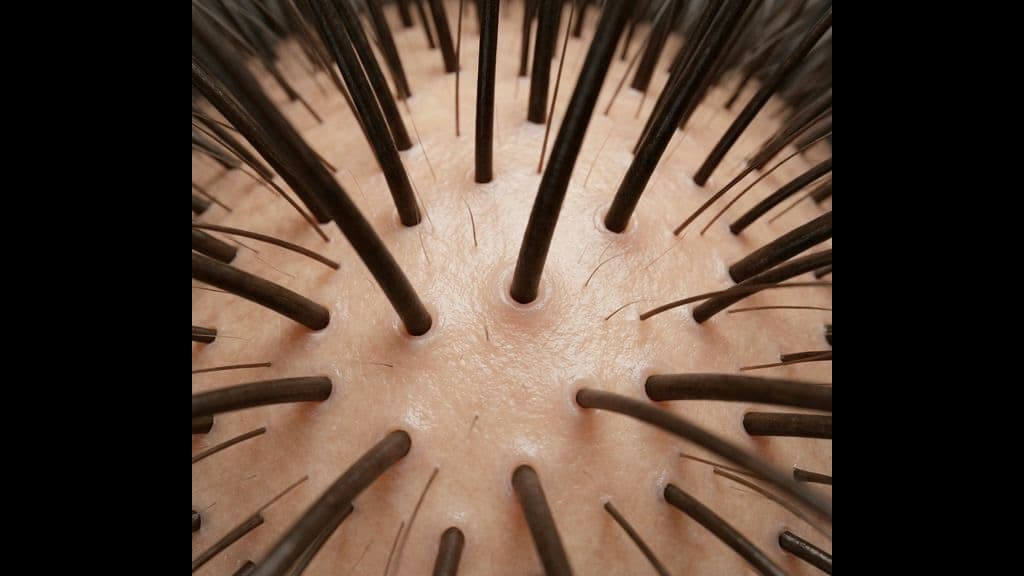
Stage 1 — AI Scalp Analysis Before any product touches your scalp, a 200× digital trichoscope captures the current state of your follicular environment: sebum plug density, Malassezia biofilm presence, follicle diameter variation, and scalp pH. This is not a consultation — it is a clinical baseline. The images taken before treatment are compared against post-treatment images so outcomes are measurable, not anecdotal.
Stage 2 — Enzymatic Exfoliation A pH-calibrated enzymatic formula is applied to the scalp and left to dwell for 8–12 minutes. The enzymes dissolve oxidised sebum (squalene peroxide) and keratin debris that accumulate inside follicular openings — a form of occlusion that standard shampoo cannot reach. This step restores follicular permeability so that the botanical actives applied next can penetrate to the papilla layer.
Stage 3 — Botanical Active Infusion A serum compound selected on the basis of your Stage 1 findings is infused into the scalp using gentle thermal or micro-needleless delivery. The botanical formulation targets your specific condition: microbiome imbalance, excess sebum production, follicle-supporting stimulation, or scalp sensitivity. This is not a one-size mask; it is a precision intervention.
Stage 4 — Scalp Massage A structured 20–30 minute scalp massage follows the infusion phase, using techniques that activate parasympathetic nervous system response — the biological state associated with tissue repair, reduced tension, and follicular blood flow. This is not a relaxation luxury bolted onto a clinical service. Neural calming is the mechanism by which the preceding botanical actives work most effectively: a scalp under chronic tension has reduced microcirculation.
Stage 5 — Progress Comparison Your post-treatment trichoscope images are compared side-by-side with the baseline from Stage 1. Sebum clearance, follicular opening, and scalp colour are visible and documentable. You leave with data, not just a feeling.
What Korean Botanicals Are Used?
The botanical formulations used in Korean scalp care are selected for specific biological functions — not fragrance or marketing appeal. Four actives form the core of the TTE Elephant Korean Flower Headspa protocol.
Camellia (Camellia japonica) Camellia oil has been used in East Asian hair care for centuries, but its relevance to scalp biology is now understood at the molecular level. Its oleic acid and squalene content mirrors the scalp's own lipid barrier, allowing it to restore barrier function without disrupting the acid mantle. In sebum-regulation protocols, camellia acts as a signal regulator — communicating to sebaceous glands that the lipid environment is balanced, which gradually reduces excess secretion.
Chrysanthemum (Chrysanthemum morifolium) Chrysanthemum extract contains luteolin and apigenin — flavonoids with documented scalp-calming properties that reduce the sensitivity of nerve endings in the follicular sheath. For scalps experiencing itch, reactive sensitivity, or tightness, chrysanthemum provides a measurable calming effect without numbing the tissue. It is a precision botanical for neurogenic scalp discomfort.
Green Tea (Camellia sinensis) Epigallocatechin gallate (EGCG) — green tea's primary catechin — has been studied extensively in the context of follicle health. It supports follicle biology by acting as a potent antioxidant at the follicular unit level, neutralising free radicals generated by sebum oxidation and environmental pollution. For scalps in JB and Singapore exposed to elevated PM2.5 and humidity, green tea's antioxidant function is particularly relevant. Studies also associate EGCG with a prolonged anagen phase in follicle cell lines.
Rosemary (Salvia rosmarinus) Rosemary extract, specifically its rosmarinic acid content, has demonstrated follicle-supporting activity in controlled studies — with one 2015 randomised trial (Panahi et al., Journal of Herbal Medicine) showing comparable outcomes to a pharmaceutical active at 6 months for hair count improvement. Rosemary supports follicle health by improving scalp microcirculation and acting as an antioxidant at the dermal papilla — the structure that determines follicle activity.
How Much Does a Korean Head Spa Cost in JB?
Korean head spa at TTE Elephant JB is priced between RM220 and RM350, depending on session length and the specific treatment protocol selected. This reflects the diagnostic equipment, the clinical-grade botanical formulations, and the private suite environment.
| Location | Korean Head Spa Price | Notes |
|---|---|---|
| JB — TTE Elephant | RM220–RM350 (~SGD 65–105) | AI scalp diagnostics included |
| Singapore | SGD 200–350 (~RM670–1,170) | Standard premium range |
| Seoul | ₩80,000–150,000 (~SGD 80–150) | Clinic-based, varies widely |
For Singaporean visitors, JB represents the most accessible and cost-effective access to clinical-standard Korean scalp care in the region. The 35-minute drive from the Tuas Second Link translates to meaningful savings — often more than SGD 100 per session for comparable protocols.
Pricing at TTE Elephant includes the initial scalp assessment, the full five-stage protocol, and the post-treatment progress comparison. There are no hidden add-on costs.
Is Korean Head Spa Good for Your Scalp Concern?
Dandruff and Malassezia overgrowth Dandruff is not a hygiene problem — it is a microbiome imbalance. The enzymatic exfoliation in the Korean head spa protocol removes the biofilm layer that allows Malassezia to proliferate, while the botanical infusion supports microbiome rebalancing over subsequent weeks. For persistent dandruff that returns within days of washing, this biological approach addresses the cause rather than suppressing the symptom. Learn more at the dandruff concerns page.
Oily scalp Excess sebum production is driven by a combination of sebaceous gland hyperactivity, microbiome disruption, and — often — surface dehydration that signals glands to produce more. The camellia-based barrier restoration component of the Korean protocol communicates lipid sufficiency to the gland, gradually moderating output. Single-session improvement is measurable; sustained change typically requires 3–4 treatments. Explore the oily scalp causes in more detail.
Thinning hair For scalps where follicle-supporting intervention is the goal, the EGCG and rosemary actives in the botanical infusion provide antioxidant protection at the follicular unit and support the conditions for healthy growth cycles. This is not a hair loss reversal — it is follicle-supporting maintenance that creates the biological environment in which natural growth cycles can function optimally. See the hair thinning overview for clinical context.
Stress-related shedding The scalp massage component of the Korean head spa directly activates parasympathetic nervous system response — the physiological opposite of the chronic sympathetic activation (stress response) that is associated with disrupted hair growth cycles. For shedding driven by stress load, the neural calming effect of the structured massage protocol is as clinically relevant as the botanical actives. Read more about stress and hair fall.
How to Book a Korean Head Spa in JB
TTE Elephant Eco Botanic — Iskandar Puteri, Johor Bahru
Book via WhatsApp: +60 12-951 8843
Online booking is available for scheduled appointments. Same-day bookings are subject to availability.
From Singapore via Tuas Second Link (CIQ2): Travel time is approximately 35 minutes under normal border crossing conditions. Free parking is available at Eco Botanic. The location is accessible by private vehicle; Grab is available from the checkpoint.
Sessions are available seven days a week. Private suites are standard — all treatments are conducted in a closed room.
Frequently Asked Questions
Q: What's the difference between a Korean and a Japanese head spa? A: Both traditions treat the scalp with more biological seriousness than standard salon services, but they diverge in approach. Japanese head spa emphasises sensory ritual, steam, and extended manual massage — the experience is the centrepiece. Korean head spa places the clinical outcome first: diagnostics precede treatment, botanical actives are selected based on assessed condition, and progress is documented. TTE Elephant's Korean Flower Headspa integrates both — rigorous protocol within a restorative environment.
Q: How long is a session? A: Sessions run 60 to 120 minutes. The duration depends on the complexity of the scalp condition identified at the initial assessment and the treatment protocol selected. First-time clients typically require 90 minutes to allow for thorough assessment and the full five-stage protocol without rushing any stage.
Q: Do I need to wash my hair before coming? A: No. Arriving with unwashed hair — 24 to 48 hours since your last shampoo — gives the trichoscope a more accurate picture of your scalp's natural sebum production and condition. Freshly washed hair removes the surface context that makes the diagnostic useful. You will leave with a clean, treated scalp.
Q: Is Korean head spa suitable for colour-treated or chemically processed hair? A: Yes. The enzymatic exfoliation targets the scalp tissue, not the hair shaft, and operates at a pH range that is compatible with chemically treated hair. The botanical actives are selected to avoid any interference with hair colour. Clients with recent chemical treatments (within 48 hours) are advised to mention this at booking so the protocol can be confirmed as appropriate.
Q: Can men book a Korean head spa at TTE Elephant JB? A: Yes. The Korean head spa at TTE Elephant Eco Botanic is available for all clients regardless of gender. Scalp biology — sebum regulation, microbiome balance, follicle health — operates identically in male and female scalps, and the diagnostic-first protocol is equally relevant for male scalp concerns, including oily scalp, thinning at the crown, and stress-related shedding.