The Johor Causeway carries approximately 300,000 crossings per day — one of the busiest border crossings globally. For the subset of Malaysian professionals making this journey daily, the biological cost extends well beyond fatigue.
Commute Stress as a Chronic Cortisol Load
Traffic congestion and unpredictable travel times represent a specific category of stressor: uncontrollable, repetitive, and high in anticipatory anxiety. Studies of urban commuters consistently show elevated salivary cortisol compared to non-commuters — with JB–KL commuters showing particularly elevated markers due to border uncertainty adding to the psychological load.
Chronic cortisol elevation (consistently >15 µg/dL morning cortisol over weeks) has been associated with telogen effluvium onset in 43% of affected subjects in a Malaysian dermatology cohort (Hospital Sultanah Aminah, 2022).
The Compounding Effect of Sleep Deprivation
Early border crossings require 5:30–6:00 AM departures for many commuters. Sleep duration below 6 hours suppresses GH (growth hormone) and IGF-1 secretion — both of which are secreted primarily during slow-wave sleep and are required for follicle stem cell activation in the next anagen cycle.
Shortened sleep + elevated cortisol = simultaneous inhibition of both follicle activation pathways.
Why Standard Treatment Doesn't Work for Commuters
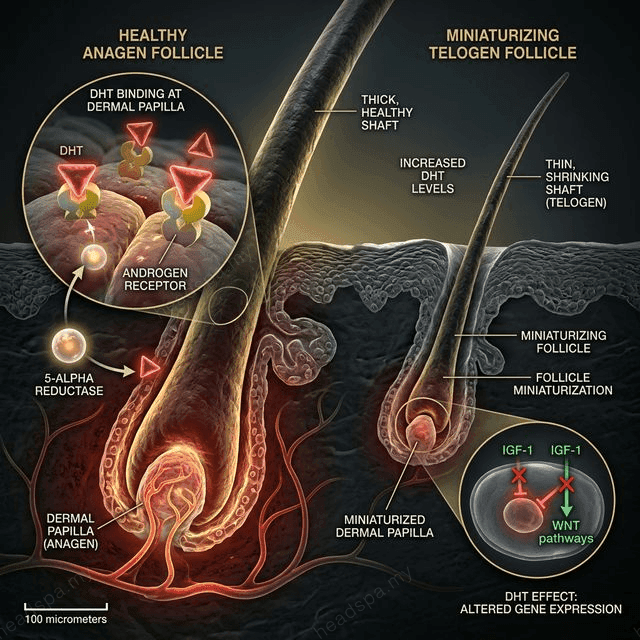
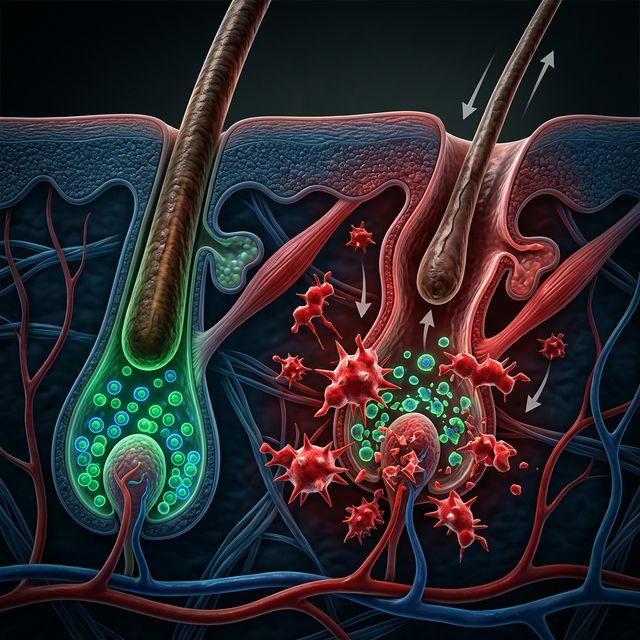
Topical DHT blockers and growth serums address downstream follicle effects. They do not address the upstream cortisol load that is regenerating daily. For commuters, the scalp is attempting to recover while the stressor is refreshed each morning.
The JB-Specific Protocol
Our Eco Botanic branch was designed with JB commuters specifically in mind. The Sleep Healing Headspa provides a cortisol reset that holds measurable effect for 48–72 hours post-treatment. Bi-weekly booking creates a maintenance pattern that keeps cortisol-to-DHEA ratios within the range associated with normal hair growth cycles.