
<!-- RESEARCH NOTES Market data found: KL's 80-90% RH significantly increases Malassezia proliferation (3x rate). Heat from the hijab triggers rapid fungal feeding on sebum. Competitors checked: Aggressive anti-dandruff chemical shampoos marketed to ladies with Hijabs simply dry out the acid mantle. Studies found: Riciputo (1996) and current microbiome studies on Malassezia globosa lipid dependency. -->
Dandruff for a hijabi is fundamentally different from dandruff experienced by someone without a head covering. When a Muslimah walks through the streets of Kuala Lumpur, the dense fabric of her hijab blocks the natural airflow required to evaporate sweat.
Instead of dealing with a simple genetic or lifestyle trigger, hijabis are fighting a physical trap. The enclosed space becomes a hyper-microclimate.
### Malassezia: The Lipid-Hungry Fungus
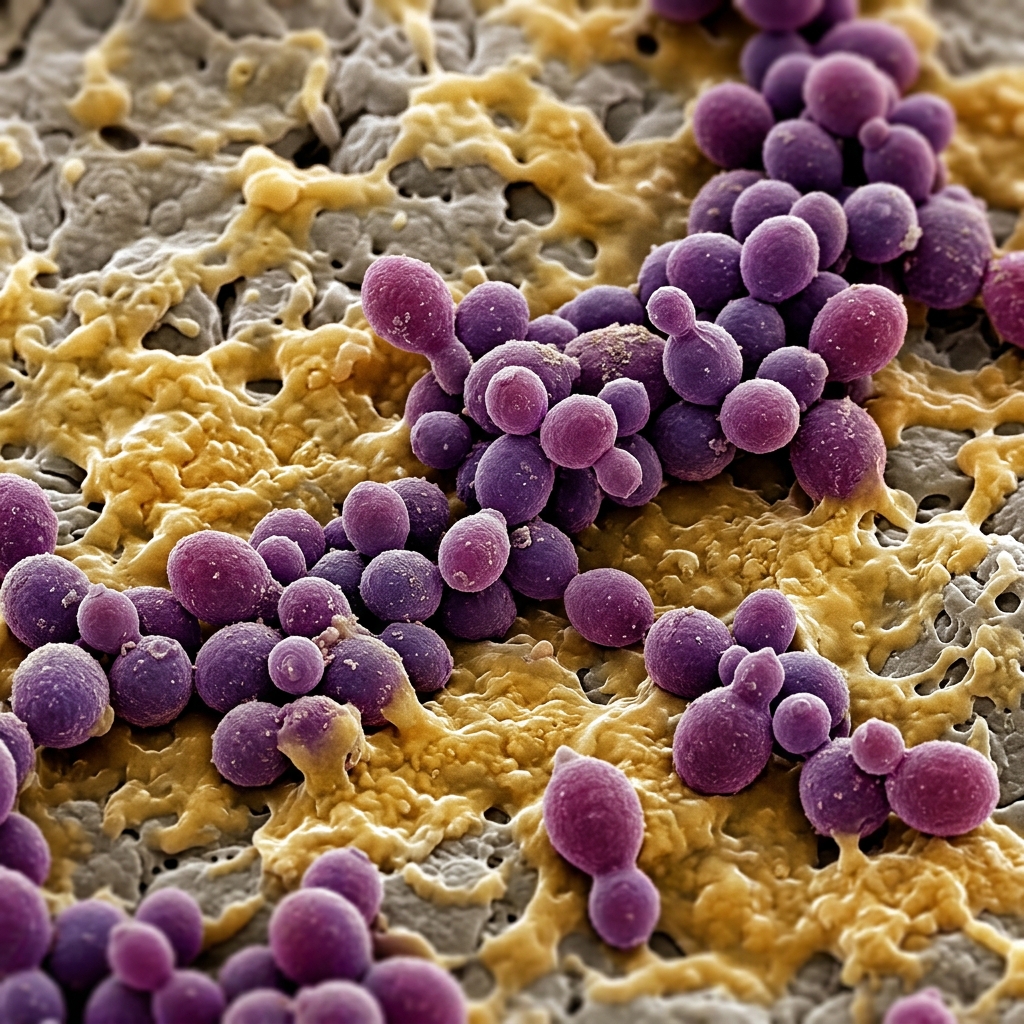
At the heart of the itchy, flaking scalp is *Malassezia globosa*, a naturally occurring yeast that lives on everyone's skin.
*Malassezia*, however, does not synthesize its own fatty acids. It survives exclusively by feeding on the sebum (oil) naturally secreted by your sebaceous glands. When you wear a hijab in Malaysia's unforgiving 34°C tropical heat, sweat layers over your sebum. Because the hijab blocks evaporation, the scalp temperature rises.
This trapped heat effectively melts the thick sebum into a liquid state, creating an all-you-can-eat buffet for the *Malassezia*.
### Multiplication in the Humid Dark
Fungi multiply extraordinarily fast in dark, humid, warm environments. The microclimate beneath an *anak tudung* matches these conditions perfectly. The combination of dense liquid sebum, human body heat (+2°C above ambient), and 90% relative humidity triggers *Malassezia* to proliferate at up to 3x the normal rate.
As the fungus digests the sebum, it leaves behind an irritating byproduct called *oleic acid*. Oleic acid disrupts the *stratum corneum* (the top layer of your skin barrier). The body interprets this breach as an attack and desperately increases cell turnover to shed the damaged barrier. This rapid shedding manifests as the visible, oily yellowish flakes collecting in your hair and along your hijab. This is Hijabi dandruff.
### The Problem With Drugstore Hijab Shampoos
The commercial response to this issue is usually "hijab-friendly" anti-dandruff shampoos heavily laced with menthol and *zinc pyrithione*.
While these formulations can briefly stunt the fungus, they rely on intensely alkaline sulfates to strip the scalp raw. The menthol creates an artificial cold tingle to mask the itching. Because the underlying acid mantle is stripped, the scalp frantically secretes even more sebum to replace the barrier. Within hours of putting the hijab back on, the new sebum begins pouring out in a hyperactive cycle. The remaining *Malassezia* rapidly bounce back, leading to a severe rebound cycle of intense oiliness and worsening flakes.
### The Microbiome Reset
To truly solve hijab dandruff, you cannot just forcefully scrape the fungus away. The biological environment must be structurally reset to suppress its food source and balance the pH.
At TTE Elephant Head Spa, our Muslimah-approved clinical protocols bypass harsh alkaline strippers. Instead, our specialists mechanically map the specific overgrowth areas using microscopic trichoscopy. We then employ highly regulated, oxygenated scaling treatments that physically dislodge the infectious oleic acid buildup and oxidized sebum without shocking the sensitive acid mantle.
This precise reset starves the *Malassezia* gracefully, rebuilding the scalp's microbiome to a balanced state capable of defending itself against the harsh KL climate under the veil.
---
Frequently Asked Questions
Q: Can a damp hijab cause Malassezia buildup? A: Absolutely. Putting on a hijab while your hair or scalp is still damp is the primary catalyst for rapid fungal proliferation. Fungi require water to multiply. Always ensure your scalp is 100% cool-blow-dried before donning the *anak tudung*.
Q: Why do my flakes look oily rather than dusty? A: Oily, yellowish flakes (known clinically as seborrheic dermatitis) are a direct result of sebum mixing with the rapidly shedding skin cells caused by the *Malassezia* oleic acid byproduct.
Q: Will an anti-itch mint scalp tonic solve the fungal problem? A: No. Menthol simply numbs the TRPM8 receptors to prevent the sensation of itching. It does not treat the fungal overgrowth or repair the breached scalp acid mantle.